


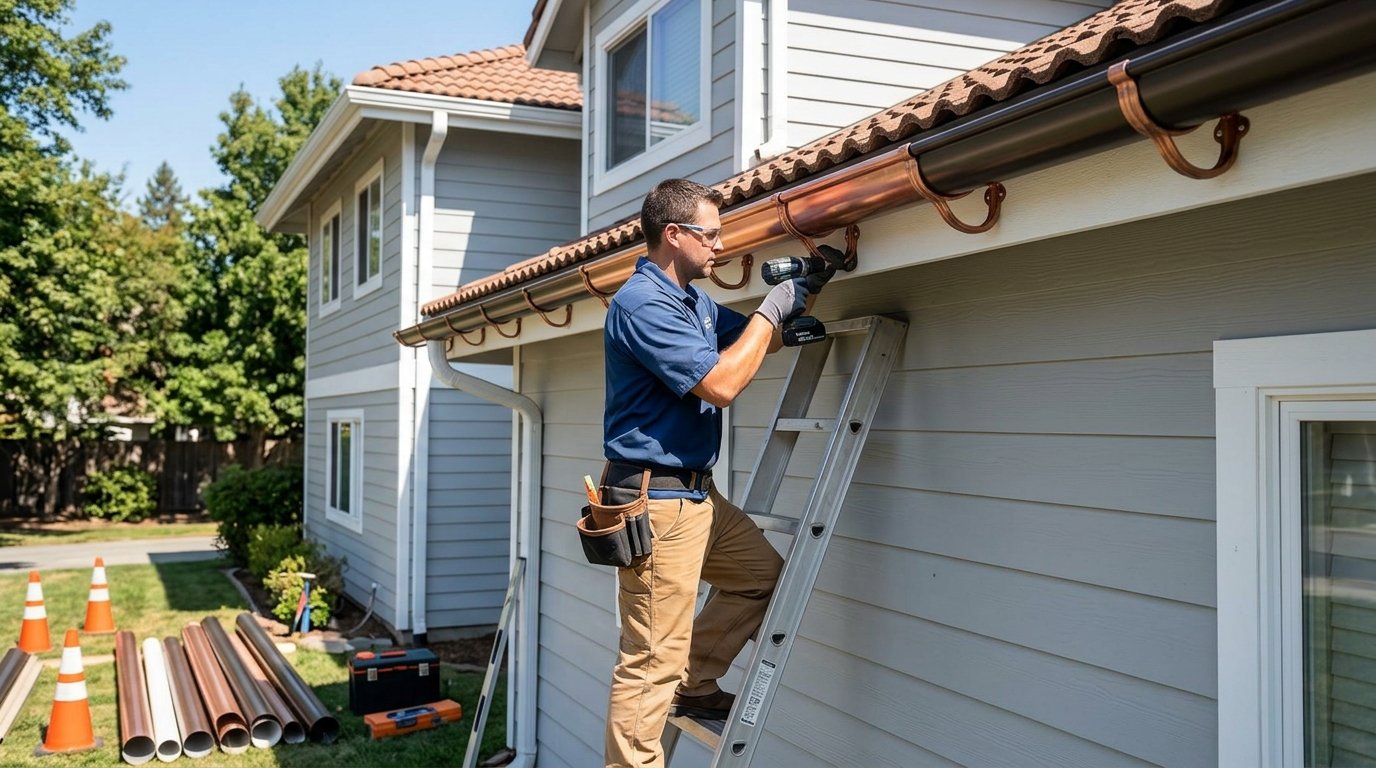

A half round gutter is a curved, semi-circular trough that channels rainwater off the roof edge, commonly seen on historic and high-end homes. Below we explain its shape and where it is typically used.
Understanding the Curved Design
Unlike K-style gutters with flat backs and decorative crown molding shapes, half round gutters have a smooth, rounded tube-like profile with no sharp edges. This design allows water and debris to flow through more freely, reducing clogging in areas with heavy leaf fall. The rounded shape also gives roofs a classic, refined appearance that many modern gutter styles cannot replicate.
Common Applications and Building Types
Half round gutters are frequently installed on colonial, Victorian, craftsman and historic restoration homes where architectural authenticity matters. They are also popular on upscale new builds where homeowners want a distinctive look different from standard gutter shapes. Commercial buildings aiming for a traditional aesthetic sometimes choose this style as well.
Materials Used in Half Round Gutter Installation
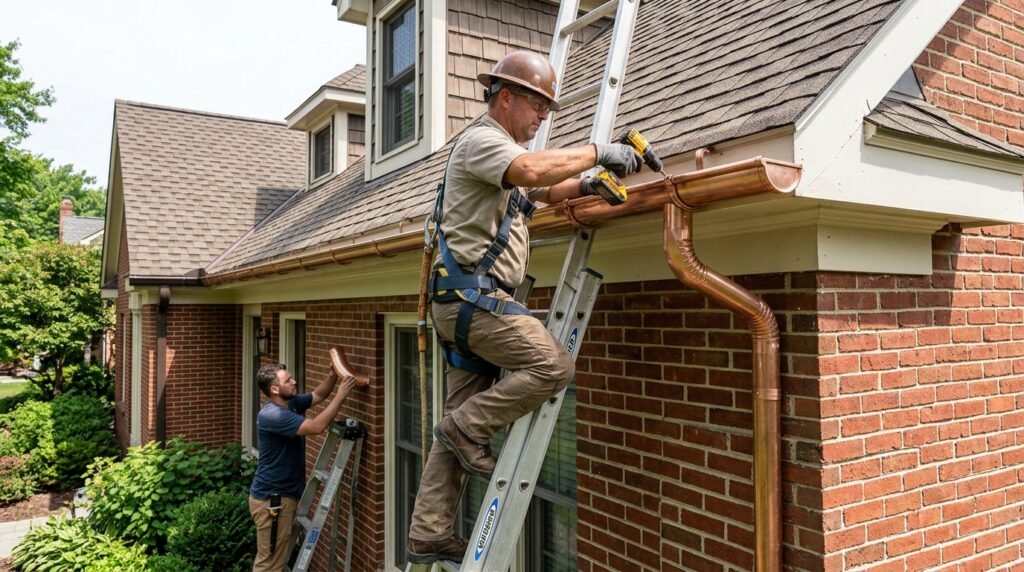
Choosing the right material affects durability, cost and maintenance needs for years to come. The subsections below cover the most common material options available.
Copper and Aluminum Options
Copper is a premium choice known for its natural patina and lifespan exceeding 50 years, though it comes at a significantly higher price point. Aluminum is more budget-friendly, lightweight, and resistant to rust, making it the most commonly chosen material for half round systems today. Both materials can be finished in various colors or left natural depending on the desired look.
Steel and Vinyl Alternatives
Galvanized or stainless steel offers strong impact resistance and works well in regions with heavy snow or hail, though it requires protective coating to prevent rust over time. Vinyl half round gutters are the most affordable option but tend to become brittle in extreme cold and have a shorter overall lifespan. Material choice should always match the local climate and budget expectations.
Tools and Equipment Needed Before Installation
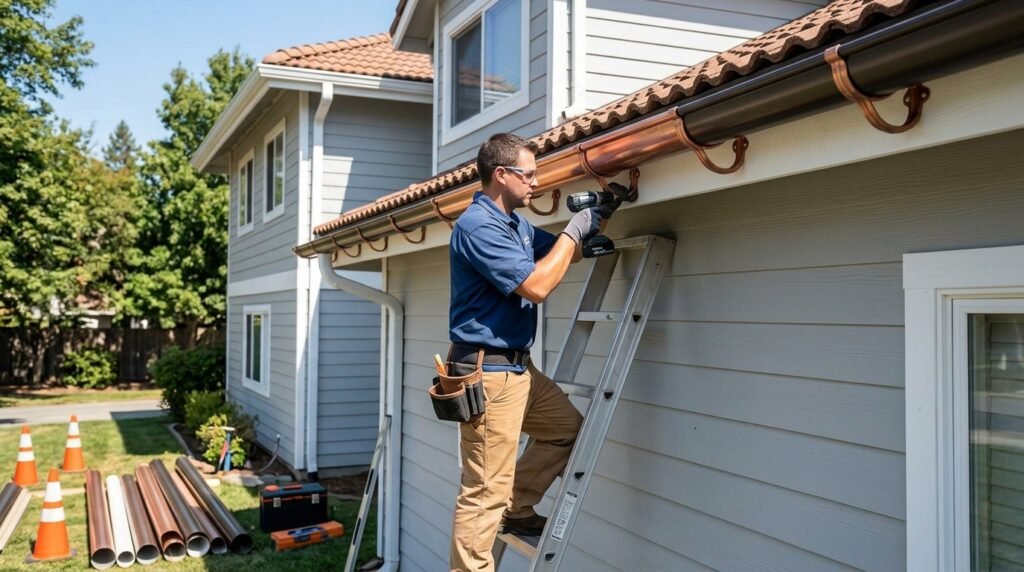
Proper installation requires specific tools to ensure accurate measurements and secure fastening. The subsections below break down the essential and optional equipment list.
Essential Installation Tools
A tape measure, chalk line, tin snips, drill, level, and pop rivet gun are the core tools required for most half round gutter installation projects. A sturdy ladder or scaffolding is also necessary since much of the work happens at roof edge height. Safety gloves and eye protection should always be worn during cutting and fastening steps.
Additional Hardware Components
Circular fascia brackets or hidden hangers, end caps, downspout outlets, and sealant are additional components needed to complete a functional system. Screws or rivets specific to the chosen gutter material help prevent corrosion at connection points. Having all hardware ready before starting prevents delays mid-installation.
Step-by-Step Half Round Gutter Installation Process
This process involves several careful stages from measuring to final sealing. The subsections below walk through the key installation steps in order.
Measuring and Planning Gutter Slope
Installation begins with measuring the roofline length and calculating a slight downward slope, typically a quarter inch drop for every ten feet, to ensure proper water flow toward downspouts. Chalk lines are snapped along the fascia board to mark bracket placement accurately. Planning downspout locations at this stage prevents costly adjustments later.
Mounting Brackets and Hangers
Circular brackets are attached to the fascia board at intervals of about 24 to 36 inches, following the marked slope line precisely.
These brackets cradle the rounded gutter shape and must be tightly secured to handle the weight of water during heavy rainfall. Spacing brackets too far apart is a common mistake that leads to sagging over time.
Fitting and Securing Gutter Sections
Gutter sections are cut to length using tin snips, then placed into the mounted brackets and connected using rivets or approved adapters designed for round profiles.
Seams between sections are sealed with a weatherproof sealant to prevent leaks at joints. End caps are fitted on open ends to fully close the system.
Installing Downspouts and Outlets
Downspout outlets are cut into the gutter at planned points, then round or rectangular downspouts are attached and secured to the exterior wall using straps.
Water should be directed at least several feet away from the foundation using extensions or splash blocks. Correct downspout placement is critical to prevent basement or foundation water damage.
Common Installation Mistakes to Avoid
Even experienced installers can make errors that reduce gutter performance over time. The subsections below highlight the most frequent mistakes homeowners should watch for.
Incorrect Slope Calculation
If the slope is too flat, water pools inside the gutter and accelerates material corrosion, while excessive slope can look uneven and cause water to overflow at low points.
Using a level and consistent chalk line reference throughout the project helps maintain accuracy. Double-checking slope after installation with a water test is highly recommended.
Improper Bracket Spacing
Placing brackets too far apart causes gutters to sag under the weight of water and debris, eventually leading to detachment from the fascia. This is especially problematic with heavier materials like copper or steel. Following manufacturer-recommended spacing guidelines prevents this structural issue.
Cost Considerations for Half Round Gutter Installation
Pricing depends heavily on material choice, home size, and labor rates in the region. The table below offers a general cost comparison across common material types.
| Material Type | Average Cost per Linear Foot | Expected Lifespan |
| Copper | $25 – $40 | 50+ years |
| Aluminum | $9 – $18 | 20 – 30 years |
| Galvanized Steel | $12 – $22 | 25 – 35 years |
| Vinyl | $4 – $8 | 10 – 15 years |
Labor Costs and Professional Installation
Professional half round gutter installation typically costs more than standard K-style gutters due to the specialized brackets and precision fitting required.
Labor rates vary based on roof height, home size, and regional contractor pricing. Hiring an experienced installer familiar with round profile systems reduces the risk of leaks and sagging.
DIY vs Hiring a Professional
While DIY installation can save on labor costs, the curved profile of half round gutters makes accurate cutting and sealing more challenging than flat-backed styles.
Homeowners with ladder safety experience and basic tool skills may attempt smaller sections, but full-home installations are best left to professionals. Mistakes in slope or bracket spacing often cost more to fix later than the original labor savings.
Maintenance Tips After Installation
Keeping a half round gutter system functional requires periodic upkeep similar to other gutter styles. The subsections below cover cleaning routines and inspection practices.
Seasonal Cleaning Routine
Gutters should be cleaned at least twice a year, typically in spring and fall, to remove leaves, twigs and sediment buildup that can block water flow. The smooth rounded interior of half round gutters generally clears debris more easily than boxier styles. Using a garden hose to flush the system after cleaning confirms proper drainage.
Checking for Leaks and Corrosion
Annual inspection of seams, end caps, and bracket connections helps catch small leaks before they cause fascia or foundation damage. Metal gutters should be checked for early signs of rust or patina buildup depending on material type. Addressing small repairs early extends the overall lifespan of the system significantly.
How Half Round Gutters Compare to Other Styles
Compared to standard K-style gutters, half round systems generally handle debris flow better due to their smooth curved interior with no corners for buildup. However, K-style gutters typically hold slightly more water volume for the same width, making them a practical choice for extremely heavy rainfall regions.
\For homeowners prioritizing classic aesthetics and lower clog frequency, half round remains the stronger choice despite a higher material and installation cost.
Frequently Asked Questions
How long does half round gutter installation take?
A typical single-story home installation takes one to two days depending on gutter length, material, and weather conditions.
Can half round gutters be installed on any roof type?
Yes, they can be installed on most roof types, though proper bracket selection matters more on steep or unusually shaped fascia boards.
Do half round gutters need gutter guards?
Guards are optional but recommended in heavily wooded areas to further reduce leaf buildup, even though the rounded shape already resists clogging better than boxy styles.
Is copper worth the extra installation cost?
For homeowners wanting a lifetime system with minimal replacement needs, copper’s durability and aesthetic patina often justify the higher upfront investment.
Conclusion
Half round gutter installation offers a timeless aesthetic combined with practical water management benefits, particularly for homes with historic or upscale architectural styles.
While the process requires more precision than standard gutter systems, careful attention to slope, bracket spacing, and material choice results in a durable, low-maintenance system that can last for decades when properly installed and maintained.
Related Articles
What Is an Asbestos Stucco Ceiling? Learn the risks and stay safe.
Crack in Basement Wall: Everything You Need to Know
Roof Repairs Worcester: Your Complete Local Guide to a Safe and Lasting Roof
How to Clean Vinyl Floors: The Complete Step-by-Step Guide
Can Gutter Hangers Prevent Gutter Damage from Roof Avalanche?