


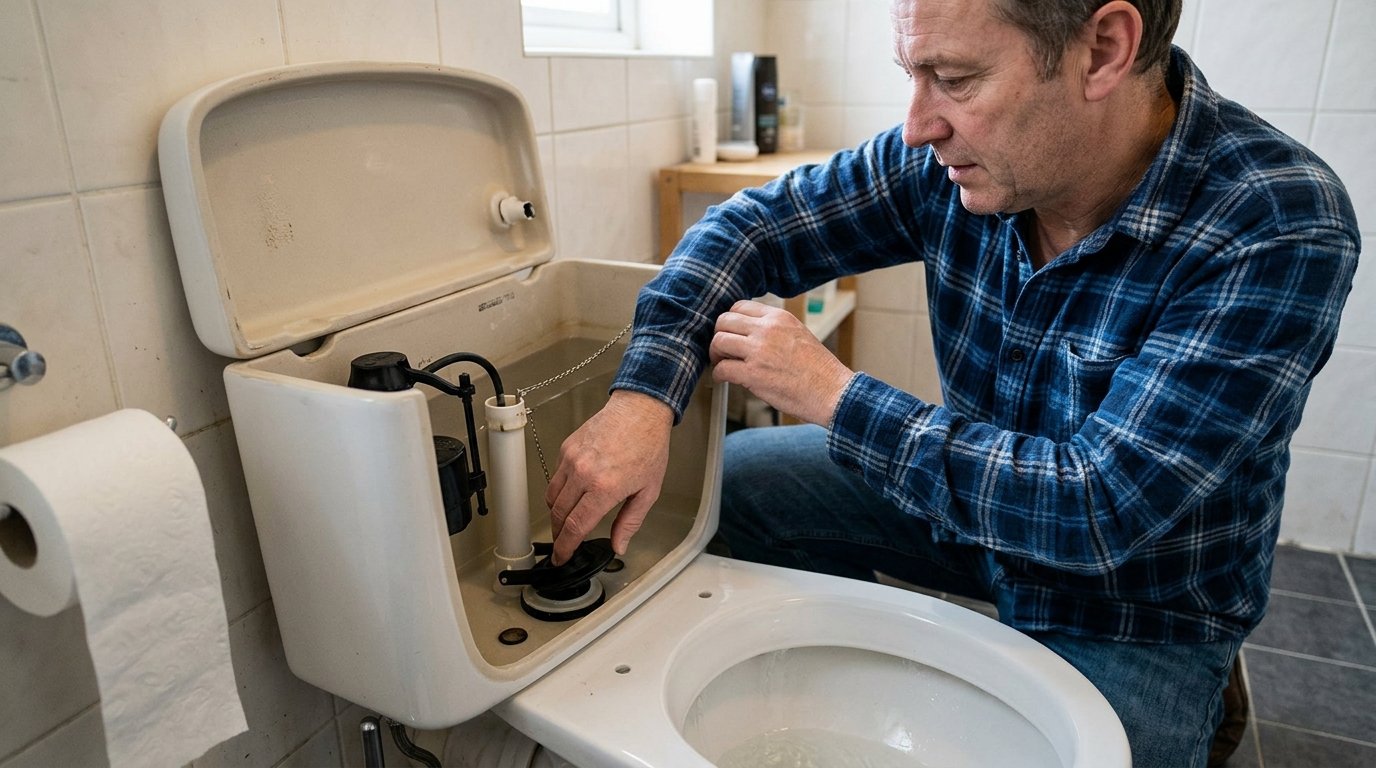

ower outages, water supply issues, or a broken flush mechanism can leave you wondering how to manually flush a toilet without waiting for a plumber to arrive. This is actually a simple process that anyone can learn in just a few minutes, and it requires no special tools or plumbing expertise. Knowing this skill becomes especially useful during emergencies, natural disasters, or when your toilet tank stops filling properly due to a mechanical fault.
This guide will walk you through everything step by step, explaining why manual flushing works, what materials you need, and how to do it safely without damaging your toilet or causing a mess. By the end, you will feel confident handling this situation whenever it comes up.
How to Manually Flush a Toilet
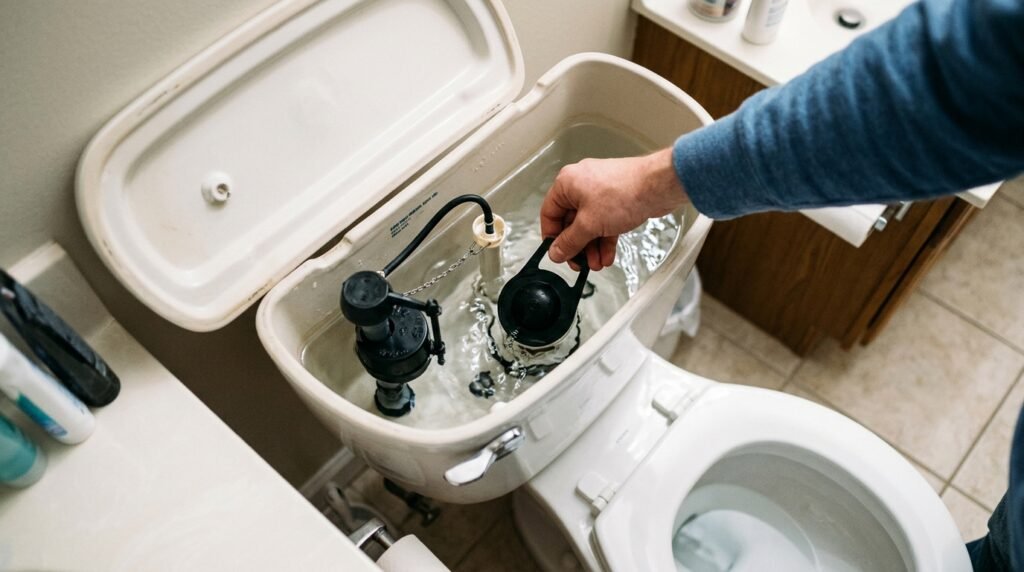
Manually flushing a toilet simply means pouring water directly into the bowl with enough force and volume to trigger the same siphoning action a normal flush creates.
This method works even when your tank is empty or the flushing mechanism is broken. Below we explain the exact process and the science behind why it works so effectively.
Understanding Why Manual Flushing Works
A toilet flushes because water rushes into the bowl quickly enough to create a siphon effect, pulling waste through the trapway and into the drainpipe. When you pour water manually with enough speed and volume, you recreate this same siphoning action without needing the tank at all. This is why the technique works consistently, even during power outages or tank malfunctions.
Materials You Will Need
Before starting, gather a bucket that holds around one to two gallons of water, since this amount closely matches what a standard toilet tank releases during a normal flush. You do not need hot water or any cleaning chemicals for this process. Plain tap water works perfectly fine for manual flushing purposes.
Step-by-Step Process for Manual Flushing
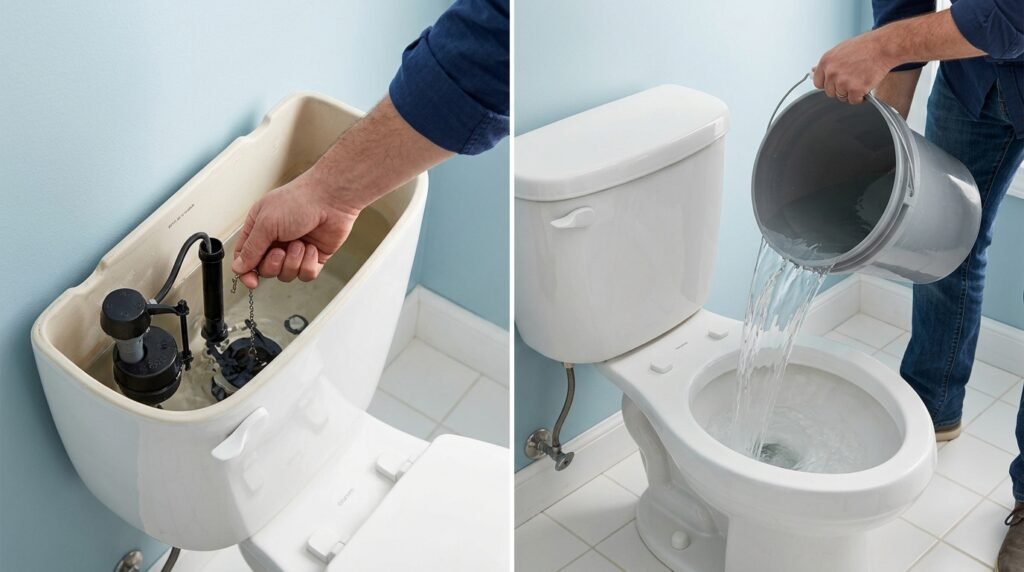
Below is a clear breakdown of the entire process, explained in an easy sequence anyone can follow without confusion.
| Step | Action | Purpose |
| Step 1 | Fill a bucket with 1-2 gallons of water | Matches normal tank flush volume |
| Step 2 | Pour water quickly into the bowl, not the tank | Creates the siphon effect needed |
| Step 3 | Pour from waist height in one steady motion | Increases water speed and force |
| Step 4 | Observe the bowl draining | Confirms successful flush |
Pouring Technique for Best Results
The key to success lies in pouring the water quickly rather than slowly trickling it into the bowl. Standing at waist height and pouring in one continuous motion gives the water enough force to trigger proper siphoning.
Slow pouring often fails because it does not generate the pressure needed to push waste through the trapway.
What to Avoid During This Process
Avoid pouring water into the tank instead of the bowl, since this will not create any flushing action at all. Also avoid using excessive water, as this can cause overflow if the bowl is already partially blocked.
Stick to the recommended one to two gallon range for consistent and clean results every time.
When You Might Need Manual Flushing
Several everyday situations can require this skill, and knowing when to use it helps you respond quickly without panic. Common scenarios include:
- Power outages affecting water pumps or well systems
- A broken flapper valve or fill valve inside the tank
- Water shutoff during repairs or maintenance work
- Camping or temporary living situations with limited plumbing
Power Outages and Water Pump Issues
Homes relying on well water often use electric pumps to bring water into the house, and a power outage stops this process completely. In these situations, using stored water in buckets to manually flush becomes the only working option. This makes the manual method extremely valuable during storms or extended power failures.
Broken Tank Components
Sometimes the fill valve or flapper inside the tank breaks, preventing the tank from refilling properly after a flush. While waiting for repairs or replacement parts, manual flushing keeps your toilet usable without any interruption to your daily routine. This temporary solution works just as effectively as the tank system itself.
Conclusion
Learning how to manually flush a toilet is a practical skill that prepares you for unexpected situations like power outages, broken tank parts, or water shutoffs.
The process is simple, requiring only a bucket of water and the right pouring technique to recreate the natural siphoning action. With this knowledge, you never have to worry about an unusable toilet during emergencies again.
FAQs
How much water do I need to manually flush a toilet?
Around one to two gallons of water poured quickly into the bowl is enough to trigger a full flush.
Can I pour water into the tank instead of the bowl?
No, pouring into the bowl directly is necessary since the tank alone cannot create the siphon effect without proper pressure.
Is manual flushing safe for regular daily use?
Yes, it is completely safe for temporary situations, though fixing the underlying tank issue is recommended for long-term convenience.
Related articles
How to Program Genie Garage Door Opener Complete Guide 2026
How To Get Stains Off Marble: Complete Guide 2026
How to Fix a Sagging Floor in a Crawl Space
18 Inch Deep Base Cabinets: A Smart Storage Solution for Every Kitchen