


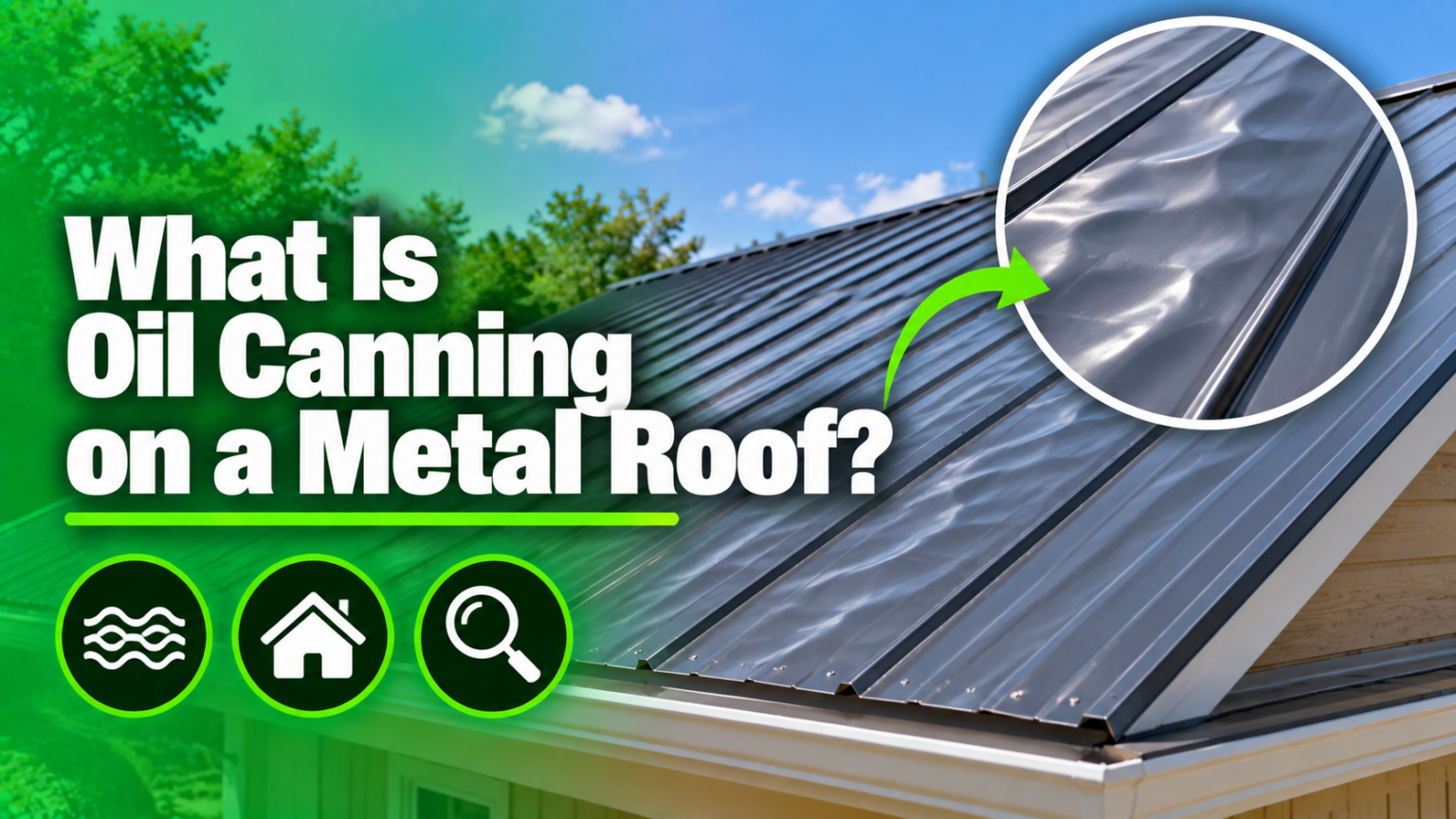

If you’ve recently installed a metal roof or you’re planning to get one, you may have come across a term that sounds a little unusual — “oil canning.”
At first, it might seem like a technical defect that should worry you, but in most cases, it’s simply a cosmetic characteristic of metal roofing that many homeowners don’t even notice until it’s pointed out to them.
So, what is oil canning on a metal roof, and should you be concerned about it? This guide breaks down everything you need to know in simple, easy-to-understand language.
Introduction to Oil Canning
Quick Definition
In the simplest terms, oil canning is the wavy, rippled, or slightly distorted appearance that sometimes shows up on the flat sections of metal roofing panels. It looks like small ripples or dents across an otherwise smooth surface, almost like the surface of water when a gentle breeze passes over it. This visual effect happens mostly on the flat areas between the ribs or seams of a metal panel, rather than on the raised or textured parts.
The name itself comes from an old comparison to the bottom of a metal oil can, which used to flex and pop in and out when pressed. While the term originated decades ago, it’s still widely used today in the roofing and metal fabrication industry to describe this exact kind of surface waviness.
Why This Topic Matters for Homeowners and Roofers
Understanding what is oil canning on a metal roof is important because it helps set realistic expectations before, during, and after installation. Many homeowners invest a significant amount of money into a metal roof expecting a perfectly flat, mirror-like finish. When they later notice slight waves or ripples reflecting sunlight at certain angles, it can cause unnecessary panic or disputes with contractors.
Roofers and contractors also need to educate their clients about this phenomenon in advance. Doing so builds trust, avoids costly misunderstandings, and helps homeowners understand that oil canning is generally a normal part of how metal panels behave — not a sign of poor workmanship or a faulty product.
What Does Oil Canning Look Like?
Visual Characteristics
Oil canning shows up as subtle waves, ripples, or slight bulges across the flat portions of a metal panel. It’s not usually a dramatic or jagged distortion — rather, it’s a soft, wavy pattern that can look like light shadows or reflections moving across the surface. Because metal panels are reflective, even a minor amount of waviness can catch sunlight and appear more prominent than it actually is.
Some people describe it as looking like the surface of a pond with tiny ripples, while others compare it to a very light dent that isn’t sharp or deep, just a smooth undulation across the panel.
Where It’s Most Commonly Seen
Oil canning tends to appear most often in the flat, unribbed sections of metal roofing panels. Panels that have more texture, ribs, or grooves are far less likely to show this issue because those design elements help break up the flat surface and add rigidity. This is why oil canning is especially associated with:
- Standing seam metal roofing panels, which have wide, flat areas between the vertical seams
- Flat panel wall or roof cladding used in modern architectural designs
- Wide-format roofing panels used to cover large surface areas with fewer seams
When It’s Most Noticeable
Interestingly, oil canning isn’t always visible under every lighting condition. It tends to become most noticeable during early morning or late afternoon when the sun is at a low angle, casting long shadows and highlighting even the smallest surface irregularities. Overcast days or direct overhead sunlight, on the other hand, often make the roof appear much smoother and flatter, since there’s less contrast to reveal the waviness.
Viewing angle also plays a big role. Someone standing directly below the roof might not notice anything unusual, while someone viewing it from a distance or at an angle may see the rippling effect clearly.
Is Oil Canning a Structural Problem?
Cosmetic vs Structural Issue
One of the most important things to understand when researching what is oil canning on a metal roof is that it is almost always a cosmetic issue, not a structural one. The waviness does not compromise the strength, durability, or integrity of the roofing panel. It doesn’t create gaps, weaken the metal, or make the roof more prone to leaks or damage.
Think of it like a scratch on a car’s paint — it might look imperfect, but it doesn’t affect how the car drives or performs. Similarly, oil canning affects appearance, not function.
Does It Affect Roof Performance or Waterproofing?
No, oil canning does not affect the roof’s ability to keep water out or protect the building underneath. The panels are still properly fastened, seamed, and sealed, and the waviness occurs within the flat field of the panel, not at the joints or overlaps where leaks typically originate. Roofs with oil canning perform just as well structurally and functionally as roofs without it.
Manufacturer and Industry Standpoint
Most metal roofing manufacturers openly acknowledge that oil canning is an inherent characteristic of light-gauge, flat metal panels. Because of this, oil canning is typically not covered under standard material warranties, since it’s considered a natural occurrence rather than a manufacturing defect. Reputable manufacturers usually include a disclaimer about this in their product documentation, which is why it’s a good idea for homeowners to ask about it before choosing a panel style.
What Causes Oil Canning?
Several factors — sometimes working together — contribute to oil canning. Understanding these causes can help homeowners and installers minimize its appearance.
Manufacturing Stress (Rolling and Forming Process)
During manufacturing, flat metal sheets are rolled and shaped into panels using large machines. This rolling and forming process can introduce internal stress into the metal, especially in the flat, unsupported areas of the panel. When this stress isn’t evenly distributed, it can cause slight waviness once the panel is installed and exposed to real-world conditions.
Thermal Expansion and Contraction
Metal naturally expands when it heats up and contracts when it cools down. Roofing panels are exposed to constant temperature changes throughout the day and across seasons. This continuous expansion and contraction can cause the flat areas of the panel to shift slightly, leading to visible waviness over time, especially if the panel wasn’t installed with enough room to move naturally.
Improper Installation Practices
Installation technique plays a major role in how much oil canning appears on a finished roof. Two common installation-related causes include:
Over-Tightened Fasteners: When screws or fasteners are tightened too much, they can pull the panel too tightly against the roof deck, restricting its natural movement and creating stress points that lead to waviness.
Uneven Substrate or Decking: If the surface underneath the metal panel isn’t perfectly flat or level, the panel will follow the contours of that uneven surface, which can result in visible ripples once installed.
Thin Gauge Metal Panels
Metal gauge refers to the thickness of the panel — the lower the gauge number, the thicker the metal. Thinner (higher gauge number) panels are naturally more flexible and therefore more prone to oil canning because they don’t have as much rigidity to resist minor stress or movement.
Panel Width and Flat Span Size
The wider the flat, unbroken section of a panel, the more likely it is to show oil canning. Panels with narrow flat areas or added ribs and grooves tend to hide waviness much better because the additional design elements help distribute stress and break up the visual flatness.
Types of Metal Panels Most Prone to Oil Canning
| Panel Type | Likelihood of Oil Canning | Reason |
|---|---|---|
| Standing Seam Panels | High | Wide flat areas between seams |
| Wide Flat Panel Profiles | High | Large unbroken flat surface |
| Light-Gauge Metal Roofing | High | Thinner metal is more flexible |
| Ribbed or Corrugated Panels | Low | Ribs break up flat surface and add strength |
| Textured/Patterned Panels | Low | Texture hides minor surface irregularities |
As shown in the table above, panels with more design detail — such as ribs, corrugations, or textured finishes — are far less likely to display noticeable oil canning compared to smooth, wide, flat panel styles.
How to Prevent Oil Canning
While it’s difficult to eliminate oil canning completely, several strategies can significantly reduce its appearance.
Choosing the Right Gauge Metal
Opting for a thicker gauge panel adds rigidity and reduces the likelihood of visible waviness. While thicker panels may cost slightly more, many homeowners find the investment worthwhile for a smoother, more polished appearance.
Proper Installation Techniques
Working with experienced installers who understand correct fastening methods — including allowing appropriate room for thermal movement and avoiding over-tightening — can make a noticeable difference in the final look of the roof.
Using Striations or Ribs in Panel Design
Many manufacturers now offer panels with small striations, or shallow ribs, built into the flat areas. These subtle design features help break up the surface visually, making any minor waviness far less noticeable to the eye.
Selecting Textured or Patterned Finishes
Textured finishes, unlike smooth glossy ones, scatter light in multiple directions rather than reflecting it uniformly. This scattering effect naturally camouflages small surface imperfections, including oil canning.
Working with Experienced Installers
Perhaps the most important preventive step is choosing a roofing contractor who has hands-on experience installing metal roofing specifically. Experienced installers understand the nuances of handling metal panels properly, from storage and handling to fastening and alignment.
Can Oil Canning Be Fixed or Reduced?
Post-Installation Solutions
Once oil canning appears on an installed roof, options for correcting it are limited. In some cases, adjusting or loosening overly tight fasteners can help relieve some of the stress causing the waviness. However, this doesn’t always fully resolve the issue, especially if the root cause is related to the metal’s manufacturing or gauge.
Panel Replacement Considerations
In more severe cases, especially where the waviness is extreme or the homeowner finds it visually unacceptable, replacing the affected panels with a thicker gauge or textured alternative may be the most effective solution.
When to Call a Professional Roofer
If you’re noticing significant oil canning on a newly installed roof, it’s worth consulting a professional roofer to assess whether the cause is related to installation error, panel quality, or simply the natural characteristics of the metal. A professional can help determine whether any corrective action is necessary or if the appearance is within a normal, expected range.
Oil Canning and Roof Warranty
What Manufacturers Typically Cover
Most metal roofing warranties cover structural defects, rust-through, paint failure, and similar performance-related issues. Oil canning, however, is generally excluded from these warranties because it’s considered a natural characteristic of flat, light-gauge metal rather than a manufacturing flaw.
Reading the Fine Print Before Installation
Before committing to a specific metal roofing product, it’s a smart idea to review the manufacturer’s warranty documentation and ask your contractor directly whether oil canning is addressed or excluded. This transparency upfront can prevent frustration and unrealistic expectations later on.
Tips to Minimize Visual Impact of Oil Canning
Roof Color and Finish Choices
Lighter colors and matte or textured finishes tend to hide oil canning better than dark, glossy colors. Dark, reflective surfaces amplify shadows and light contrast, making any surface waviness far more visible.
Panel Orientation and Design Adjustments
Sometimes, simply changing the orientation of panels or opting for a design with more seams and breaks in the flat area can help minimize the appearance of oil canning across a large roof surface.
Frequently Asked Questions (FAQs)
Is oil canning covered under warranty? In most cases, no. Manufacturers typically classify oil canning as a natural characteristic of metal panels rather than a defect, so it’s usually excluded from standard material warranties.
Does oil canning affect roof lifespan? No, oil canning is a cosmetic issue and does not impact the roof’s durability, waterproofing, or overall lifespan.
Can oil canning be completely avoided? While it can be significantly reduced through proper panel selection, thicker gauge metal, and correct installation techniques, it’s very difficult to eliminate entirely, especially on wide, flat panel designs.
Which metal roofing panels are least likely to oil can? Ribbed, corrugated, or textured panels are the least likely to show oil canning, since their design naturally breaks up flat surfaces and hides minor imperfections.
Conclusion
Key Takeaways
So, what is oil canning on a metal roof? It’s a common, mostly cosmetic occurrence where the flat sections of metal panels develop a wavy or rippled appearance due to factors like manufacturing stress, thermal expansion, panel gauge, and installation technique. While it doesn’t affect the roof’s performance or structural integrity, it can influence the overall visual appeal of the roofing system.
Final Recommendation for Homeowners
If a flawless, ultra-smooth appearance is a top priority for your metal roofing project, consider choosing thicker gauge panels, textured finishes, or ribbed profiles, and always work with an experienced, reputable installer. Having an open conversation with your roofing contractor about oil canning before installation can help set realistic expectations and ensure you’re happy with the final result for years to come.
Related Articles
How Do You Wash Walls Before Painting? (Step-by-Step Guide)
Glow in the Dark Epoxy Floor: The Ultimate Guide for Homeowners & Contractors
How to Improve Home Security with Better Locks: The Complete 2026 Guide