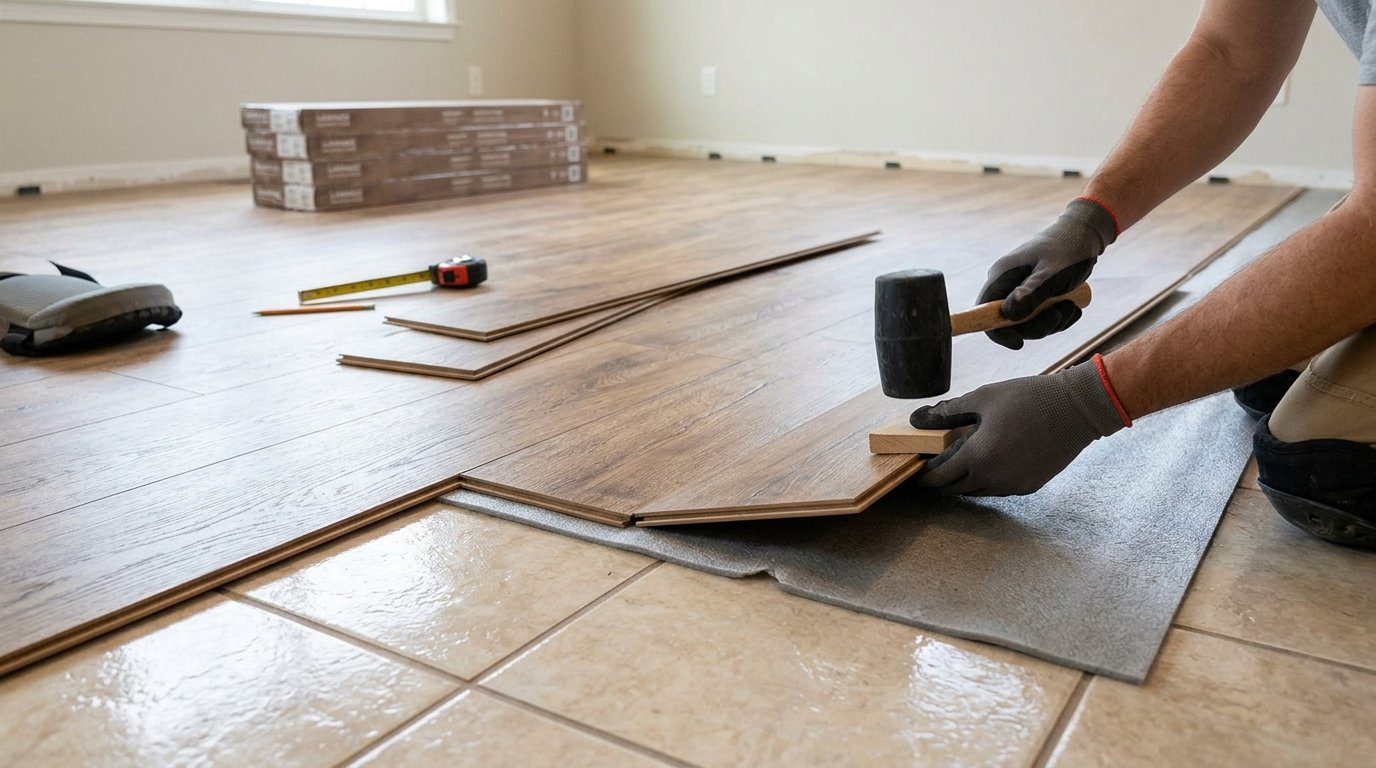

Yes, you can install laminate flooring over tile, and it is actually one of the most common flooring upgrades homeowners choose today. Tile floors are naturally flat and stable, which makes them a good base for laminate as long as a few conditions are met before you start.
Why Laminate Over Tile Is a Popular Choice
Laminate flooring over tile saves time, money, and the mess of tile removal. It has become a favorite renovation shortcut for people who want a fresh look without tearing up their subfloor.
Saves Demolition Time and Cost
Removing old tile is heavy, dusty, and often expensive work that can take days depending on the room size. Installing laminate directly over the existing tile skips this entire step completely. This alone makes the project faster and far less stressful for most homeowners.
No Structural Disruption
Tile removal can sometimes damage the subfloor underneath, especially in older homes with weaker foundations. Laying laminate over tile avoids this risk entirely since nothing gets pulled up or disturbed. Your subfloor stays protected and untouched throughout the entire renovation.
Budget Friendly Renovation Option
Skipping demolition and disposal fees means the overall project cost drops significantly for most homeowners. Laminate itself is also one of the more affordable flooring materials on the market today. Together, these savings make this option attractive for people renovating on a tight budget.
Conditions Your Tile Floor Must Meet First
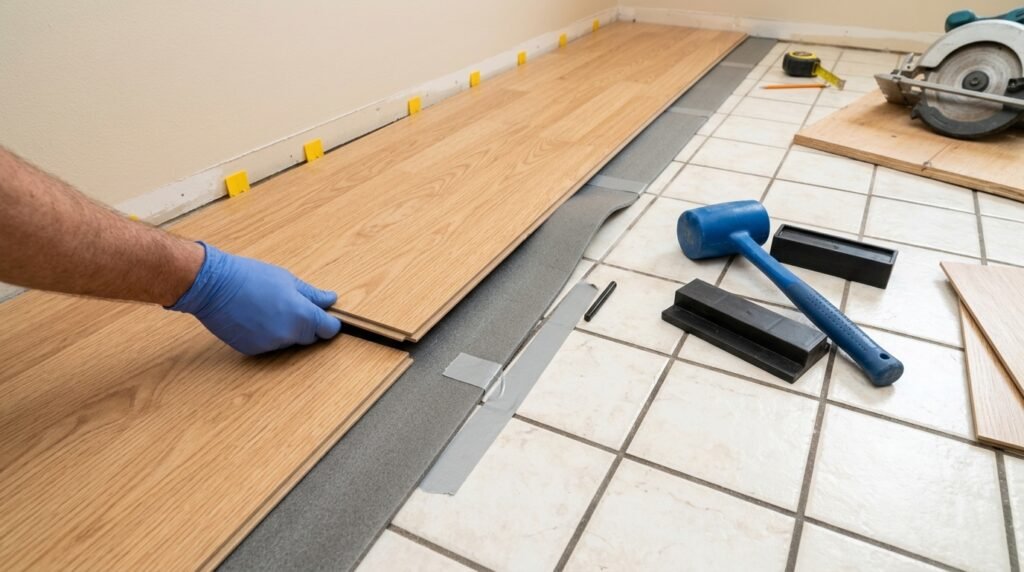
Before laying laminate, the tile underneath needs to pass a basic condition check. Cracked, uneven, or loose tiles can cause serious problems later if ignored.
Tile Must Be Level and Flat
Laminate flooring needs a flat surface to click together properly without gaps or stress points. Any tile that sits higher or lower than its neighbors will telegraph through the new floor. A self-leveling compound can fix minor unevenness before installation begins.
No Cracked or Loose Tiles Allowed
Loose or cracked tiles create hollow spots that shift under weight over time. These weak spots eventually cause the laminate above to crack, squeak, or separate at the seams. Every damaged tile should be repaired or replaced before moving forward with installation.
Grout Lines Should Be Filled Properly
Deep or uneven grout lines create small dips across the tile surface that laminate cannot bridge smoothly. These gaps often show up as slight ridges once the laminate is installed on top. Filling grout lines flush with the tile surface prevents this issue entirely.
Steps to Install Laminate Flooring Over Tile
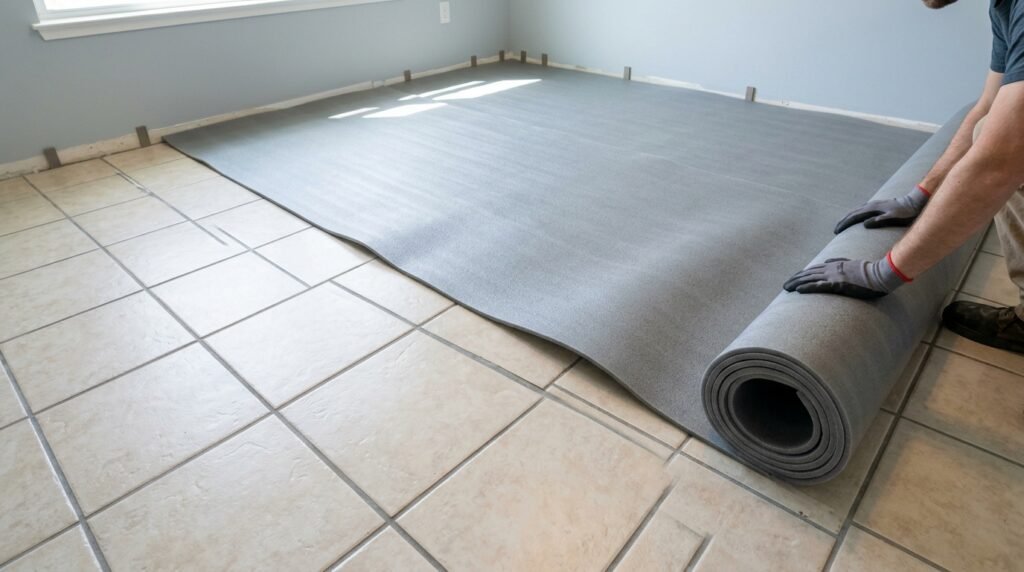
Installing laminate over tile follows a fairly straightforward process once the tile passes inspection. Each step plays a role in making sure the final floor feels solid and looks seamless.
Clean and Inspect the Tile Surface
Start by removing all dust, grease, and debris from the tile using a proper floor cleaner. A clean surface helps you spot cracks, loose tiles, or uneven grout lines more clearly. This inspection step should never be skipped, even if the tile looks fine at first glance.
Level the Floor Where Needed
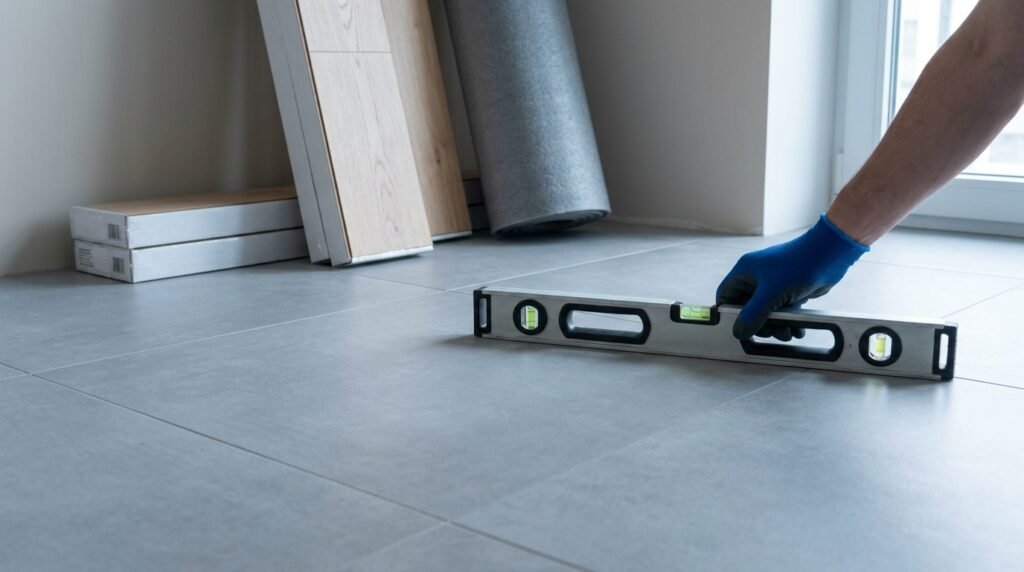
Use a long level or straightedge to check for dips, bumps, or slopes across the tile floor. Any problem areas should be corrected using a self-leveling underlayment compound designed for tile surfaces. Let the compound cure fully before moving to the next step.
Install an Underlayment Layer
A foam or felt underlayment goes down first to cushion the laminate and reduce noise while walking. This layer also helps smooth out very minor imperfections left in the tile surface. Most laminate brands specify a particular underlayment type, so always check the manufacturer’s instructions.
Lay the Laminate Planks
Laminate planks click together in rows, usually starting from one corner of the room and working outward. A small expansion gap should be left around the room’s edges to allow for natural movement. Trim pieces and transition strips finish the edges neatly once all planks are installed.
Pros and Cons of This Installation Method
Every renovation shortcut comes with trade-offs, and installing laminate over tile is no exception. Weighing these points helps you decide if this method fits your specific situation.
| Pros | Cons |
| Faster installation timeline | Raises floor height noticeably |
| Lower overall renovation cost | Uneven tile can still cause issues |
| No demolition mess or debris | Doorways may need trimming |
| Subfloor stays fully protected | Not ideal for severely damaged tile |
Floor Height Increase Can Affect Doors
Adding laminate on top of tile raises the floor level by a small but noticeable amount. This change can cause doors to drag or stick against the new surface height. Trimming the bottom of doors is a common fix homeowners need to plan for.
Not Suitable for Severely Damaged Tile
If tile is heavily cracked, hollow, or shifting in large sections, laminate installation becomes risky. The unstable base will eventually transfer damage upward into the new laminate flooring. In these cases, full tile removal is the safer long-term solution.
Cost Considerations for This Project
Budget planning matters a lot when comparing this method against full tile removal and replacement. Understanding where the money goes helps avoid surprises partway through the project.
Underlayment and Leveling Compound Costs
Self-leveling compound and underlayment materials add a modest cost on top of the laminate itself. These materials are necessary investments that protect the quality of the finished floor. Skipping them to save money often leads to bigger problems later.
Laminate Material Price Range
Laminate flooring prices vary widely based on thickness, brand, and finish quality selected. Mid-range laminate offers a good balance between durability and affordable pricing for most homes. Premium laminate options cost more but often include better water resistance and texture.
How This Compares to Other Flooring Approaches
Many homeowners also research vinyl plank or engineered wood as alternatives before choosing laminate. Most competing guides focus heavily on cost comparisons but skip practical prep steps like grout leveling and door trimming, which this guide covers in detail for a more complete picture.
FAQs
Does the tile need to be removed first?
No, tile removal is not required as long as the tile is flat, stable, and free of major cracks.
Will the laminate feel different walking over tile versus a wood subfloor?
The underlayment layer minimizes this difference, though very hard tile can feel slightly firmer underfoot.
How long does this installation typically take?
Most standard rooms can be completed within one to two days, depending on leveling needs.
Is professional installation necessary for this method?
Many homeowners install laminate over tile themselves, though professional help is useful for larger or uneven areas.
Conclusion
Installing laminate flooring over tile is a practical, budget-friendly renovation option when the tile base is flat, stable, and free of major damage. Proper prep work, including leveling and underlayment, makes the biggest difference in how the final floor performs over time.
Related Articles
How Many Bags of Mulch in a Yard Complete guide 2026
Can You Tile Over Tile: A Complete Guide 2026
How Much Does It Cost to Waterproof a Basement?
Shower Door Repair: Complete Guide to Fix Common Shower Door Problems
How to Clean Shower Tiles: Step-by-Step Guide for a Spotless Bathroom