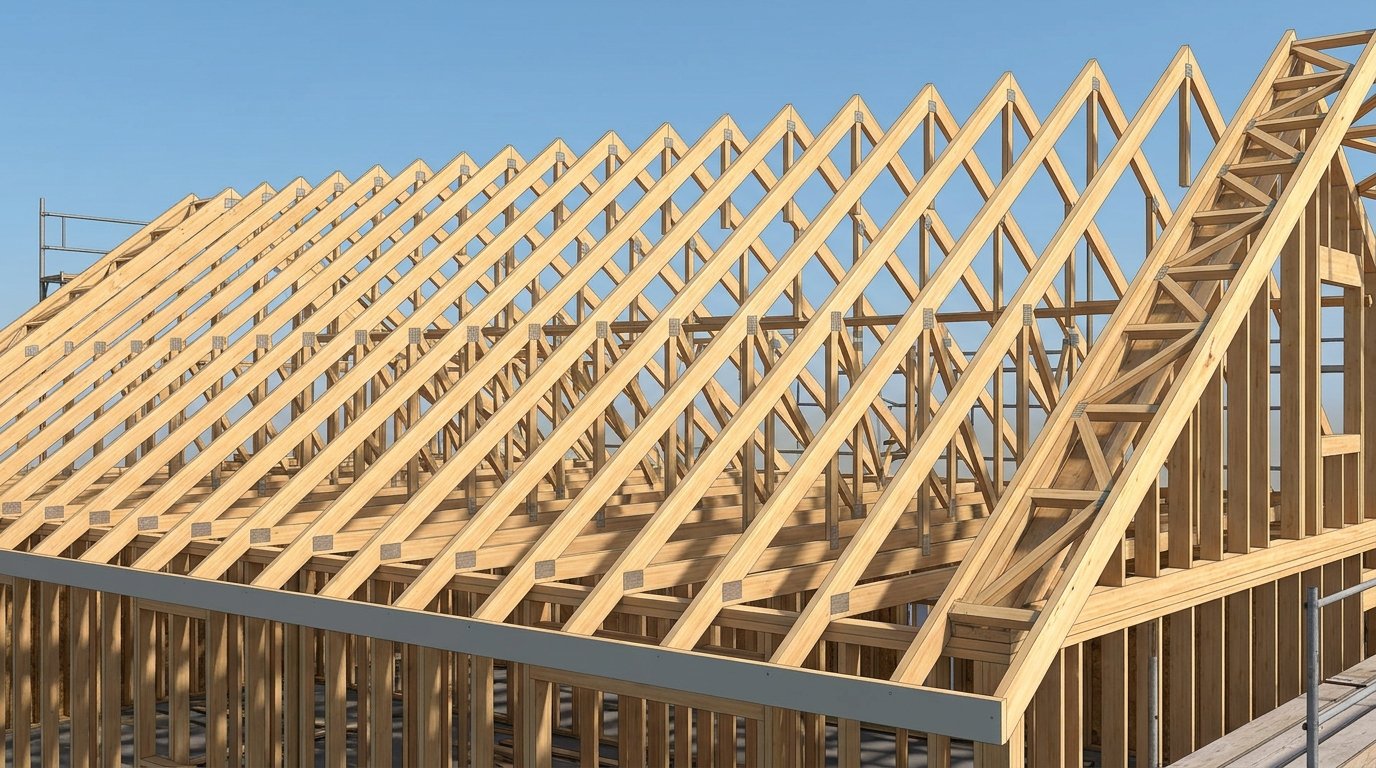

Roof decking is the structural base layer that sits directly on top of the roof rafters or trusses, forming the foundation for every other roofing material. Understanding what roof decking is and how it works helps homeowners make better decisions during roof repairs, replacements, or new construction.
Basic Definition of Roof Decking
Roof decking, sometimes called roof sheathing, is the solid layer of material fixed to the roof frame that supports underlayment, shingles, or other roofing systems. Without this layer, there would be no stable surface to attach any roofing material to.
Where Roof Decking Sits in the Roof System
Roof decking is installed directly on top of the rafters or trusses, forming the very first solid surface of the roof structure. Every other roofing layer, including underlayment and shingles, rests on top of this decking layer.
Why Roof Decking Is Considered the Foundation Layer
The strength and condition of the decking determine how well the entire roof can handle weather, weight, and foot traffic during installation or repairs. If the decking is weak or damaged, even high-quality shingles above it will not perform properly.
Common Materials Used for Roof Decking
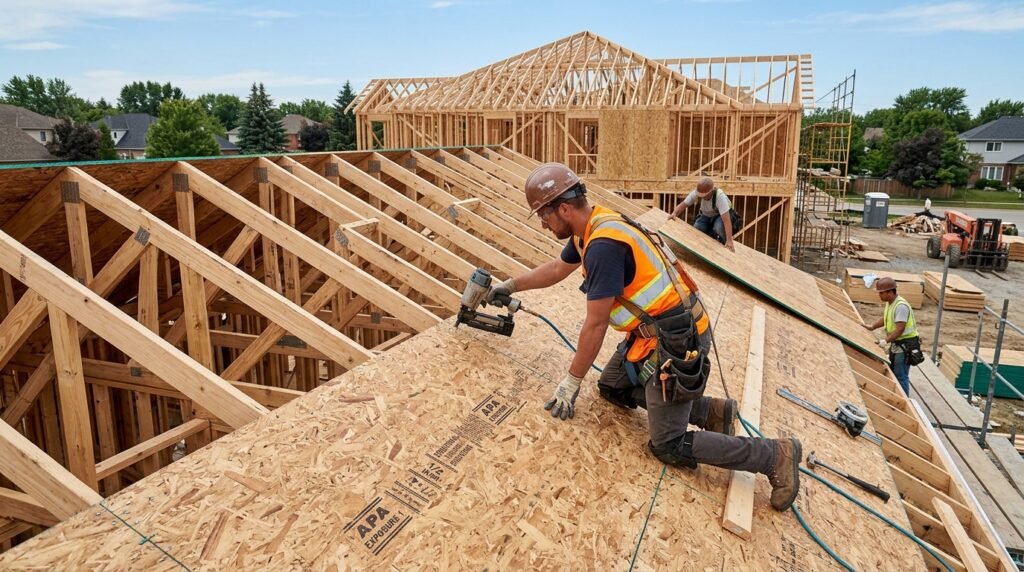
Roof decking can be made from several different materials, each offering different levels of strength, cost, and moisture resistance. The right material depends on the climate, budget, and type of roofing system being installed.
Plywood Roof Decking
Plywood is one of the most widely used decking materials because it offers a good balance of strength, weight, and affordability. It is made of thin wood layers glued together in alternating directions, which gives it resistance to warping.
Oriented Strand Board Decking
Oriented strand board, commonly called OSB, is made from compressed wood strands and is slightly cheaper than plywood. It provides similar strength to plywood but can absorb moisture more easily if not properly sealed or ventilated.
Tongue and Groove Wood Decking
Tongue and groove decking uses wooden planks that interlock along their edges, creating a very solid and often visually appealing surface. This type is common in homes with open or exposed ceiling designs where the decking is visible from inside.
Metal Roof Decking
Metal decking is typically used in commercial buildings and consists of corrugated steel panels that offer excellent strength and fire resistance. It is lightweight compared to its strength and works well for large spans without needing many support points.
Concrete Roof Decking
Concrete decking is used mainly in commercial or industrial buildings where maximum durability and fire resistance are required. It is heavier than wood or metal options, so the building structure must be designed to support the additional weight.
Comparison Table of Roof Decking Materials
The table below compares the most common roof decking materials based on strength, cost, and typical usage.
| Material | Typical Use | Cost Level | Moisture Resistance |
| Plywood | Residential roofs | Moderate | Good |
| OSB | Residential roofs | Low | Fair |
| Tongue and Groove | Exposed ceiling designs | High | Good |
| Metal | Commercial buildings | Moderate to High | Excellent |
| Concrete | Industrial buildings | High | Excellent |
Functions of Roof Decking
Roof decking performs several important jobs beyond simply holding up the shingles, and each function plays a role in the overall performance of the roof.
Providing Structural Support
Roof decking spreads the weight of roofing materials, snow, and foot traffic evenly across the rafters below. This even distribution prevents stress points that could otherwise weaken the roof frame over time.
Creating a Nailing Surface
Shingles, underlayment, and other roofing materials need a solid surface to be nailed or fastened into securely. Without decking, there would be no consistent base to hold these materials firmly in place during storms or high winds.
Acting as a Moisture Barrier Layer
While decking is not fully waterproof on its own, it works together with underlayment to slow down water intrusion into the home. A solid, well-sealed decking layer reduces the risk of leaks reaching the interior structure.
Signs of Roof Decking Damage
Knowing the warning signs of damaged decking helps homeowners catch problems early before they turn into costly structural repairs.
Sagging or Soft Spots on the Roof
Walking on the roof and feeling soft or spongy areas usually means the decking underneath has absorbed moisture and started to weaken. This is one of the clearest indicators that decking replacement is needed soon.
Visible Water Stains on the Ceiling
Water stains or discoloration on interior ceilings often point to a decking problem where water has been seeping through for some time. Ignoring these stains can lead to mold growth and further structural damage.
Sunlight Visible Through the Roof Boards
If sunlight can be seen through gaps in the attic roof boards, it usually means the decking has cracked, rotted, or shifted out of place. This issue should be inspected and repaired quickly to prevent water and pest entry.
How Roof Decking Is Installed
Installing roof decking correctly is just as important as choosing the right material, since poor installation can cause problems even with high-quality boards.
Measuring and Cutting the Panels
Decking panels are measured and cut to fit the roof frame with small gaps left between boards to allow for natural expansion. These gaps prevent buckling or warping when temperature and humidity levels change throughout the year.
Fastening the Decking to the Frame
Panels are nailed or screwed into the rafters at regular intervals following the manufacturer’s spacing guidelines for strength. Proper fastening spacing ensures the decking stays secure during high winds or heavy snow loads.
Sealing the Decking Before Roofing
Once the decking is installed, a layer of underlayment or moisture barrier is added before the final roofing material goes on top. This sealing step protects the decking from rain exposure during the construction or repair process.
Comparing This Guide to Other Roof Decking Resources
Many articles on roof decking only describe the material types without explaining how decking functions within the wider roofing system or what damage looks like in practice. This guide combines material comparison, function explanation, and damage signs together, giving readers a more complete and practical understanding than most surface-level guides available online.
Frequently Asked Questions
What is the best material for roof decking?
Plywood is generally considered the best all-around choice due to its strength, moisture resistance, and reasonable cost.
How thick should roof decking be?
Most residential roof decking ranges between three-eighths and three-quarter inch thickness, depending on rafter spacing and local building codes.
Can roof decking be repaired without replacing the whole roof?
Yes, damaged sections of decking can often be cut out and replaced individually without removing the entire roofing system.
How long does roof decking usually last?
Roof decking can last several decades if kept dry and properly ventilated, though moisture exposure can shorten its lifespan significantly.
Conclusion
Roof decking is the structural backbone of any roofing system, providing the support, nailing surface, and moisture protection needed for shingles and other materials above it. Choosing the right decking material and keeping it well maintained ensures the entire roof stays strong and reliable for many years.
Related articles
How to Clean and Store Kitchen Tools: The Complete Guide