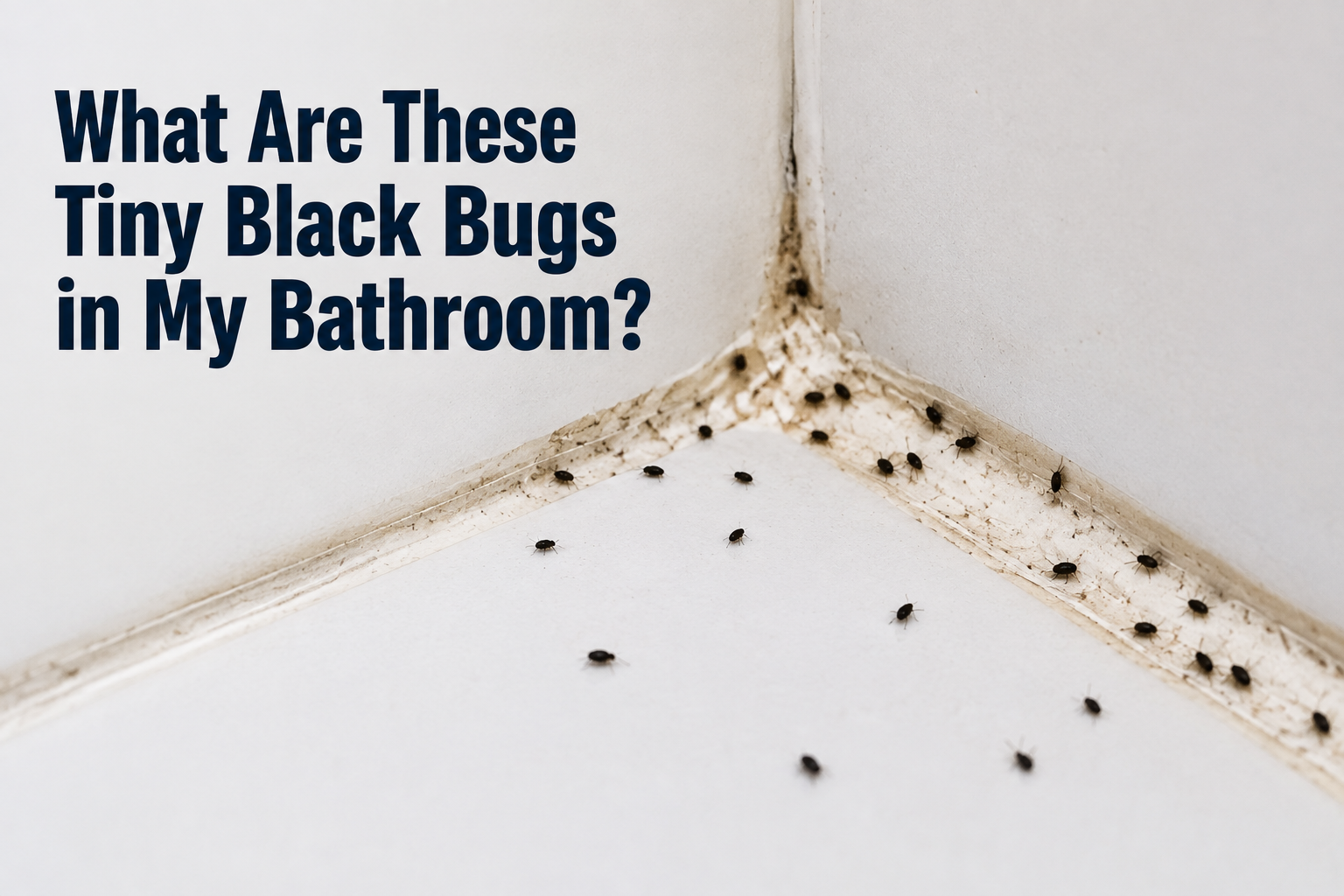

If you’ve walked into your bathroom and noticed small dark specks crawling near the sink, hovering around the shower drain, or resting on the tiles, you’ve probably asked yourself the same question thousands of homeowners search for every day: what are these tiny black bugs in my bathroom?
The good news is that these bugs are almost always common household pests that thrive in damp, humid spaces rather than something exotic or dangerous. Bathrooms create the perfect breeding ground because they combine moisture, warmth, and organic residue in drains, all of which certain insects find irresistible.
This guide walks you through everything you need to know. You’ll learn how to tell one bug from another, why they suddenly appear even in a clean home, whether they pose any real risk to you or your family, and exactly how to get rid of them step by step. By the end, you’ll not only be able to answer what are these tiny black bugs in my bathroom with confidence, but you’ll also know how to stop them from coming back.
Common Types of Tiny Black Bugs Found in Bathrooms
Not every tiny black bug in a bathroom is the same species, and identifying the correct one matters because each type requires a slightly different removal approach. Below are the most frequent culprits.
Drain Flies (Moth Flies)
Drain flies, sometimes called moth flies because of their fuzzy, moth-like wings, are one of the most common answers to what are these tiny black bugs in my bathroom. They are small, dark gray to black, and have a distinctly furry appearance when viewed up close. They tend to rest on walls near sinks, tubs, or shower drains and only fly in short, erratic bursts when disturbed. Their larvae live inside the gelatinous film that builds up along the inner walls of drain pipes, feeding on the organic sludge there.
Fungus Gnats
Fungus gnats are thinner and more mosquito-like than drain flies, with long legs and delicate wings. While they are more commonly associated with overwatered houseplants, they can also appear in bathrooms if there is a potted plant nearby or persistent dampness in the flooring or walls. They are weak fliers and are often seen drifting near light sources or windows.
Black Ants
Unlike drain flies and gnats, black ants do not hover or fly around erratically. Instead, they move in organized trails along baseboards, tile grout lines, or around windowsills, usually searching for moisture or food residue. If the tiny black bugs you’re seeing are walking in a line rather than clustering near a drain, ants are the more likely explanation.
Carpet Beetles
Carpet beetles are small, oval-shaped, and often mistaken for tiny black bugs when young or before their characteristic mottled pattern is visible. They are usually found near bath mats, towels, or fabric-based items rather than drains, since their larvae feed on natural fibers, hair, and lint.
Booklice (Psocids)
Booklice are nearly microscopic, soft-bodied insects that thrive in areas with high humidity and mold growth, including bathroom corners, wallpaper edges, and grout. They do not bite or fly, and while their name suggests otherwise, they are not true lice and pose no risk to humans or pets.
Springtails
Springtails are tiny, dark, wingless insects known for their ability to jump when disturbed, thanks to a spring-like appendage under their abdomen. They are strongly linked to excess moisture and are often found near leaky pipes, damp caulking, or condensation-prone corners of a bathroom.
Fruit Flies (Near Drains With Organic Buildup)
Although fruit flies are more typically a kitchen pest, they can appear in bathrooms if there is decaying organic matter in a drain or nearby trash bin. They are small, tan to black, with noticeably red eyes, and tend to hover in small groups rather than resting flat against a surface.
Quick Comparison Table
| Bug Type | Appearance | Behavior | Common Location |
|---|---|---|---|
| Drain Flies | Fuzzy, moth-like, dark gray/black | Rests on walls, short erratic flights | Near sink or shower drains |
| Fungus Gnats | Thin, mosquito-like | Weak, drifting flight | Near plants, damp flooring |
| Black Ants | Small, shiny, segmented body | Walks in trails | Baseboards, grout lines |
| Carpet Beetles | Oval, mottled or dark | Slow crawler | Near fabrics, bath mats |
| Booklice | Tiny, soft-bodied | Crawls, no flight | Damp corners, wallpaper |
| Springtails | Tiny, dark, wingless | Jumps when disturbed | Near leaks, damp caulking |
| Fruit Flies | Small, red-eyed | Hovers in small groups | Near organic drain buildup |
How to Identify Which Bug You Have
Correctly identifying the insect is the first real step toward solving the problem, since a treatment that works for drain flies won’t necessarily work for ants or carpet beetles.
Size and Shape Comparison
Most of these bathroom pests fall between one and five millimeters in length, which is part of why they’re so often lumped together under the same general question of what are these tiny black bugs in my bathroom. Look closely at the body shape: fuzzy and rounded points to drain flies, slender and elongated suggests fungus gnats or fruit flies, and a segmented, shiny body usually means ants.
Flying vs. Crawling Behavior
Flight pattern is one of the most reliable identifiers. Drain flies and fungus gnats fly in short, weak bursts. Fruit flies hover persistently around a specific spot. Ants and carpet beetles crawl exclusively, while springtails jump rather than fly when disturbed.
Where They Cluster
Location tells its own story. Bugs clustering directly on or around a drain opening are almost certainly drain flies or fruit flies. Insects near damp grout, caulking, or wallpaper are more likely booklice or springtails. A steady trail along a wall or floor edge points to ants.
Simple Identification Checklist
- Does it have visibly fuzzy wings? → Likely a drain fly
- Does it look thin and mosquito-like? → Likely a fungus gnat
- Is it walking in an organized line? → Likely an ant
- Does it jump when you get close? → Likely a springtail
- Is it near fabric or lint rather than water? → Likely a carpet beetle
- Does it have red eyes and hover? → Likely a fruit fly
Why These Bugs Appear in Bathrooms
Bathrooms check nearly every box that small insects look for: consistent moisture, organic residue, and limited airflow. Understanding the root cause is essential, because killing visible bugs without addressing the underlying condition only offers temporary relief.
Moisture and Humidity
Bathrooms are naturally humid due to showers and baths, and that consistent dampness creates an environment where insect eggs and larvae can develop without drying out. Even a small amount of standing moisture on tile grout or under a bath mat can be enough to sustain a population.
Organic Buildup in Drains
Over time, hair, soap scum, skin cells, and toothpaste residue accumulate inside pipes, forming a thin biofilm along the interior walls. This film is exactly what drain fly larvae feed on, which is why drains are the single most common source when people wonder what are these tiny black bugs in my bathroom.
Poor Ventilation
Bathrooms without an exhaust fan or window tend to trap humidity long after a shower ends, giving moisture more time to settle into corners, behind toilets, and along baseboards, which in turn supports gnats, springtails, and booklice.
Standing Water
Leaky faucets, dripping pipes under the sink, or water pooling around the base of the toilet all create the kind of persistent dampness that attracts and sustains insect activity.
Cracks, Pipes, and Hidden Entry Points
Small gaps around pipe fittings, cracked caulking, or unsealed baseboards give insects a physical pathway into the bathroom from wall voids or outside, particularly for ants searching for water sources.
Are They Harmful?
Health Risks
The vast majority of tiny black bugs found in bathrooms are not dangerous. Drain flies, fungus gnats, booklice, and springtails do not bite and are not known to transmit disease to humans. That said, large populations can occasionally trigger mild allergic reactions or respiratory irritation in sensitive individuals, and any pest that breeds in stagnant organic matter is a sign that the area could use better sanitation.
Structural or Material Risks
Carpet beetles are the exception worth watching closely, since their larvae can damage natural fiber items such as towels, bath mats, and stored clothing over time if left unchecked.
When to Worry vs. When It’s Harmless
A handful of drain flies near a shower drain is generally harmless and easily resolved with cleaning. However, a rapidly growing population, bugs spreading into other rooms, or visible damage to fabric items are signals that it’s time for a more thorough intervention.
Step-by-Step Guide to Get Rid of Them
Cleaning and Unclogging Drains
Since drain buildup is the most common cause, start by using a stiff drain brush to physically scrub the inside of the pipe as far as you can reach, then flush with hot water. A mixture of baking soda followed by vinegar, left to sit for fifteen minutes before rinsing, helps break down remaining organic film.
DIY Traps and Natural Remedies
A simple apple cider vinegar trap, made by covering a small bowl of vinegar with plastic wrap and poking a few holes in the top, is effective for capturing adult flies. Placing a strip of tape sticky-side down over a drain overnight can also confirm whether drain flies are breeding inside.
Store-Bought Treatments
Enzyme-based drain cleaners are generally more effective long-term than chemical drain openers, since they break down the organic film that larvae feed on rather than just clearing a clog. For ants, gel baits placed along their trail tend to work better than surface sprays because the ants carry the bait back to the colony.
Fixing Moisture and Ventilation Issues
Running an exhaust fan during and after showers, wiping down wet surfaces, and fixing any dripping fixtures will remove the environment these bugs depend on.
Sealing Entry Points
Caulking gaps around pipes, replacing cracked grout, and sealing baseboard edges closes off the routes insects use to enter from wall cavities or outside.
Prevention Tips for Long-Term Control
- Clean drains weekly with a brush and hot water, not just when clogged
- Keep bathroom surfaces dry, especially bath mats and shower corners
- Run the exhaust fan for at least twenty minutes after every shower
- Inspect under-sink cabinets monthly for hidden leaks
- Wash towels and bath mats regularly to prevent fiber buildup
- Repair cracked caulking and grout as soon as it appears
When to Call a Pest Control Professional
If you’ve cleaned drains, fixed moisture issues, and sealed entry points but still see bugs reappearing within days, or if the population seems to be growing rather than shrinking, it may indicate a breeding site inside the wall or under the floor that isn’t accessible through normal cleaning. A pest control professional can use targeted treatments and, if needed, inspect plumbing lines for hidden leaks that are sustaining the infestation.
Frequently Asked Questions
Are these bugs dangerous to pets? Most bathroom bugs like drain flies and gnats pose no direct threat to pets, though it’s still best to keep the area clean since curious pets may try to eat them.
Why do they appear at night? Many of these insects are drawn to light and moisture, and bathrooms often stay slightly warmer and more humid after evening showers, which increases activity at night.
Can they spread to other rooms? Yes, particularly fungus gnats and ants, which will follow moisture or food sources beyond the bathroom if the underlying issue isn’t addressed.
How long does it take to get rid of them? With consistent drain cleaning and moisture control, most infestations noticeably improve within one to two weeks, though full elimination can take a bit longer if larvae are still developing in the pipes.
Conclusion
The next time you find yourself asking what are these tiny black bugs in my bathroom, you now have a clear framework for identifying exactly what you’re dealing with and why it showed up in the first place. In most cases, the answer comes down to drain flies, fungus gnats, or ants drawn in by moisture and organic buildup rather than anything harmful. With regular drain cleaning, better ventilation, and prompt repairs to leaks or cracks, most bathrooms can stay bug-free for good.
Related Articles
How Deep Are Kitchen Counters? Standard Depths for Every Counter Type
How to Install a Curtain Rod? Complete Beginner’s Guide
What Cabinets Go Well With Kitchen Tile Floor: Complete Guide 2026
How Hard Is It to Install a Ceiling Fan? Full Difficulty Guide (2026)