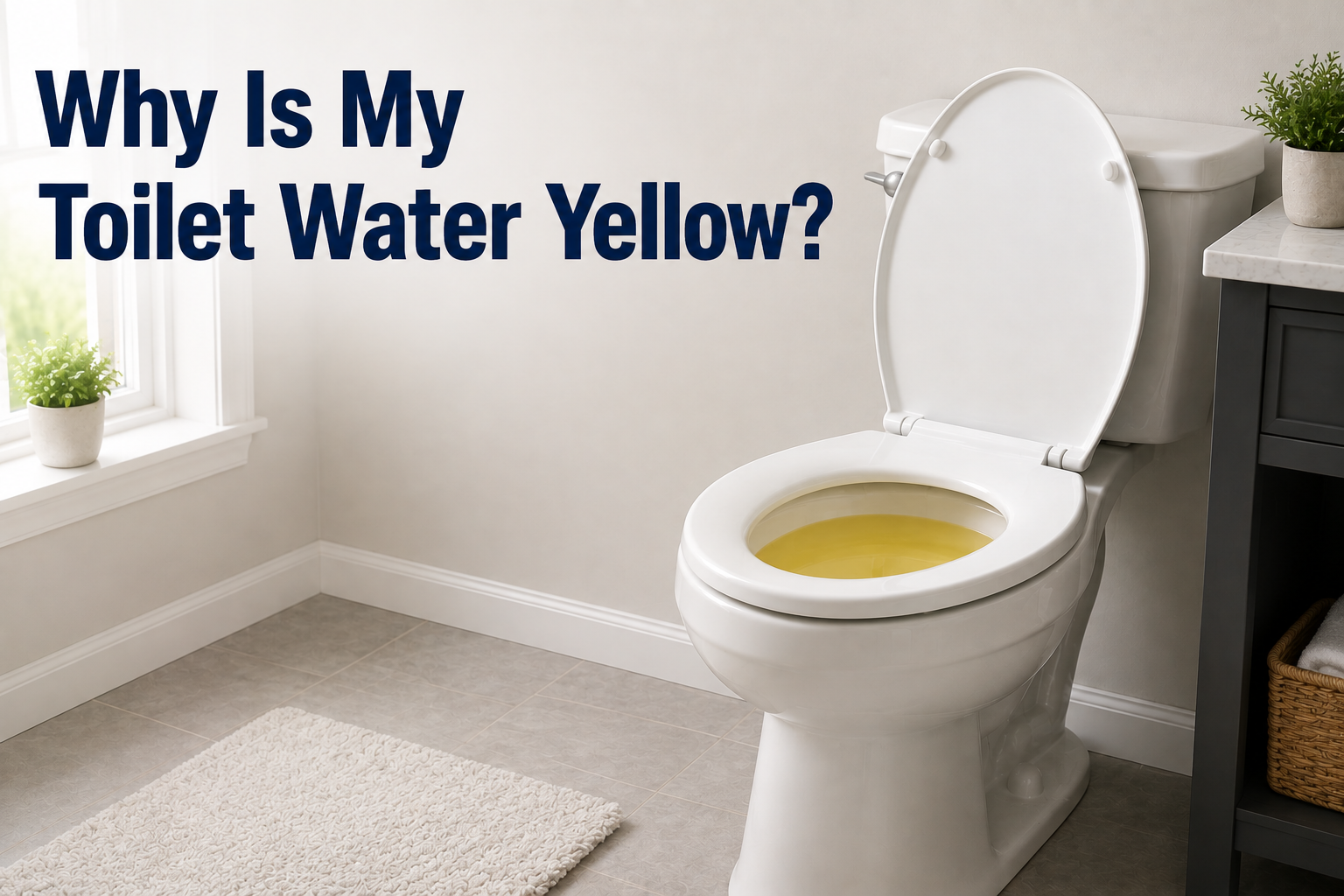

Yellow toilet water is usually caused by one of five things: leftover urine that wasn’t fully flushed, rusty pipes or tank parts, hard water with a high mineral or iron content, a leaking flapper valve that lets tank water seep into the bowl, or cleaning tablets sitting in the tank. Most cases are harmless and easy to fix at home within minutes. In rare situations, however, the yellow tint can point to a water supply issue that needs professional testing. This guide walks you through every possible cause, how to tell them apart, and the exact steps to get your toilet water clear again.
If you’ve noticed a faint yellow or golden tint in your toilet bowl and started wondering why is my toilet water yellow, you’re not alone — it’s one of the most common household plumbing questions. The good news is that in the vast majority of cases, the fix takes less than an hour and doesn’t require calling a professional. Below, we break the problem down step by step so you can diagnose your exact situation and resolve it with confidence.
Key Takeaways
- Yellow toilet water is most often caused by concentrated urine, rust, hard water, or a leaking flapper valve.
- A quick tank inspection can usually tell you the exact source within minutes.
- Most fixes — cleaning, descaling, or replacing a flapper — cost very little and take under an hour.
- Persistent yellow water that doesn’t clear after cleaning may signal a water supply problem worth testing.
- Ignoring the issue for too long can lead to staining, odor, or larger plumbing repairs later.
What Causes Yellow Toilet Water?
There isn’t a single reason your toilet water turns yellow — it usually comes down to what’s happening inside the tank, the pipes leading into your home, or simply how concentrated your urine is before flushing. Below, each cause is explained separately so you can match it to what you’re actually seeing in your bathroom.
Concentrated Urine or Dehydration
The most common and least concerning reason for yellow toilet water is simply urine that hasn’t been diluted by a full flush. When you’re dehydrated, your urine becomes darker and more concentrated, which can leave a yellow tint in the bowl even after flushing. This is especially noticeable first thing in the morning. If drinking more water throughout the day lightens the color, dehydration was likely the cause all along.
Rusty Pipes or Tank Components
Older homes often have galvanized steel or iron pipes that corrode over time. As rust builds up inside these pipes or on metal parts inside the tank, it can leach into the water and give it a yellow or orange tinge. This is more likely if you notice the same yellow color coming from other faucets in your home, not just the toilet. Rust-related discoloration tends to get worse gradually rather than appearing overnight.
Hard Water and High Mineral or Iron Content
Homes supplied by well water or water with naturally high iron and mineral content often develop yellow or brownish staining in the toilet bowl and tank. This isn’t caused by anything wrong with your plumbing — it’s a property of the water itself. Over time, mineral deposits can also build up on the tank walls and flush mechanism, making the yellow tint appear more frequently even after cleaning.
Leaking Flapper or Flush Valve
Inside every toilet tank sits a rubber flapper that controls water flow into the bowl. When this flapper deteriorates or doesn’t seal properly, tank water — which may already contain rust, mineral buildup, or cleaning chemicals — can slowly seep into the bowl between flushes. This creates a yellow tint that reappears even in a bowl that was just cleaned, and it’s one of the easiest causes to confirm and fix.
Toilet Bowl Cleaners or Tank Tablets
If you or a previous occupant used yellow or blue toilet tank tablets, dye residue can linger in the tank and bowl long after the tablet has dissolved. Some tablets also react with hard water minerals to produce a yellowish tint instead of the intended blue or green color. This cause is easy to rule out simply by checking whether a tablet is currently sitting in the tank.
Is Yellow Toilet Water Dangerous to Health?
In most cases, yellow toilet water is a cosmetic and plumbing issue rather than a health hazard, especially when it’s caused by urine, rust, or minerals. However, there are situations — particularly involving your water supply — where the discoloration is worth taking more seriously and testing before continuing to use the water for anything beyond flushing.
Urine-Related Causes: Normal vs Concerning
A faint yellow tint from concentrated urine is completely normal and not a cause for concern on its own. However, if your urine is consistently very dark yellow or amber even when you’re well-hydrated, it can sometimes indicate an underlying health issue such as dehydration, liver function changes, or certain medications affecting urine color. If this pattern continues alongside other symptoms like fatigue or pain, it’s worth mentioning to a doctor — separate from the plumbing fix.
Water Supply Contamination Risks
If the yellow tint appears in your toilet water even right after flushing with fresh water, and especially if it also shows up in your sinks or shower, this points to the water supply rather than the toilet itself. High iron content is generally not dangerous to touch but can affect taste and staining. In rarer cases, discoloration paired with an unusual odor could indicate bacterial growth or pipe corrosion that has crossed a safety threshold, which is when a certified water test becomes worthwhile.
How to Diagnose the Source?
Before reaching for cleaning supplies, take a few minutes to narrow down the actual cause — this saves time and prevents you from fixing the wrong problem. Start by checking whether the yellow tint disappears completely after a fresh flush; if it does, urine concentration is the likely cause.
Next, lift the tank lid and look directly inside for rust flakes, discoloration on the walls, or a cleaning tablet that might still be dissolving. Then run a sink or shower on the same water line briefly to see if the yellow color shows up there too, which would point to the water supply rather than the toilet alone. Finally, inspect the flapper valve at the bottom of the tank for cracks, warping, or a poor seal, since a faulty flapper is one of the most common hidden causes of recurring yellow water.
DIY Fix vs Professional Plumber Call
Not every yellow toilet water problem needs a plumber, but some do. The table below breaks down which situations you can typically handle yourself and which ones are worth professional attention.
| Situation | Recommended Approach | Estimated Effort |
| Occasional yellow tint from urine only | No fix needed — flush fully and stay hydrated | None |
| Tank tablet residue | Remove tablet, clean tank manually | 15–20 minutes |
| Mild rust or mineral staining | Descale with vinegar or a commercial cleaner | 30–45 minutes |
| Worn or leaking flapper valve | Replace flapper valve (inexpensive part) | 20–30 minutes |
| Yellow water from all faucets, not just toilet | Contact a plumber or water utility for testing | Professional visit |
| Persistent odor with discoloration | Get water tested before continuing use | Professional visit |
Step-by-Step Fixes
Once you’ve identified the likely cause, most fixes are straightforward and don’t require special tools. The three methods below cover the situations homeowners run into most often.
Cleaning or Descaling the Tank
Turn off the water supply valve behind the toilet, then flush to drain most of the tank. Pour in a mixture of white vinegar and water, or a commercial descaling cleaner, and let it sit for at least 30 minutes to break down rust and mineral deposits. Scrub the tank walls gently with a soft brush, then flush several times with the supply valve back on until the water runs clear.
Replacing the Flapper Valve
Shut off the water supply and drain the tank completely before starting. Detach the old flapper from its mounting pegs and disconnect the chain linking it to the flush handle, then attach the new flapper in the same position and reconnect the chain with a small amount of slack. Turn the water supply back on, let the tank refill, and flush a few times to confirm the seal is tight and no water is leaking into the bowl.
Treating Hard Water or Iron Content
For ongoing mineral or iron issues, a whole-home water softener or iron filter installed at the main line addresses the problem at its source rather than just in the toilet. If a full system isn’t practical right now, periodic descaling of the tank and bowl every few weeks will keep visible staining under control in the meantime. Testing your water hardness level first helps you choose the right filter capacity instead of guessing.
When to Call a Plumber or Test Your Water
If cleaning and flapper replacement don’t resolve the yellow tint, or if the discoloration appears across multiple faucets in your home, it’s time to bring in a professional.
A plumber can inspect your supply pipes for corrosion, while a certified water testing service can confirm whether iron, bacteria, or another contaminant is responsible. This step is especially important if the water also has an odd smell or taste, since that combination is less likely to be a simple plumbing fix.
Prevention Tips
Keeping toilet water clear going forward mostly comes down to a few consistent habits. Flush fully after each use rather than relying on partial flushes, and clean the tank every few months even if no staining is visible yet.
Replace the flapper valve proactively every few years, since rubber degrades over time regardless of visible leaks. If you’re on well water or know your area has hard water, consider a filtration system before staining becomes a recurring issue rather than treating it after the fact.
FAQs
Is yellow toilet water safe to flush normally? Yes, in almost all cases yellow toilet water is safe to flush and doesn’t pose a health risk on its own.
Why does my toilet water turn yellow again right after cleaning? This usually points to a leaking flapper valve letting tank water seep into the bowl between flushes.
Can hard water cause permanent yellow staining? Yes, prolonged mineral exposure can etch staining into the bowl surface if left untreated for a long time.
Should I worry if only my toilet water is yellow, not other faucets? Not usually — this points to something local to the toilet, like the tank or flapper, rather than the main supply.
Conclusion
Yellow toilet water almost always has a simple explanation, whether it’s concentrated urine, rust, hard water minerals, or a worn flapper valve. A quick inspection of the tank usually reveals the cause within minutes, and most fixes take under an hour with minimal cost. If the discoloration persists after cleaning or appears across multiple faucets, testing your water supply is the safest next step.
RELATED POST’S
What Is an Asbestos Stucco Ceiling? Learn the risks and stay safe.
How To Get Stains Off Marble: Complete Guide 2026
How Long Does a Home Inspection Take? Complete Time Guide (2026)