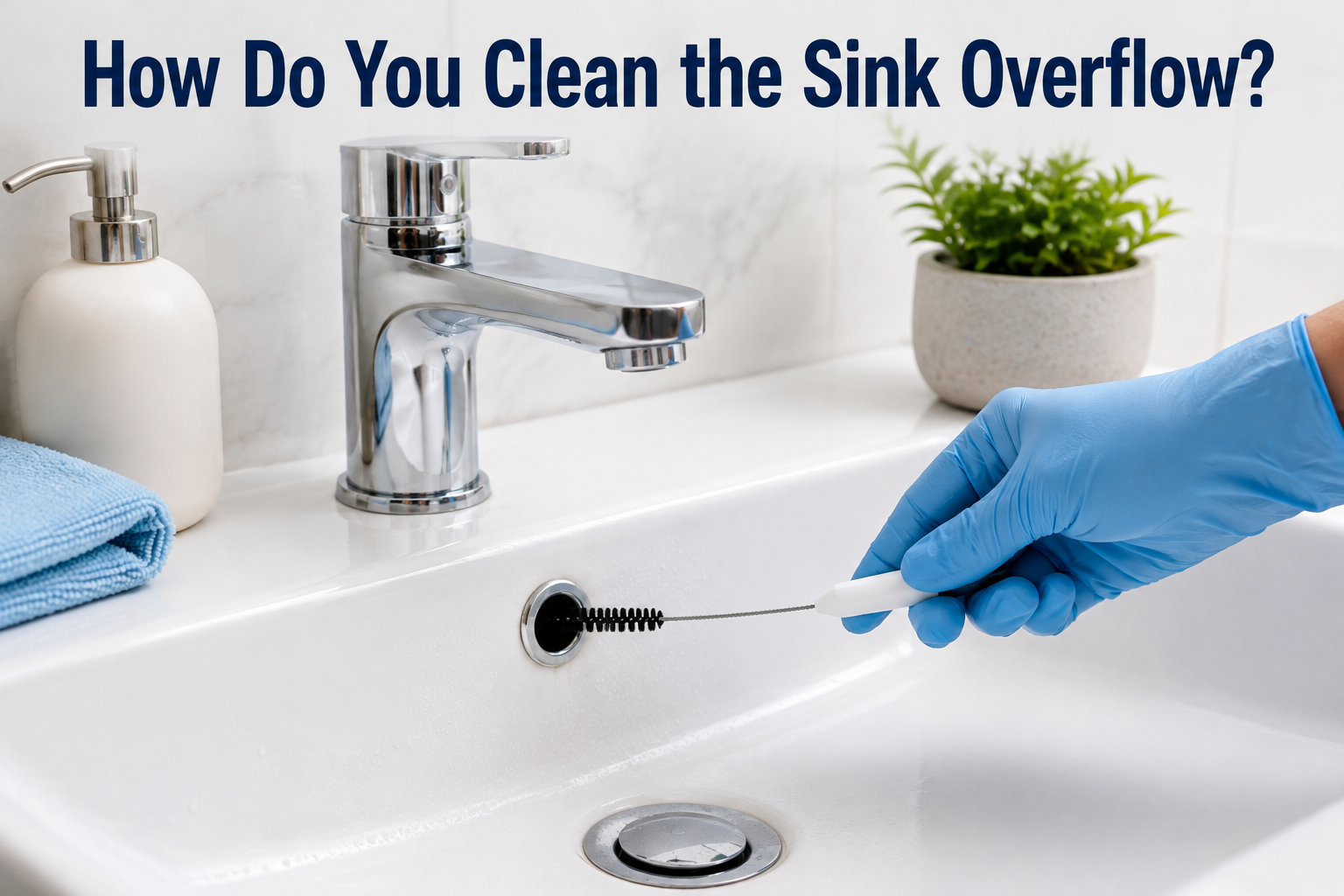

Many people ask how do you clean the sink overflow because this small hole near the top of the sink is often forgotten during regular cleaning. It collects soap residue, hair, and moisture over time, which leads to bad smells and bacteria buildup.
Cleaning it is simple once you understand where it connects and what tools work best. This guide walks you through the entire process in an easy, practical way so your sink stays fresh and hygienic without any guesswork.
Understanding the Sink Overflow System
Before cleaning, it helps to know how the overflow hole is connected internally, since this affects how you approach the cleaning process. The system is simple, but understanding it prevents wasted effort on the wrong areas.
How Does the Overflow Hole Work?
Water that rises too high in the basin flows into the overflow opening and travels through a hidden channel inside the sink’s body. This channel eventually reconnects with the main drainpipe below. Because this path is narrow and enclosed, debris tends to settle rather than flush out on its own.
Where It Connects to the Drain Pipe
The overflow channel usually joins the drain assembly just beneath the sink basin, often near the trap. This connection point is why flushing water through the overflow hole can also help clear minor buildup lower in the drain system. Knowing this connection helps you understand why cleaning solutions poured into the hole are effective.
Common Causes of Buildup
Soap scum, skin cells, toothpaste residue, and hard water minerals are the most frequent culprits inside the overflow channel. Hair strands can also get trapped near the entrance, slowing down water flow. Over time, these materials combine with moisture to form a sticky layer that hosts bacteria and mold.
Why Overflow Holes Get Smelly and Dirty?
The overflow hole develops odor problems mainly because it stays damp and dark, both ideal conditions for microbial growth. Recognizing why this happens makes it easier to target the root cause during cleaning rather than just masking the smell.
Trapped Moisture and Bacteria Growth
Because the channel rarely dries out completely, bacteria multiply steadily inside it, releasing the sour smell many people notice near their sink. This bacterial layer often goes unnoticed since it sits out of sight inside the hole. Regular flushing disrupts this cycle before it becomes severe.
Lack of Regular Flushing
Most cleaning routines focus on the visible basin and faucet, leaving the overflow hole untouched for months at a time. Without occasional flushing, debris settles permanently along the channel walls. This is one of the most common reasons the smell keeps returning even after the rest of the sink is cleaned.
Mold and Mildew Formation
Dark, moist, and rarely disturbed, the overflow channel offers ideal conditions for mold spores to settle and grow. Mildew often appears as a thin, slimy film that is difficult to see without a flashlight. Left untreated, this buildup can worsen and spread further into the drain system.
Tools and Materials Needed
You do not need any specialized equipment to clean a sink overflow hole, as most items are already found around the house. Gathering everything beforehand makes the process quicker and more effective.
Basic Household Items
Dish soap, baking soda, white vinegar, and diluted bleach form the core of an effective cleaning routine. These items break down grease, neutralize odors, and kill bacteria without damaging the sink material. Warm water is also essential, as it helps loosen buildup before scrubbing.
Cleaning Tools
A small bottle brush, a flexible pipe cleaner, and an old toothbrush allow you to reach inside the narrow overflow opening. A funnel can help direct liquid cleaners precisely into the hole without spilling onto the counter. These tools are inexpensive and reusable for future cleanings.
Optional Tools
A turkey baster or a large syringe gives you better control when flushing solutions directly into the overflow channel. A flexible cleaning brush designed for narrow pipes can reach deeper sections that a regular brush cannot. These optional tools are especially useful for sinks with stubborn, long-term buildup.
The table below summarizes the tools and their main purpose:
| Tool/Material | Purpose |
| Dish soap | Breaks down grease and everyday grime |
| Baking soda & vinegar | Fizzing action loosens buildup and neutralizes odor |
| Diluted bleach | Kills mold, mildew, and bacteria |
| Bottle brush/pipe cleaner | Manual scrubbing inside the narrow hole |
| Turkey baster/syringe | Precise flushing of cleaning solution |
| Funnel | Directs liquid into the hole without spilling |
Step-by-Step Cleaning Methods
There are several effective ways to clean the overflow hole, and combining more than one method often produces the best results. Choose the method that matches how dirty or smelly your sink has become.
Method 1: Soap and Warm Water Flush
Mix a few drops of dish soap into a cup of warm water and pour it slowly into the overflow hole using a funnel. Let it sit for a few minutes so the soap can loosen surface grime. Follow with a rinse of plain hot water to flush the loosened debris through the channel.
Method 2: Baking Soda and Vinegar Fizz Method
Pour a few tablespoons of baking soda into the overflow hole, followed slowly by an equal amount of white vinegar. The fizzing reaction helps break down grease and organic buildup clinging to the channel walls. Let it sit for ten to fifteen minutes before flushing with hot water.
Method 3: Diluted Bleach Solution
Mix one part bleach with several parts water and pour it carefully into the overflow hole to target mold and mildew. Allow the solution to sit for a few minutes, since bleach needs contact time to kill bacteria effectively. Rinse thoroughly afterward, and always ensure the room is ventilated while using bleach.
Method 4: Manual Scrubbing with a Bottle Brush
Dip a small bottle brush or pipe cleaner into soapy water and gently insert it into the overflow hole, moving it in circular motions. This physically removes buildup that liquid cleaners alone cannot dislodge. Rinse the brush frequently to avoid pushing debris back into the channel.
Method 5: Targeted Flushing with a Turkey Baster
Fill a turkey baster or syringe with your chosen cleaning solution and insert the tip directly into the overflow opening. Squeeze slowly to push the liquid deeper into the channel than pouring alone would allow. This method is particularly useful for reaching buildup further down near the drain connection.
Deep Cleaning Techniques for Stubborn Buildup
When regular methods are not enough, a more thorough approach is needed to fully clear the channel. These techniques take a bit more time but handle buildup that has accumulated over months.
Repeated Flushing Technique
Instead of a single rinse, flush the overflow hole with hot water three or four times in a row, waiting a minute between each pour. This repeated action gradually loosens layers of debris that a single flush would miss. It is a simple but effective technique for moderate buildup.
Combining Methods for Tough Grime
For sinks that have not been cleaned in a long time, use the baking soda and vinegar method first, followed by a diluted bleach rinse afterward. This combination tackles both organic buildup and bacterial growth in one session. Always rinse thoroughly between different cleaning solutions.
When to Use Enzyme-Based Cleaners
Enzyme cleaners work well for organic buildup like hair and skin cells, breaking them down naturally over several hours. Pour the enzyme solution into the overflow hole before bed and let it work overnight for the best results. This method is gentler than bleach and safe for regular use.
Preventive Maintenance Tips
Preventing buildup is far easier than removing it once it has settled, so a light maintenance routine goes a long way. A few small habits keep the overflow hole clean without much effort.
Weekly or Biweekly Flushing Routine
Pouring a cup of warm soapy water into the overflow hole every week prevents debris from settling long enough to cause odor. This small habit takes less than a minute but significantly reduces the need for deep cleaning later. Consistency matters more than intensity here.
Keeping the Sink Area Dry
Wiping down the area around the overflow hole after use reduces the moisture that mold and bacteria depend on. A dry environment slows down microbial growth considerably. This simple step complements regular flushing for long-term freshness.
Avoiding Grease and Debris Near the Hole
Try not to let grease, food particles, or heavy soap residue collect near the overflow opening while cleaning the sink. These substances can seep into the channel and harden over time, making future cleaning more difficult. Rinsing the area after each cleaning session helps prevent this buildup.
Common Mistakes to Avoid
Even well-intentioned cleaning routines can go wrong if certain precautions are ignored. Being aware of these mistakes helps you clean safely and effectively.
Using Too Much Bleach
Excessive bleach can damage certain sink materials, especially stainless steel or older fixtures, if left in contact for too long. It can also create strong fumes if not properly diluted or ventilated. Stick to the recommended diluted ratio and rinse promptly.
Ignoring the Overflow Hole During Regular Cleaning
Many people clean the basin and faucet thoroughly but skip the overflow hole entirely out of habit. This gap allows buildup to accumulate for months, leading to stronger odors and more difficult cleaning later. Including it in your regular routine prevents this issue entirely.
Using Harsh Tools That Can Scratch or Damage the Hole
Metal tools or overly stiff brushes can scratch the interior of the overflow channel, creating rough surfaces where debris sticks more easily. Soft-bristled brushes and flexible pipe cleaners are safer choices. Gentle, consistent cleaning works better than aggressive scrubbing.
When to Call a Professional
Most overflow hole cleaning can be done at home, but certain signs indicate it is time to bring in a plumber. Recognizing these signs early prevents more serious drainage problems.
Persistent Bad Odor Despite Cleaning
If the smell returns shortly after cleaning even when you have tried multiple methods, there may be a deeper blockage beyond what home tools can reach. A professional has equipment to inspect further into the pipe system. This is worth addressing before the odor worsens.
Signs of Clogging Beyond the Overflow Hole
Slow drainage throughout the entire sink, not just near the overflow opening, often points to a clog deeper in the plumbing. Home cleaning methods may only address the surface issue in this case. A plumber can diagnose and clear the full blockage safely.
Suspected Pipe Damage or Mold Infestation
Cracked pipes or extensive mold growth that keeps returning despite regular cleaning may require professional-grade treatment or repair. Attempting to fix structural issues without proper tools can sometimes make the problem worse. It is safer to call a professional once these signs appear.
Frequently Asked Questions
How often should I clean the sink overflow? A weekly or biweekly flush with warm soapy water is usually enough to prevent buildup and odor from developing.
Can I use bleach every time? Bleach is effective but should be used occasionally rather than every cleaning session, since frequent use can affect certain sink materials.
Why does my sink overflow smell even after cleaning? This usually means buildup has settled deeper in the channel, requiring repeated flushing or a combination of cleaning methods.
Is it normal for water to sit in the overflow hole? A small amount of residual water is normal, but if it does not drain at all, the channel may be blocked and needs attention.
Conclusion
Understanding how do you clean the sink overflow makes it easy to keep this hidden part of your sink fresh and odor-free. With simple household items, a bit of regular flushing, and occasional deep cleaning, buildup and smells can be avoided entirely. Following the preventive habits shared in this guide ensures your sink stays hygienic without requiring frequent professional help.
Related Articles
What Are Styrofoam Ceiling Tiles? Discover their benefits & tips.
How Deep Are Upper Kitchen Cabinets: Complete Guide 2026
How to Clean Bathroom Drain: A Complete Guide 2026
Average Door Thickness: A Complete Guide to Standard Sizes and Measuring Tips
What Are Styrofoam Ceiling Tiles? Discover their benefits & tips.