

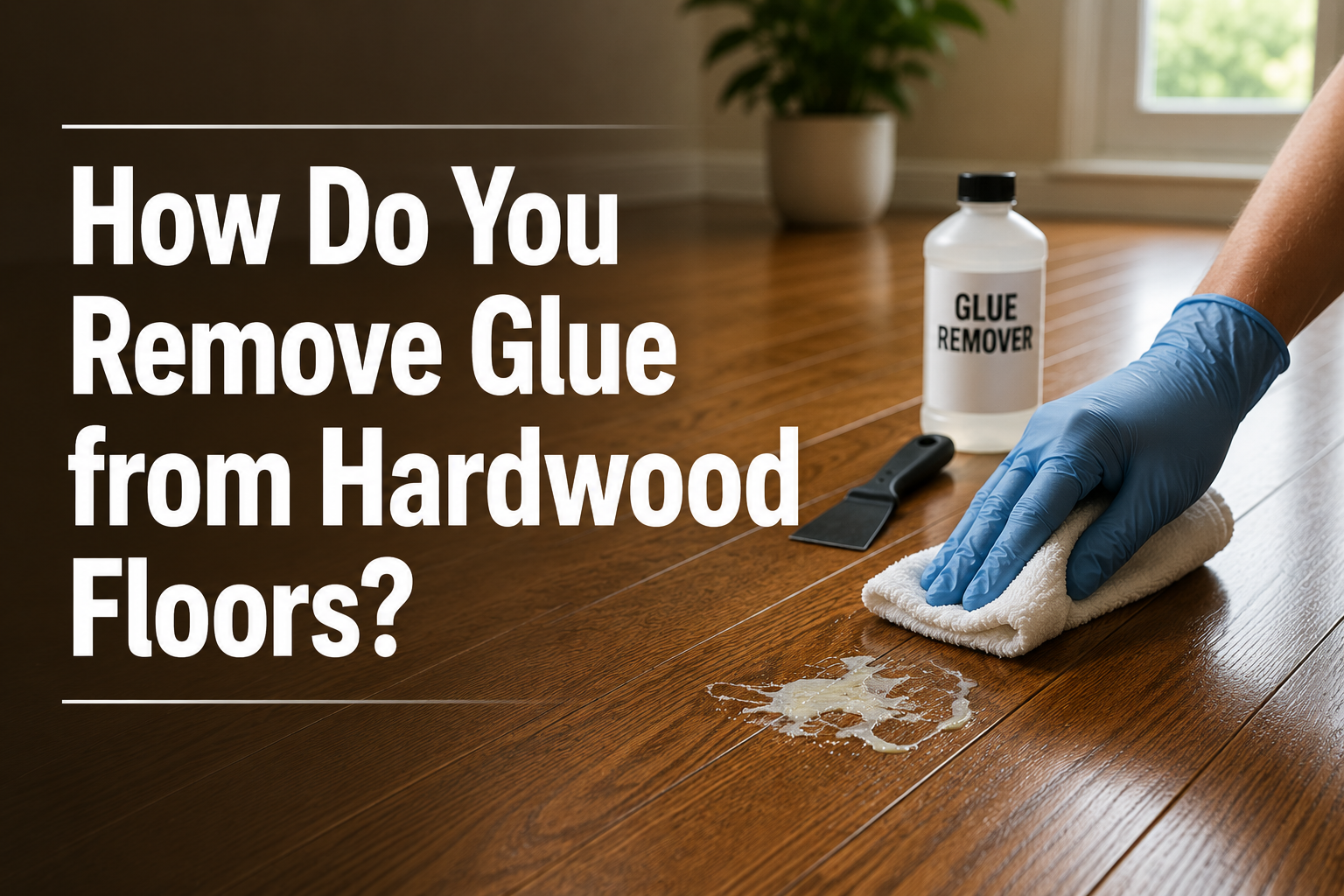

So you have a glob of dried glue staring up at you from your hardwood floor, and you’re wondering how do you remove glue from hardwood floors without scratching the wood or ruining the finish.
The good news: in almost every case, you can lift glue off hardwood safely using tools you already have at home. The key is matching your method to the type of glue and the type of finish on your floor — get that wrong, and you risk trading a glue spot for a dull patch or a scratch mark instead.
This guide walks through exactly how to identify what you’re dealing with, which removal method to use for each situation, and how to protect your floor’s finish along the way.
What You Need to Know Before You Start
Before reaching for a scraper or a bottle of solvent, take sixty seconds to answer two questions. They determine which method below is safe for your floor.
Identify the Type of Glue
Different adhesives respond to different removal techniques, and using the wrong one can waste time or make the spot worse.
- Super glue (cyanoacrylate): Dries rock-hard and glossy within seconds; brittle once cured.
- Wood glue (PVA/carpenter’s glue): Dries into a semi-flexible, tan or clear film; softens with water.
- Gorilla Glue or polyurethane glue: Expands as it cures, leaving a foamy, rigid residue that’s notoriously stubborn.
- Hot glue: Cools into a rubbery, waxy blob that softens easily with heat.
- Old flooring or carpet adhesive: Often a thick, tar-like or rubbery residue left behind after removing carpet, tile, or vinyl.
Check Your Floor’s Finish First
Hardwood floors are typically sealed with either an oil-based polyurethane, a water-based polyurethane, wax, or left unfinished. Solvents like acetone and mineral spirits can dull, cloud, or strip certain finishes — especially wax and some water-based coatings. Always test any product on a hidden spot, such as inside a closet or under a rug, and wait a few minutes to check for discoloration before treating the visible glue spot.
Tools and Supplies You’ll Need
Gather these before you start so you’re not searching mid-project:
- Plastic putty knife or old credit card (never metal — it scratches wood)
- Microfiber cloths
- Warm water and mild dish soap
- White vinegar
- Rubbing alcohol or acetone-based nail polish remover
- A hair dryer or iron with a cloth barrier
- Ice cubes in a sealed bag
- A commercial adhesive remover (such as Goo Gone) as a backup
- Fine-grit sandpaper (220-grit or higher) for stubborn spots
- Floor polish or wax matching your finish, for touch-ups afterward
How to Remove Glue From Hardwood Floors: Step-by-Step Methods
Start with the gentlest method that fits your glue type, and only move to stronger solvents if needed.
Method 1: Warm Soapy Water (Best for Fresh or Water-Based Glue)
This is the safest starting point for any hardwood floor and works well on fresh wood glue or hot glue residue.
- Mix a few drops of dish soap into a bowl of warm water.
- Dampen a microfiber cloth and lay it over the glue for 3–5 minutes to soften it.
- Wipe in the direction of the wood grain.
- If residue remains, gently scrape with a plastic putty knife at a low angle.
- Dry the area immediately with a clean towel — standing water damages hardwood.
Method 2: The Ice Cube Trick (Best for Hardened Glue)
Cold makes glue brittle so it lifts off in flakes rather than smearing.
- Place a few ice cubes in a sealed sandwich bag to prevent water from pooling on the floor.
- Hold the bag against the glue for 1–2 minutes until it hardens and turns brittle.
- Use a plastic scraper to gently chip the glue away at a shallow angle.
- Wipe the area dry right after.
Method 3: Heat (Hair Dryer or Iron)
Heat softens glue so it can be wiped or scraped away cleanly — particularly effective on hot glue and softened wood glue.
- Set a hair dryer to low or medium heat and hold it 4–6 inches from the glue, moving constantly to avoid overheating one spot (excess heat can bubble the finish).
- Once the glue softens, wipe it away with a cloth.
- For stubborn spots, place a thin cloth over the glue and press a warm (not hot) iron on top for a few seconds, then lift and wipe.
Method 4: Natural Solvents — Vinegar and Coconut Oil
For a gentler chemical option that’s less likely to affect most finishes, try:
- Soak a cloth in white vinegar and lay it over the glue for 5–10 minutes.
- Wipe and gently scrape with a plastic tool.
- If a dry residue remains, rub in a small amount of coconut or olive oil, let it sit for a few minutes, then wipe clean.
Method 5: Rubbing Alcohol or Acetone (Use With Caution)
Reserve this for cured super glue or Gorilla Glue that won’t budge with gentler methods, and only after a hidden-spot test.
- Dampen a cloth with rubbing alcohol or acetone-based nail polish remover — never pour it directly on the floor.
- Press the cloth onto the glue for 1–2 minutes.
- Gently rub in small circles, adding more solvent as needed.
- Wipe the area with a clean, water-dampened cloth immediately afterward to remove any solvent residue, then dry.
Caution: Acetone can strip or cloud wax finishes and some water-based polyurethanes. If your spot test shows any dulling, stop and switch to Method 6 instead.
Method 6: Commercial Adhesive Removers
Products like Goo Gone or Goof Off are formulated to break down sticky residue without the harshness of pure acetone, though they should still be spot-tested first.
- Apply a small amount to the glue and let it sit for the time listed on the label (usually 3–5 minutes).
- Wipe away with a cloth, adding light pressure with a plastic scraper if needed.
- Follow with a soap-and-water wipe-down to remove any oily residue, which can otherwise leave the floor slippery.
How to Remove Specific Types of Glue From Hardwood Floors
Super Glue (Cyanoacrylate)
Because super glue dries so hard and fast, start with the ice cube method to make it brittle, then scrape gently. If residue remains, finish with acetone-based nail polish remover (Method 5), always testing first.
Wood Glue (PVA)
Wood glue is water-soluble even after curing, so warm soapy water (Method 1) is usually enough. For dried spots, let the damp cloth sit a bit longer before scraping.
Gorilla Glue or Polyurethane Glue
This is the toughest of the bunch since it expands and hardens like foam. Freeze it with ice first to make it brittle, then carefully shave it down with a plastic scraper in thin layers rather than trying to remove it all at once. Avoid excessive scraping in one spot, which can gouge the finish.
Old Carpet or Flooring Adhesive
For adhesive left behind after pulling up carpet or vinyl, warm water often isn’t enough. Mineral spirits or a citrus-based commercial remover, applied per Method 6, typically does the job. If the residue covers a large area of the floor, refinishing may be more practical than spot removal (see below).
What NOT to Do When Removing Glue From Wood Floors
- Don’t use metal scrapers, razor blades, or knives — they will scratch or gouge the wood, even through the finish.
- Don’t soak the floor — standing water can seep into seams and cause warping or staining.
- Don’t skip the spot test — solvents that are safe on one finish can cloud or strip another.
- Don’t sand aggressively as a first step — sanding removes finish along with the glue and should be a last resort, done lightly and only on the affected spot.
- Don’t use dry ice indoors without ventilation and protective gear — it poses a carbon dioxide inhalation risk in enclosed spaces; ordinary ice cubes are safer and work well for most household glue spots.
How to Restore the Finish After Glue Removal
Removing glue — especially with solvents or light sanding — can leave a slightly dull or matte patch compared to the surrounding floor. Once the area is completely clean and dry:
- Buff the spot lightly with a soft cloth to blend the sheen.
- Apply a small amount of floor polish or wax that matches your existing finish (oil-based, water-based, or wax) using a soft applicator.
- Let it cure fully before walking on it or replacing furniture, following the product’s dry-time instructions.
If the spot still looks noticeably different after polishing, it may need a localized touch-up with matching finish from a flooring supplier.
When to Call a Flooring Professional
Reach out to a flooring specialist if:
- Glue or adhesive residue covers a large area, such as an entire room after carpet removal
- The glue has soaked into unfinished or raw wood
- Scraping has left visible gouges or the finish has become patchy across a wide area
- You’re unsure whether your floor can handle sanding without going through to bare wood
A professional can advise whether a spot refinish or a full sand-and-refinish is the better long-term fix.
How to Prevent Glue Stains on Hardwood Floors in the Future
- Lay down a drop cloth or wax paper before any craft, repair, or DIY project involving glue.
- Choose rug pads and mats labeled safe for hardwood instead of adhesive-backed or rubber-backed options that can leave residue over time.
- Wipe up any glue spill immediately, while it’s still wet — it takes seconds compared to the effort of removing it once cured.
- Keep a soft cloth and warm water nearby whenever you’re working with adhesives near flooring.
Frequently Asked Questions
Does WD-40 remove glue from hardwood floors? Yes, WD-40 can help loosen some types of glue, particularly sticker or tape residue, but it should be tested on a hidden area first since its solvents can affect certain finishes. Always follow up with a soap-and-water wipe to remove any oily film.
Will acetone damage a hardwood floor’s finish? It can, especially on wax finishes and some water-based polyurethanes. Oil-based polyurethane tends to hold up better, but a spot test is essential before applying acetone anywhere visible.
Can I use a razor blade to scrape glue off hardwood floors? It’s not recommended. Metal blades can scratch or gouge the wood and finish. A plastic putty knife or old gift card is a much safer choice for scraping.
How do you get dried super glue off a hardwood floor? Soften it first with an ice pack to make it brittle, gently scrape with a plastic tool, then use an acetone-based nail polish remover on any remaining residue — after testing it on a hidden spot.
Is vinegar safe for hardwood floors? Used sparingly and wiped up promptly, white vinegar is generally safe for sealed hardwood and is effective at softening glue. Avoid soaking the floor, and always dry the area afterward.
Will the glue spot always leave a mark, even after removal? Not usually, if you act carefully and match your method to the glue and finish type. Any dulling from cleaning or light scraping can typically be blended back in with a matching floor polish.
Conclusion
Removing glue from hardwood floors comes down to two things: correctly identifying what type of glue you’re dealing with, and choosing a method that’s gentle enough not to damage your floor’s finish. Start with the mildest option — warm soapy water or ice — and only move up to solvents or light sanding if needed, always testing on a hidden spot first.
Avoid metal tools, standing water, and aggressive sanding, and finish by polishing the area so it blends seamlessly with the rest of the floor. With the right approach, you can get your hardwood looking spotless again without any lasting damage. If you’re dealing with a large glue-covered area or you’re unsure your floor can handle DIY treatment, don’t hesitate to consult a local flooring professional before you start scraping.
Related Articles
How to Remove Tile from Bathroom Wall: Step-by-Step Guide
Half Round Gutter Installation: Complete Guide
How to Attach Crown Molding to Cabinets: Complete Guide 2026