

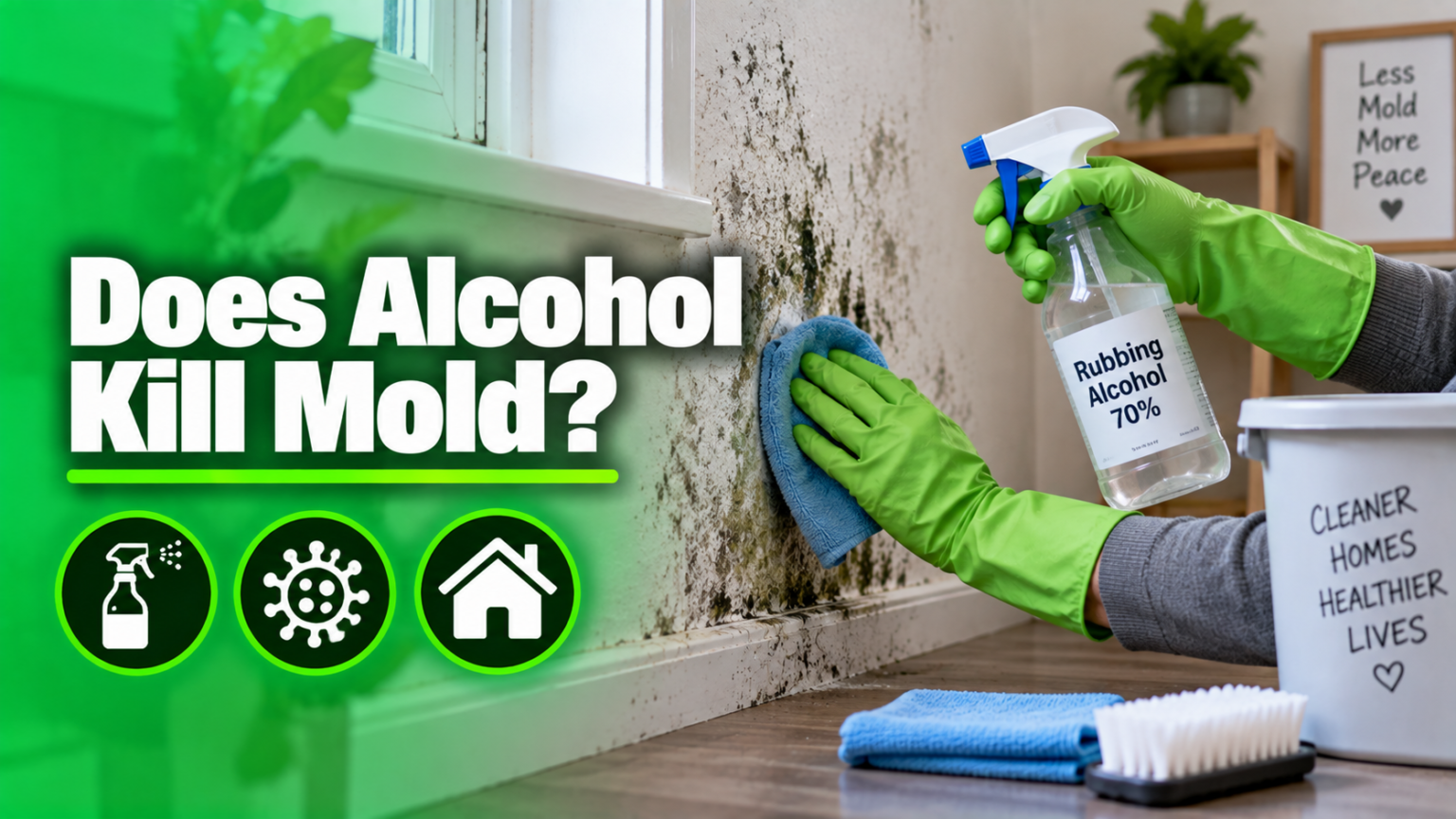

If you’ve spotted a patch of dark spots on your bathroom tiles or a musty smell creeping out of your closet, you’ve probably already searched online for a quick fix. One of the most common questions people ask is: does alcohol kill mold? The short answer is yes, alcohol can kill mold, but the full answer is a little more detailed than that.
Not every surface reacts the same way, and not every type of alcohol works equally well. In this guide, we’ll walk through exactly how alcohol interacts with mold, which concentration works best, how to use it safely, and when you should stop trying DIY methods and call in a professional.
What Is Mold and Why Does It Grow?
Mold is a type of fungus that thrives in damp, humid, and poorly ventilated spaces. It reproduces through tiny spores that float through the air and settle on surfaces, where they multiply if the conditions are right. Mold isn’t just an appearance problem; it can also affect indoor air quality and trigger allergies or respiratory irritation in sensitive individuals.
Common Causes of Mold Growth
Mold typically appears when there is a combination of moisture, warmth, and organic material to feed on. Some of the most frequent triggers include leaking pipes, poor bathroom ventilation, condensation on windows, water damage from roof leaks, and high indoor humidity levels, especially during rainy or humid seasons.
Common Areas Where Mold Appears
Mold tends to show up in places where moisture lingers longest. Bathrooms, kitchens, basements, window sills, and areas around air conditioning units are classic hotspots. Fabric-covered furniture, mattresses, and even books stored in damp rooms can also develop mold over time.
Does Alcohol Kill Mold? (Direct Answer)
Yes, alcohol does kill mold, particularly on hard, non-porous surfaces. Alcohol works by breaking down the cell membranes of mold organisms, which disrupts their structure and causes them to die. This makes it a genuinely useful tool for spot-treating small mold patches on things like glass, countertops, and sealed tile.
How Alcohol Works Against Mold
When alcohol comes into contact with mold, it dehydrates the fungal cells and denatures the proteins that keep the organism functioning. This process happens fairly quickly, often within a few minutes of contact, which is why alcohol is popular for quick cleanups.
Effectiveness on Spores vs. Roots
While alcohol is effective at killing visible mold growth and surface-level spores, it doesn’t always reach the roots, known as hyphae, when mold has grown into a porous material. This distinction matters a lot, because killing the surface mold without addressing the roots often means the mold will simply grow back.
Types of Alcohol Used for Mold Removal
Not all alcohol is created equal when it comes to mold removal. Here’s a quick breakdown of the most commonly used types.
Isopropyl Alcohol
Isopropyl alcohol, often labeled as rubbing alcohol, is the most widely recommended option for killing mold. It evaporates quickly and leaves behind minimal residue.
Rubbing Alcohol
Rubbing alcohol is essentially isopropyl alcohol mixed with water, usually sold at drugstores in concentrations like 70% or 91%. It’s affordable, accessible, and effective for household mold spots.
Ethanol
Ethanol, the type of alcohol found in some cleaning products and hand sanitizers, also has antifungal properties, though it’s less commonly used specifically for mold removal at home.
Denatured Alcohol
Denatured alcohol is ethanol that has additives to make it unsuitable for consumption. It’s sometimes used in industrial cleaning but is less ideal for household mold removal due to the added chemicals.
Best Alcohol Concentration to Kill Mold
Concentration plays a bigger role in effectiveness than most people expect.
Why 70% Isopropyl Alcohol Works Best
Interestingly, 70% isopropyl alcohol is generally considered more effective at killing mold than higher concentrations like 91% or 99%. This is because the water content in the 70% solution slows evaporation just enough to give the alcohol time to penetrate and act on the mold before drying up.
Diluted vs. Undiluted Alcohol Comparison
| Concentration | Effectiveness on Mold | Evaporation Speed | Best Use Case |
|---|---|---|---|
| 99% Isopropyl | Moderate | Very fast | Electronics, quick disinfecting |
| 91% Isopropyl | Good | Fast | General surface cleaning |
| 70% Isopropyl | Best | Moderate | Mold removal on hard surfaces |
| Ethanol (denatured) | Moderate | Fast | Industrial or heavy-duty cleaning |
Surfaces Where Alcohol Works Best
Where you apply alcohol matters just as much as which alcohol you choose.
Non-Porous Surfaces (Glass, Tile, Plastic, Metal)
Alcohol performs best on non-porous surfaces because there’s nowhere for mold to hide beneath the surface. Glass shower doors, ceramic tile, plastic storage bins, and metal fixtures are ideal candidates for alcohol-based mold treatment.
Semi-Porous Surfaces
Surfaces like sealed wood, painted walls, or laminate countertops fall into a middle category. Alcohol can help here, but it may not fully eliminate mold that has started to seep into tiny cracks or seams.
Why Alcohol Fails on Porous Materials (Wood, Drywall, Fabric)
On porous materials such as unsealed wood, drywall, and fabric, mold roots can grow deep beneath the visible surface. Alcohol only treats what it touches, so if the roots are embedded further in, the mold is likely to return even after the surface looks clean.
Step-by-Step Guide: How to Kill Mold with Alcohol
Here’s a simple process to follow if you’re treating a small mold patch at home.
Materials Needed
- 70% isopropyl alcohol
- Spray bottle
- Clean cloth or sponge
- Rubber gloves
- Face mask
- Scrub brush (for stubborn spots)
Step 1 – Safety Precautions
Before starting, put on gloves and a mask to avoid direct contact with mold spores, and open windows or turn on a fan to keep the area ventilated.
Step 2 – Preparing the Alcohol Solution
Pour the 70% isopropyl alcohol directly into a clean spray bottle. There’s no need to dilute it further, since this concentration is already optimized for mold removal.
Step 3 – Applying Alcohol to the Moldy Surface
Spray the alcohol generously over the moldy area, making sure the surface is fully saturated rather than just lightly misted.
Step 4 – Scrubbing and Wiping
Let the alcohol sit for a few minutes, then scrub the area with a brush or sponge to lift the mold, followed by wiping it clean with a cloth.
Step 5 – Drying the Area Properly
Once the mold is removed, dry the surface thoroughly, since leftover moisture can invite new mold growth almost immediately.
Alcohol vs. Other Mold-Killing Solutions
Alcohol isn’t the only household option for mold removal. Here’s how it stacks up against other common choices.
Alcohol vs. Bleach
Bleach is a stronger option for killing mold on non-porous surfaces, but it’s also harsher, can discolor materials, and produces strong fumes. Alcohol is gentler and evaporates without leaving strong odors behind.
Alcohol vs. Vinegar
Vinegar is a mild, natural acid that can kill some types of mold, but it generally works slower than alcohol and is less effective on tougher mold strains.
Alcohol vs. Hydrogen Peroxide
Hydrogen peroxide is another mold-killing option that also helps lighten stains, but it can be slightly more corrosive to certain fabrics and surfaces compared to alcohol.
Comparison Table (Pros/Cons)
| Solution | Pros | Cons |
|---|---|---|
| Alcohol | Fast-evaporating, low odor, easy to use | Doesn’t penetrate porous roots |
| Bleach | Strong killing power | Harsh fumes, can discolor surfaces |
| Vinegar | Natural, non-toxic | Slower acting, less effective on tough mold |
| Hydrogen Peroxide | Kills mold and lightens stains | Can be corrosive on some materials |
Limitations of Using Alcohol for Mold Removal
While alcohol is handy for quick fixes, it’s not a cure-all solution.
Doesn’t Penetrate Deep-Rooted Mold
As mentioned earlier, alcohol struggles to reach mold that has grown into porous materials, meaning surface treatment alone may not solve the underlying problem.
Not Effective for Large Infestations
For widespread mold coverage, especially in areas larger than a few square feet, alcohol simply isn’t strong or long-lasting enough to handle the job on its own.
Temporary vs. Permanent Solution
Alcohol often provides a temporary fix rather than a permanent one, particularly if the root cause of the moisture problem isn’t addressed alongside the cleanup.
Safety Precautions When Using Alcohol on Mold
Using alcohol safely is just as important as using it effectively.
Ventilation Requirements
Always work in a well-ventilated space, since inhaling concentrated alcohol fumes for extended periods can cause dizziness or headaches.
Flammability Warning
Isopropyl alcohol is highly flammable, so it should never be used near open flames, lit candles, or heat sources like stovetops.
Protective Gear (Gloves, Mask)
Wearing gloves and a mask protects your skin and lungs from prolonged exposure to both the alcohol and the mold spores being disturbed during cleaning.
When to Call a Professional Mold Remediation Service
DIY methods work well for small, manageable mold spots, but there are times when it’s smarter to bring in an expert.
Signs Mold Has Spread Too Far
If mold covers a large area, keeps returning after repeated cleaning, or is hidden behind walls or under flooring, it’s usually a sign that professional remediation is needed.
Health Risks of DIY Removal in Severe Cases
Large-scale mold infestations can release higher concentrations of spores into the air, which may pose health risks, especially for people with asthma, allergies, or compromised immune systems. In these cases, professionals with proper equipment and containment methods are the safer choice.
Tips to Prevent Mold From Returning
Killing existing mold is only half the job; preventing its return matters just as much.
Humidity Control
Keeping indoor humidity below 50% using dehumidifiers or air conditioning makes it much harder for mold to establish itself again.
Regular Cleaning Routine
Wiping down bathroom tiles, kitchen counters, and window sills regularly prevents moisture and grime from building up into a mold-friendly environment.
Proper Ventilation
Using exhaust fans in bathrooms and kitchens, along with opening windows when possible, helps moisture escape before it has a chance to settle into surfaces.
Frequently Asked Questions (FAQs)
Does Alcohol Kill Mold Spores?
Yes, alcohol kills mold spores it comes into direct contact with, though airborne spores that haven’t settled on a treated surface won’t be affected.
Is Isopropyl Alcohol Better Than Bleach for Mold?
Isopropyl alcohol is gentler and less likely to damage surfaces, but bleach generally has stronger killing power, especially on tougher mold strains.
How Long Does Alcohol Take to Kill Mold?
Alcohol typically starts killing mold within a few minutes of contact, though letting it sit for five to ten minutes before wiping gives better results.
Can I Use Vodka or Drinking Alcohol to Kill Mold?
Standard vodka usually contains around 40% alcohol, which is too diluted to effectively kill mold compared to a 70% isopropyl alcohol solution.
Conclusion
So, does alcohol kill mold? Yes, especially when using 70% isopropyl alcohol on hard, non-porous surfaces like glass, tile, and plastic. It’s a fast, low-odor, and beginner-friendly option for small mold spots around the house.
That said, it has clear limitations when it comes to porous materials or larger infestations, where the roots of the mold sit deeper than alcohol can reach.
For minor cleanups, alcohol is a solid go-to solution, but for persistent or widespread mold problems, addressing the root moisture issue and consulting a professional remediation service will give you a more lasting result.
Related Articles
How to Clean Vinyl Floors: The Complete Step-by-Step Guide
Roof Washing: A Complete Guide 2026
How to Clean Gutters With Gutter Guards Safely: Step-by-Step Guide
How to Change Kitchen Countertops Without Replacing Them: A Complete Guide