


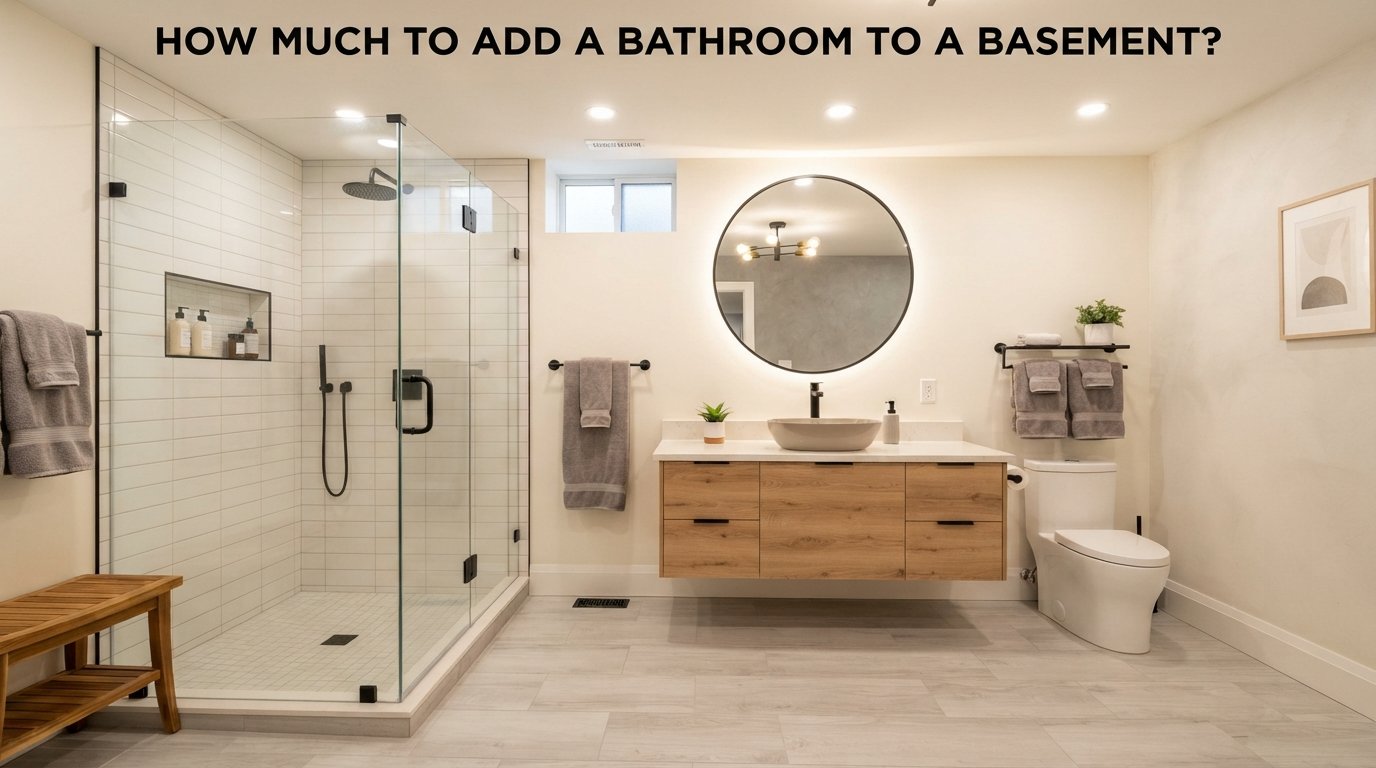

Adding a bathroom to a basement typically costs between $10,000 and $40,000, with most homeowners spending somewhere around $15,000 to $27,000 for a standard project. The final price depends heavily on how far the new bathroom sits from existing plumbing lines, whether a sump pump or ejector system is required, and the quality of fixtures chosen.
Basement bathrooms usually cost more than bathrooms added on upper floors because pipes often need to be routed through or below the concrete foundation. A simple half bath will always land at the lower end of the range, while a full bath with a tiled shower and premium finishes pushes the total much higher. Understanding these cost drivers ahead of time makes it far easier to plan a realistic budget.
Average Cost Overview
Most basement bathroom projects fall somewhere between $10,000 and $40,000, though the exact figure shifts based on size, layout, and finish level. The sections below break this range down by square footage and bathroom type so you can estimate more accurately.
National Average Cost Range
Across the country, homeowners typically spend an average of $20,000 to $25,000 to add a complete bathroom to their basement. Projects with straightforward layouts and access to nearby plumbing tend to stay closer to $15,000, while more complex builds with structural changes can reach $40,000 or beyond.
Cost Per Square Foot
Basement bathrooms generally cost between $90 and $300 per square foot once plumbing, electrical, and finishing work are all included. A compact 5×8 foot bathroom, which is a common layout, will therefore land somewhere in the $3,600 to $12,000 range for that portion of the work alone, before counting fixtures separately.
Half Bath vs. Full Bath Cost Comparison
A half bath, which only includes a toilet and sink, is the most budget-friendly option since it avoids the extra plumbing and waterproofing needed for a shower. A full bath with a shower or tub roughly doubles the plumbing complexity and material cost, which is why it sits much closer to the top of the overall price range.
Cost by Bathroom Size
Smaller stalls around 3×5 feet are the cheapest to build since they need less flooring, fewer materials, and a smaller footprint for waterproofing. Larger layouts of 5×8 feet or more allow for a proper shower or tub but naturally raise the total cost due to more tile, more plumbing runs, and more finishing work.
Cost Breakdown by Category
Every basement bathroom project is made up of several distinct cost categories, from plumbing to permits. Below is a detailed table followed by an explanation of each major category.
| Category | Typical Cost Range | Notes |
| Plumbing & rough-in | $2,000 – $15,000 | Depends on distance to existing lines |
| Electrical & ventilation | $600 – $6,000 | Includes GFCI outlets and exhaust fan |
| Waterproofing & sump pump | $1,000 – $10,000 | Required in many basements |
| Framing & drywall | $1,500 – $6,000 | Varies with layout complexity |
| Flooring & wall finishes | $2,000 – $8,000 | Tile is the most common choice |
| Fixtures (toilet, vanity, shower) | $2,000 – $15,000 | Budget to luxury options |
| Permits & inspections | $200 – $4,000 | Set by local jurisdiction |
| Labor | $6,000 – $20,000 | Usually the largest single expense |
Plumbing & Rough-In Costs
Plumbing is usually the single biggest cost factor when adding a bathroom to a basement because pipes often need to be routed under or through the concrete slab. If the new bathroom sits far from the home’s main soil stack, expect significantly higher costs due to the extra trenching and pipe work involved.
Electrical & Ventilation Costs
Every basement bathroom needs proper lighting, GFCI-protected outlets, and an exhaust fan to control moisture. This portion of the budget is relatively small compared to plumbing, but skipping proper ventilation can lead to mold problems down the road.
Waterproofing & Sump Pump Costs
Because basements sit below ground level, gravity often cannot carry wastewater to the main sewer line on its own. In these cases, a sewage ejector pump or sump pump system becomes necessary, which adds a meaningful cost but is essential for the bathroom to function correctly.
Framing & Drywall Costs
If the basement is currently unfinished, framing new walls to enclose the bathroom is a fairly straightforward and affordable step. However, if the basement is already finished, existing walls may need to be partially demolished first, which adds labor and disposal costs.
Flooring & Wall Finishes
Tile remains the most popular flooring choice for basement bathrooms because it resists moisture far better than wood or laminate. The overall cost here depends heavily on the tile quality selected, ranging from simple ceramic to higher-end porcelain or natural stone.
Fixtures Costs
Fixtures include the toilet, vanity, sink, faucet, and shower or tub, and this is where homeowners have the most control over spending. Choosing mid-range, readily available fixtures instead of custom or luxury options can meaningfully lower the overall project total.
Permits & Inspection Fees
Nearly every basement bathroom addition requires a permit, since it involves new plumbing and electrical work. Skipping this step is not recommended, as unpermitted work can create serious problems when selling the home later.
Labor Costs
Labor typically makes up the largest portion of the total budget, since plumbers, electricians, and general contractors are all involved. Hiring experienced professionals costs more upfront but reduces the risk of costly mistakes or rework later.
Key Factors That Affect the Price
Several variables can push the final cost of a basement bathroom higher or lower than the average range. Understanding these factors ahead of time helps set realistic expectations before getting quotes from contractors.
- Distance from existing plumbing: The farther the new bathroom is from the main soil stack, the more trenching and piping is required.
- Finished vs. unfinished basement: A finished basement often needs demolition work first, adding to labor costs.
- Ceiling height and egress requirements: Low ceilings or strict local codes can require extra structural adjustments.
- Local building codes: Permit costs and inspection requirements vary significantly by city and state.
- Fixture quality: Budget, mid-range, and luxury fixtures create a wide gap in total spending.
- Need for a sump pump: Homes without gravity drainage access require an ejector system, adding to the budget.
- Regional labor rates: Contractor pricing differs considerably depending on location.
Types of Basement Bathroom Additions
Not every basement bathroom needs to be a full-sized installation. Choosing the right type for your household’s needs is one of the easiest ways to control cost.
Half Bath
A half bath includes only a toilet and sink, making it the most affordable and simplest option to install. It works well for basements used mainly for storage, a home office, or occasional guest use.
Three-Quarter Bath
This option adds a shower to the toilet and sink combination without including a full bathtub. It strikes a practical balance between cost and functionality for basements used more regularly.
Full Bath
A full bath includes a toilet, sink, and either a shower or bathtub, making it suitable for basements converted into rental units or guest suites. This option carries the highest cost due to the added plumbing and waterproofing needed.
Rough-In Only
Some homeowners choose to install just the plumbing rough-in now and add the actual fixtures later. This approach protects the future option of a full bathroom while spreading the total cost over a longer period.
DIY vs. Hiring a Professional
Certain parts of a basement bathroom project, like painting or installing a vanity, can reasonably be handled without professional help. However, plumbing and electrical work should almost always be left to licensed professionals, since mistakes in these areas can lead to costly water damage, mold, or code violations. While DIY work can reduce labor costs, the potential for expensive errors often makes hiring an experienced contractor the safer long-term choice for the core construction work.
Ways to Save Money
There are several practical strategies homeowners can use to lower the overall cost of adding a bathroom to a basement without sacrificing quality.
- Choose a rough-in-only approach now and finish the bathroom fully at a later date.
- Position the new bathroom as close as possible to existing plumbing lines.
- Select standard, readily available fixtures instead of custom-built options.
- Get at least three contractor quotes before starting the project.
- Stick to a simple, efficient layout rather than an oversized footprint.
Common Mistakes to Avoid
Avoiding a few common missteps can save both money and future headaches during a basement bathroom project.
- Skipping the permit process, which can create serious issues when selling the home.
- Ignoring proper waterproofing, leading to mold or moisture damage over time.
- Underestimating how much plumbing complexity will add to the budget.
- Choosing a poor location in the basement that increases plumbing distance unnecessarily.
Step-by-Step Process of Adding a Basement Bathroom
Understanding the general project timeline helps homeowners know what to expect from start to finish.
- Plan the layout and choose the bathroom type that fits the space and budget.
- Apply for the necessary permits from the local building department.
- Complete the plumbing rough-in, including waste, vent, and supply lines.
- Handle the electrical work, including outlets, lighting, and ventilation.
- Frame the walls and complete any necessary waterproofing.
- Install flooring, tile, and finish the walls.
- Add fixtures such as the toilet, vanity, and shower or tub.
- Schedule a final inspection to confirm everything meets code.
Return on Investment
A well-built basement bathroom often delivers a strong return on investment, since it adds functional living space that appeals to future buyers. Homes with a finished basement bathroom are frequently seen as more move-in ready, particularly if the basement is set up as a guest suite or rental space. While exact ROI varies by market, this upgrade is generally considered one of the more valuable basement improvements a homeowner can make.
Frequently Asked Questions
Do I need a permit to add a basement bathroom?
Yes, almost every basement bathroom addition requires a permit due to the plumbing and electrical work involved.
How long does the project take?
Most basement bathroom projects take between two and four weeks, depending on complexity and contractor availability.
Can I add a bathroom without a sewage ejector pump?
Only if the plumbing can rely on gravity to reach the main sewer line; otherwise, an ejector pump is required.
Is it cheaper to add a half bath instead of a full bath?
Yes, a half bath is significantly cheaper since it avoids the extra plumbing and waterproofing needed for a shower or tub.
Conclusion
Figuring out how much to add a bathroom to a basement comes down to understanding a few key factors: plumbing distance, fixture quality, and whether waterproofing or a sump pump is needed.
Most projects fall between $10,000 and $40,000, and choosing the right bathroom type for your household’s needs is one of the simplest ways to control that cost. With careful planning and the right contractor, a basement bathroom can be a smart, lasting upgrade to any home.
Related Articles
Roof Washing: A Complete Guide 2026
Where to Hang Curtain Holdbacks: A Complete Placement Guide
How to Make the Basement Warmer: 8 Proven Fixes for a Cozy Space
How Do You Get Candle Wax Off Hardwood Floors
Tiny Black Bugs in the Bathroom: Identification, Causes, and Complete Removal Guide




