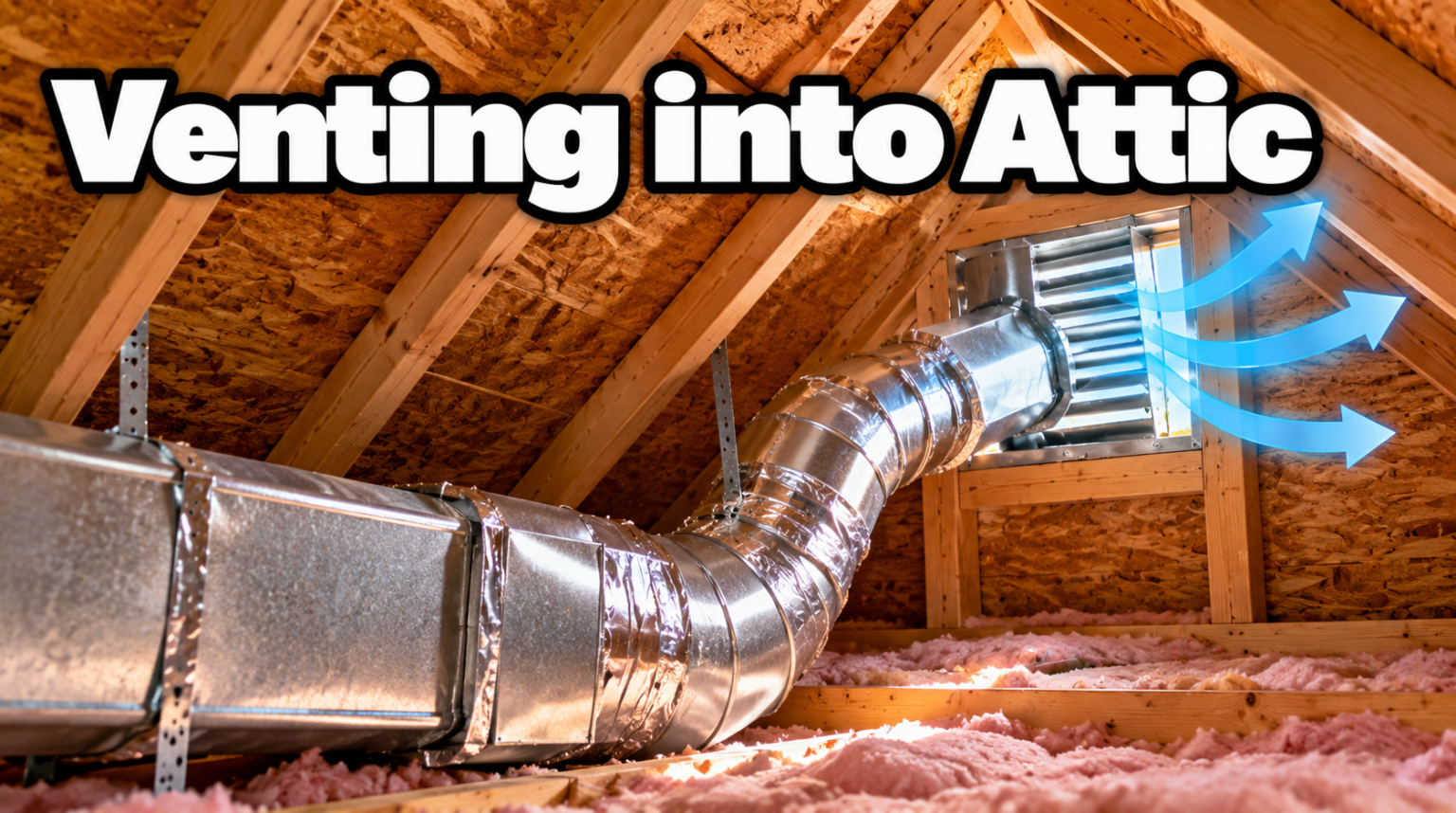

Venting into an attic is not safe, and building code does not allow it. Whether it is a bathroom exhaust fan, a kitchen range hood, or a clothes dryer, the warm, wet air they push out has to leave the house completely, not sit in the attic above your ceiling. Dumping that air into the attic traps moisture against your roof framing and insulation, and over a season or two it leads to mold, rot, and ruined insulation. A dryer vented into the attic adds a fire risk on top of that.
If your exhaust duct ends inside the attic, or just points up at a roof vent without connecting to it, the fix is to run the duct all the way through the roof or an exterior wall and cap it outside. Here is why the attic is the wrong place for it, what the rules say, and how to vent each appliance correctly.
Can you ever vent into the attic?
No. There is no version of this that is safe or allowed for exhaust air. The job of an exhaust fan or a dryer vent is to move humid air, odors, and lint out of the living space. The attic is still inside the building envelope, so sending the air there just moves the problem a few feet up. The moisture does not disappear. It cools, turns back into water on the cold underside of the roof, and soaks whatever it lands on.
Some attics have a roof vent, a ridge vent, or soffit vents nearby, and it can look like the exhaust will find its way out through those. It will not, at least not fast enough. Those vents are sized to let the attic breathe slowly, not to clear the burst of wet air a hot shower or a dryer load produces. Most of that moisture stays behind and settles on the wood.
What the building code says
The International Residential Code is direct about this. Section M1501.1 states that air must not be exhausted into an attic, soffit, ridge vent, or crawl space. Exhaust has to discharge to the outdoors through a wall or the roof. You can read the exact wording in the IRC exhaust system rules.
The code also sets where that exhaust can end once it is outside. Under Section M1504.3, an exhaust opening has to sit at least 3 feet from property lines and from any window, door, or air intake that opens, and at least 10 feet from a mechanical air intake unless it is 3 feet above it. Section M1505.2 bans recirculating bathroom exhaust back into the home or into another unit. The air goes outside, with no exceptions for the attic.
Dryers have their own rules. A clothes dryer must vent to the exterior, never into an attic, a crawl space, or a wall cavity. Most codes cap the duct run at 35 feet, and that length drops for every bend. The duct should be rigid metal, 4 inches across, with a backdraft damper and a cap where it exits. Gas dryers make this stricter still, because their exhaust carries carbon monoxide that has to leave the building.
This is also one of the first things a home inspector flags, so a vent running into the attic can stall a sale or fail an inspection. Plenty of homes already have the problem, left behind by a quick install or a past owner, and age does not make it compliant. If you find one, it still needs to be corrected.
What goes wrong when exhaust ends in the attic
The damage from attic venting builds quietly, usually out of sight, until it gets expensive. Warm air holds a lot of water. One hot shower puts a surprising amount of humidity into the air, and a dryer load pushes out even more. When that air meets the cold roof sheathing in the attic, the water condenses straight onto the wood.
The amounts are easy to underestimate. One shower can release close to a pint of water into the air, and a full dryer load pushes out several pints as it dries the clothes. Sent into the attic, that water does not drift off somewhere. It lands on the first cold surface it meets, usually the roof sheathing, and sits there until the wood either dries out or starts to rot.
Over weeks, that steady dampness leads to a short list of predictable problems:
- Mold and mildew grow on the sheathing, the framing, and the top of the insulation, and can spread spores into the rooms below.
- Wood rot softens the roof sheathing and rafters, weakening the structure that holds the roof up.
- Ruined insulation. Wet insulation flattens and stops working, so heating and cooling bills climb.
- Ceiling stains and peeling show up in the rooms under the attic as the moisture works downward.
- Ice in winter. In cold climates the moisture freezes on the sheathing, then melts and drips when the attic warms, which looks exactly like a roof leak.
A dryer adds one more danger. Dryer exhaust carries lint, and lint burns easily. Piled in an attic next to warm ducts and wiring, it becomes fuel. Lint buildup is one of the leading causes of home dryer fires, which is the whole reason code insists the dryer duct run short, clean, and all the way to the outside.
Bathroom fans, range hoods, and dryers: same rule, different stakes
Every exhaust appliance follows the same basic rule, the air goes outside, but the reasons sharpen depending on what is in the air. A bathroom fan moves warm, humid air, so its main risk in the attic is moisture and the mold and rot that follow.
A kitchen range hood adds grease and cooking odors to that moisture, and the grease coats whatever the duct touches. A clothes dryer combines heavy moisture with lint, and gas models add combustion gases. The fix is the same for all three, but a dryer venting into the attic is the one to correct first.
Does your climate change the risk?
The core rule does not change with climate, but the way the damage shows up does. In cold regions the attic sheathing stays below freezing for months, so exhaust moisture condenses fast and can freeze on the wood. When a thaw comes, it melts and drips onto the insulation and the ceiling, and that freeze and thaw cycle is hard on the sheathing over time.
In hot, humid areas the attic stays warm and the added moisture feeds mold almost year round. Mild climates get a slower version of the same thing. Wherever you live, the water has to end up outside, and the correct fix does not change.
How to vent the right way
Getting it right means giving the air a clean path from the fan or dryer straight to the outdoors. The route matters as much as the destination. Here is the correct setup:
- Pick the shortest, straightest path to an exterior wall or through the roof. Fewer bends mean better airflow and, for a dryer, less lint caught along the way.
- Use the right duct. Smooth rigid metal is best for airflow and, with dryers, for fire safety. Skip thin foil or plastic flex duct on a dryer.
- Run the duct fully to the outside. It has to connect to a dedicated roof cap or wall cap, not just point toward an attic vent.
- Slope the duct slightly down toward the outlet where you can, so any condensation drains out instead of running back inside.
- Insulate the duct where it crosses the cold attic. A wrapped duct keeps the warm air from cooling and condensing before it reaches the outside.
- Fit a cap with a backdraft damper at the exit. The damper lets air out and keeps cold air, rain, and pests from coming back in.
- Mind the clearances. Keep the outside opening at least 3 feet from windows, doors, and air intakes, as the code requires.
For bathroom fans, picking a correctly sized, efficient fan and venting it fully outdoors is the combination that actually clears the moisture. ENERGY STAR guidance on ventilating fans is a good starting point when you are choosing one.
Where the duct exits is a real choice. A wall cap on a nearby exterior wall usually means a shorter, straighter run, which moves air better and gathers less lint. A roof cap makes sense when the fan or dryer sits far from any outside wall. Either way, keep the run as short as you can, because every extra foot and every bend cuts airflow and, on a dryer, adds to the fire risk.
Here is what a correct termination looks like for each appliance:
| Appliance | Duct | Terminates | Must have |
| Bathroom fan | 4 in rigid or insulated flex | Roof or wall cap, outdoors | Backdraft damper, 3 ft from openings |
| Range hood | Rigid metal | Roof or wall cap, outdoors | Damper, grease-rated duct |
| Clothes dryer | 4 in rigid metal, 35 ft max | Wall or roof cap, outdoors | Backdraft damper, no screen on cap |
How to tell if yours is venting into the attic
Quick check: on a dry day, go into the attic and follow the duct from each fan and from the dryer. If a duct ends in open attic space, lies disconnected, or only aims at a vent without connecting to it, it is venting into the attic and needs to be fixed.
From inside the house, the signs are a bathroom that stays steamy long after a shower, mildew spots on the ceiling, a musty smell, or damp and frosty patches on the attic sheathing in winter. On the roof, the giveaway is no dedicated cap for the fan or the dryer. Any of these means the exhaust is not reaching the outside, and the longer it runs that way, the more it costs to repair.
Fixing a vent that already runs into the attic
If you find a duct dumping into the attic, the repair is simple in principle: give the air a sealed path to the outside. Find the nearest exterior wall or a clear spot on the roof, run rigid or insulated duct to it, and fit a proper cap with a backdraft damper. Seal the joints with foil tape or clamps, not cloth duct tape, which dries out and lets go in the heat.
A short, reachable run is a fair weekend job for a confident DIYer. Cutting a new hole in the roof, working on a gas dryer, or reaching a vent buried under insulation is work for a pro, both for safety and to keep the roof watertight. Whichever way you go, do not leave the old attic opening open. Seal it so the air cannot slip back inside and start the problem over.
Conclusion
Venting into the attic is never the right move. Exhaust air carries moisture, and often lint or grease, that has to leave the house entirely. Left in the attic it causes mold, wood rot, wrecked insulation, and, with a dryer, a real fire risk. Run each duct in rigid or insulated material along the shortest path to a dedicated roof or wall cap outdoors, add a backdraft damper, and keep the opening clear of windows and intakes. Done right, the wet air is gone and the attic stays dry.
Frequently asked questions
Is it against code to vent a bathroom fan into the attic?
Yes. IRC Section M1501.1 bans exhausting air into an attic, soffit, ridge vent, or crawl space. The duct must run to the outdoors and end at a wall or roof cap.
Can I vent into the attic if it already has roof or soffit vents?
No. Those vents move air too slowly to clear the burst of moisture from a shower or dryer. Most of the humidity stays behind and condenses on the roof framing.
What is the biggest risk of venting a dryer into the attic?
Fire. Dryer lint is flammable and piles up in the attic near warm ducts and wiring. Heavy moisture damage, and carbon monoxide from gas dryers, are serious risks too.
Should I insulate the exhaust duct in the attic?
Yes, where it crosses the cold attic. An insulated duct keeps the warm air from cooling and condensing inside before it reaches the outside, which cuts down on drips.
How do I fix a fan that vents into the attic?
Connect the duct to a dedicated roof or wall cap that ends outdoors, by the shortest path. Add a backdraft damper and keep the opening at least 3 feet from windows and intakes.
Related Articles
How to Cut Tin Roofing: Complete Guide 2026
How to Measure Ceiling Fan Blades: A Complete Step-by-Step Guide
How Can You Make Saltillo Floors Shine? Complete Guide 2026
How to Restain Kitchen Cabinets: A Complete Step-by-Step Guide