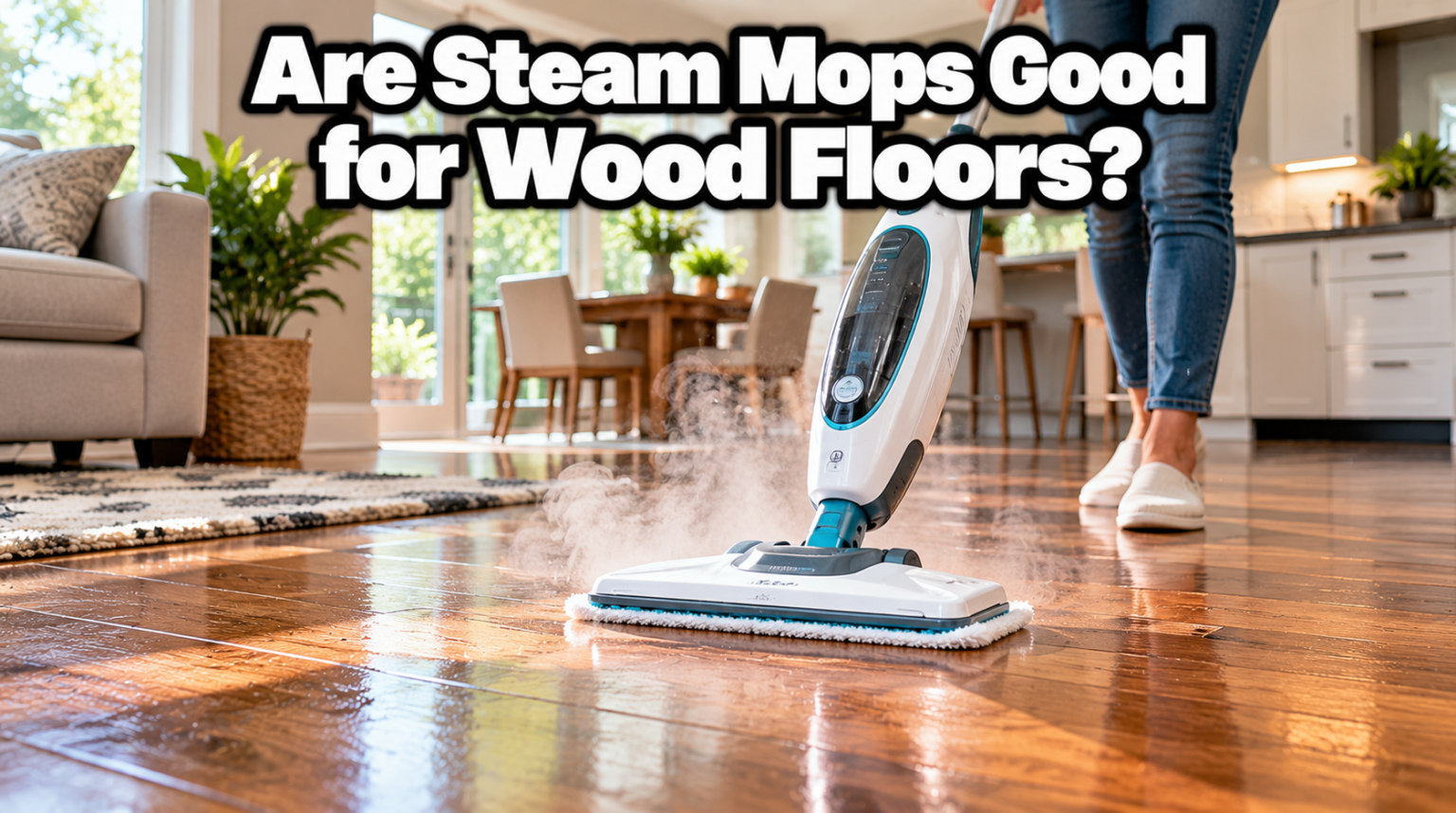

No. Steam mops are not good for wood floors. The one thing wood handles worst is heat combined with moisture, and a steam mop delivers both at once, straight into the surface you are trying to protect.
That answer holds for solid hardwood and for engineered wood, whether the floor is twenty years old or brand new. A single quick pass might look fine today. The real problem is what builds up underneath over months of regular cleaning. Here is what the steam actually does, why a sealed floor is not safe either, and the simple routine that keeps wood floors clean without the risk.
What a steam mop does to a wood floor
Wood is a natural material, and it moves. It swells when it takes on moisture and shrinks as it dries. A steam mop heats water past boiling, so the vapor that reaches the floor is hot, well above 200°F, and it comes out under pressure. Vapor is much better than liquid water at finding its way into tiny openings, and a wood floor is full of them.
The finish on top, usually a polyurethane coat, is not a waterproof seal. It slows moisture down, but it has seams. Every board meets its neighbor along an edge, and every row ends in a joint. Steam gets pushed right into those gaps. Once it is under the finish or down between the boards, it has nowhere fast to go, so it sits there and soaks in.
The ends of the boards are the weak point. End grain soaks up moisture far faster than the flat face of a plank, so the joints running across a room are usually where damage shows up first.
Over months this shows up in a few clear ways. The edges of the finish start to peel or lift. The surface turns cloudy or hazy instead of clear. Individual boards cup, which means the edges rise higher than the middle and the floor feels uneven underfoot. Boards can also split or pull apart at the ends. None of this comes from one clean. It is the slow result of heat and moisture going in again and again.
Why steam is worse than an ordinary damp mop
It is fair to ask why steam is harder on wood than a normal damp mop, since both involve water. Two things make the difference. The first is heat. Warm vapor softens the finish and opens it up, so moisture gets through more easily than cool water would. The second is pressure. A steam mop forces vapor out, driving it into seams and joints instead of letting it rest on top where it can be wiped away.
A barely damp microfibre pad leaves a thin film of cool water that dries in seconds, before it can do any harm. A steam mop pushes hot moisture in and gives it a route down into the wood. Same ingredient, very different result.
Does it matter if the floor is sealed or has a polyurethane finish?
A sealed or polyurethane floor is still not safe for steam. The finish is a thin protective layer, not a moisture barrier, and heat makes it work less well. Hot vapor softens the finish a little and works into the microscopic cracks that every floor develops as it ages and moves.
Many steam mops include a setting or a pad labeled for sealed hardwood. The setting lowers how much steam comes out, but it does not change the basic problem. You are still putting heat and water vapor onto a material that reacts badly to both. A newer floor with a flawless finish buys you more time before damage shows. It does not make the floor immune.
Older floors have an extra catch. A finish wears thinnest exactly where you walk most, and those traffic lanes are also where a mop spends the most time. So the steam hits the floor hardest in the very spots least able to take it.
What about engineered wood floors?
Engineered wood floors are also not suited to steam mops. An engineered board has a real wood veneer on top of a core built from layers of plywood or fibreboard, glued together. That build is more stable against humidity than solid wood, which is why engineered floors work in kitchens and basements. Stable is not the same as waterproof.
The top veneer is often thin, sometimes only a couple of millimetres. Steam can still get into the seams, swell the core, and loosen the glue holding the layers together. When that happens the surface can bubble or lift at the edges, and a thin veneer gives you little or nothing to sand back. So the same rule applies. Keep the steam mop off it.
Quick comparison: steam by floor type
| Floor type | Steam mop? | What happens |
| Solid hardwood | Avoid | Heat and moisture reach the finish and seams, causing cupping, haze, and peeling over time. |
| Engineered wood | Avoid | Steam swells the core and loosens the glue between layers; a thin veneer is hard to repair. |
| Sealed tile or stone | Fine | No wood fibres to swell and no glue to loosen, so heat just helps lift grease and grime. |
Where steam mops actually belong
Steam mops are built for sealed hard surfaces that do not mind water. Ceramic and porcelain tile are the clearest fit, and most sealed stone is fine too. On those floors the heat helps lift grease and kills some germs, and there are no wood fibres to swell and no glued layers to come apart. If you already own a steam mop, that is where it earns its keep. Wood is simply the wrong floor for it.
Will a steam mop void your floor’s warranty?
Using a steam mop can void the warranty on a wood floor. Flooring and finish makers set out how their products should be cleaned, and most name steam and standing water as things to avoid. Cleaning your floor in a way the maker warns against can cancel the coverage. It can also make a future recoat difficult, because leftover residue or moisture damage stops a fresh finish from bonding.
This holds true even when a steam mop is sold as safe for wood. The warranty that matters is the one on your floor, not the one printed on the mop box. If your floor is still under warranty, read the care instructions that came with it before you settle on any cleaning method.
How to tell if steam has already damaged your floor
If you have been steam mopping a wood floor, a few signs are worth checking for. Look across the boards with light coming in at a low angle, such as a window in the early morning or evening. That raking light shows up trouble a straight-down look hides.
Watch for a cloudy or milky haze in the finish, worst in the paths you clean most. Run a hand along the boards and feel for cupping, where the edges sit higher than the centre. Check the ends of boards and the gaps between them for finish that has lifted, peeled, or turned white. White or grey patches usually mean moisture has reached the wood under the finish. Catching this early matters, because a floor dealt with sooner often needs less work to put right.
Can steam damage to a wood floor be fixed?
Steam damage can often be fixed, but the size of the job depends on how far it has gone. Light haze or a dulled finish on the surface can sometimes be sorted with a screen and recoat, where the top of the finish is scuffed and a fresh coat goes over it. That is the cheaper, faster route, and it leaves the wood itself untouched.
Once moisture has reached the wood and caused cupping, peeling, or white marks, a recoat will not hold. The floor needs sanding back to bare wood and refinishing, which is dusty, takes a few days, and costs a good deal more. A mildly cupped floor sometimes flattens out on its own once the extra moisture dries over weeks or months, so it is worth letting the floor settle before deciding to sand. For anything past light surface dullness, a flooring professional is the safer call.
How to clean wood floors the right way
The safe way to clean a wood floor uses almost no water and no heat at all. The goal is to lift dust and grime off the surface, not to soak it.
Start with a routine that keeps grit off the floor, because loose grit is what scratches the finish and dulls it fastest:
- Sweep or dust-mop the busy areas daily, or run a vacuum on a bare-floor setting with the beater bar switched off.
- Wipe up spills the moment they happen with a dry or barely damp cloth. Standing liquid is the thing to avoid.
- Give the floor a deeper clean about once a month with a cleaner made for wood.
For that monthly clean, spray a pH-neutral hardwood floor cleaner, such as Bona, lightly onto a microfibre pad rather than onto the floor, then mop in the direction of the boards. The pad should feel just damp, never wet, and the floor should dry on its own in a minute or two. If you can see a trail of liquid behind the mop, there is far too much on it.
A few popular shortcuts quietly harm wood, so skip them. Plain water with a wet mop leaves too much moisture behind. Vinegar and water, once a common home remedy, is acidic and dulls the finish over time. Oil soaps and wax-based products leave a film that builds up and makes the floor hard to recoat later. A simple pH-neutral cleaner on a damp pad is all a sealed wood floor needs. For the full homeowner routine, the National Wood Flooring Association keeps a plain guide to caring for wood floors.
A little prevention cuts how often you need to wet-clean at all. Put a mat at each outside door to catch grit and water before they reach the wood, and stick felt pads under furniture legs so chairs and tables do not scratch the finish. The less grit that lands on the floor, the less scrubbing it needs, and the longer the finish stays clear.
The rule that protects a wood floor is simple: as little water as possible, no heat, and never let liquid sit on the surface.
Keep the room’s humidity steady too
Cleaning is only half of protecting a wood floor. Because wood moves with the moisture in the air around it, keeping the room steady matters as much as how you mop. A good target is indoor humidity between 30 and 50 percent and a temperature between 60 and 80°F. Steady air stops the boards swelling through a damp summer or shrinking and gapping in a dry winter. A steam mop pulls against all of that by adding bursts of moisture the floor never needed.
Winter is the season to watch. Radiators, wood stoves, and forced-air heat dry the air right out, which is when gaps between boards tend to open up. A small humidifier through the driest months keeps the floor from shrinking too far.
Conclusion
Steam mops are not good for wood floors, solid or engineered. The heat and moisture work into the finish and down into the seams, and over months they lead to cupping, a cloudy finish, and peeling that often needs a full sand and refinish to put right. Clean the floor instead with a dry dust-mop or vacuum for everyday grit, and a barely damp microfibre pad with a pH-neutral wood cleaner about once a month. Keep the room’s humidity steady, and a wood floor will last for decades.
Frequently asked questions
Can I use a steam mop on sealed hardwood floors?
No. A sealed or polyurethane finish slows moisture but does not block it, and heat softens the finish so vapor works into the seams. A sealed-wood setting lowers the steam, not the underlying risk.
Will one use of a steam mop ruin my wood floor?
Usually not. A single pass rarely shows damage. The harm builds up from repeated cleaning, as heat and moisture get into the finish and the joints again and again over months.
Are steam mops safe for engineered wood floors?
No. Engineered boards resist humidity better than solid wood, but steam can still swell the core and loosen the glue between the layers. The thin top veneer leaves little to sand back if it lifts.
What should I use instead of a steam mop on wood floors?
A dry dust-mop or vacuum for daily grit, and a lightly damp microfibre pad with a pH-neutral hardwood cleaner for a monthly clean. Keep the pad just damp, never wet, and let the floor air-dry.
Does a steam mop really void a hardwood floor warranty?
It can. Most flooring and finish makers list steam and standing water as things to avoid, and cleaning against those instructions can cancel the warranty, even when the mop itself is sold as wood-safe.
Related Articles
What Causes Bathroom Faucets to Corrode (And How to Stop It for Good)
What Does a Roof Pipe Do? Complete Guide 2026
How to Clean Gutters With Gutter Guards Safely: Step-by-Step Guide