


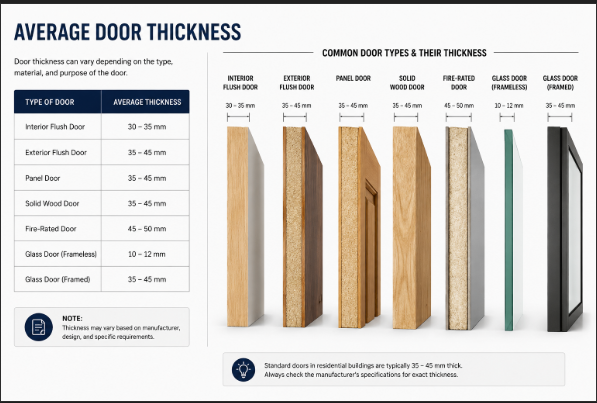

When it comes time to replace a door, one of the most overlooked details is thickness. Many homeowners focus only on height and width, but getting the thickness right is just as important for a proper fit, smooth operation, and compatibility with hardware like locks and hinges.
This guide breaks down the average thickness for different types of doors, explains why these standards exist, and walks you through how to measure your door correctly before placing an order.
Understanding Standard Door Thickness
Door thickness varies depending on the type of door and where it is being used in a home. Knowing these general standards helps you understand what to expect when shopping for a replacement, whether for an interior room or a main entrance.
Interior Door Thickness
Interior doors are generally thinner than exterior doors because they do not need to provide insulation or withstand harsh outdoor conditions. The standard thickness for most interior doors is around one and three-eighths inches, which is roughly thirty-five millimeters.
This thickness is common for bedroom doors, closet doors, and bathroom doors found throughout most homes.
Exterior Door Thickness
Exterior doors are built thicker because they serve as the main barrier between your home and the outside environment. Most exterior doors fall in the range of one and three-quarter inches to two inches, which translates to approximately forty-four to fifty millimeters.
This added thickness allows for better insulation, stronger security, and the ability to support heavier hardware such as deadbolts and multi-point locking systems.
Why Standard Thickness Matters for Hardware and Fit
Thickness is not just about how solid a door feels. It directly affects which hardware options are compatible and how well the door will function once installed.
Compatibility With Locks and Hinges
Most door hardware manufacturers design their products around standard thicknesses, which means locks, deadbolts, and hinges are typically built to fit doors that fall within the one and three-quarter inch to two inch range for exterior doors.
If a door falls outside this standard range, finding hardware that fits properly can become more difficult and may require special ordering.
Impact on Insulation and Energy Efficiency
A thicker exterior door generally has more room for insulation material inside its core, which helps regulate indoor temperatures and reduce energy loss.
This is especially important for entry doors that are exposed to direct sunlight, cold drafts, or temperature swings throughout the year, since a properly insulated door can make a noticeable difference in comfort near the entryway.
Custom Doors and Thickness Variations
While standard thicknesses cover most residential doors, certain styles do not always follow these typical measurements, which makes accurate measuring even more important.
Doors That Often Vary in Thickness
Arched doors, French double doors, barn-style front doors, and other specialty designs often have different thickness requirements compared to standard single-entry doors.
These variations can come from the design style itself or from additional structural reinforcement built into the door for larger openings.
Why This Matters for Replacement Orders
Ordering a replacement door without confirming the exact thickness of your current door can lead to fitting issues, gaps around the frame, or problems with hardware alignment.
Taking accurate measurements before placing an order helps avoid unnecessary delays, additional costs, and the frustration of dealing with a door that does not sit properly in its frame.
How to Measure Door Thickness and Related Dimensions
Getting accurate measurements is one of the most important steps when preparing to order a replacement door. A few simple tools and a careful approach can make this process straightforward.
Tools and Preparation
Before starting, gather a tape measure, a pen or pencil, and a notepad to record each measurement as soon as it is taken.
Measuring twice or even three times for each dimension helps avoid mistakes that could affect the final order, since even small errors in measurement can lead to a door that does not fit correctly.
Measuring Width and Height
To measure the width of an existing prehung door, take the measurement from the interior side, going from one edge of the door panel to the opposite edge.
For height, measure from the very top of the door panel down to the bottom edge, making sure the tape measure runs in a straight vertical line for accuracy.
Measuring the Thickness Itself
To measure the thickness of the door, run the tape measure across the edge of the door panel, capturing the full depth from the front face to the back face. This measurement is what determines whether the door falls into the standard interior or exterior thickness range discussed earlier.
Measuring the Frame and Jamb
Locate the wooden frame that holds the door in place to determine the jamb depth, which involves measuring both the height and depth of this frame component.
In some cases, a small section of trim may need to be removed temporarily to get an accurate reading, since trim width should never be included in the jamb measurement itself.
Checking for Square and Plumb
Once the basic measurements are recorded, it is important to confirm that the door opening is square and plumb. This can be done by measuring diagonally from one corner of the frame to the opposite corner, forming an X pattern, and comparing the two diagonal measurements to each other.
| Measurement Type | What to Check | Why It Matters |
| Diagonal Corners | Both diagonal measurements should match | Confirms the frame is square |
| Side and Top Levels | Use a level along the sides and top of the frame | Confirms the frame is plumb |
| Jamb Depth | Measure height and depth of the frame | Ensures proper door seating |
If both diagonal measurements match, the frame is considered square. A level can then be used along the sides and top of the frame to confirm that everything is plumb, which helps ensure the new door will hang and operate correctly once installed.
Quick Reference Table for Door Thickness
The table below summarizes the typical thickness ranges discussed throughout this guide for easy reference when planning a door replacement.
| Door Type | Typical Thickness | Common Use |
| Interior Door | About 1 3/8 inches (35 mm) | Bedrooms, closets, bathrooms |
| Standard Exterior Door | 1 3/4 to 2 inches (44 to 50 mm) | Main entry doors |
| Custom Doors | Varies by design | Arched, French, barn-style doors |
When to Get Professional Help With Measuring
Even with careful measuring, some situations call for professional assistance, especially when dealing with older homes or unusual door styles.
Signs You Should Call a Professional
If your door opening does not appear square or plumb, if you are dealing with a custom or specialty door style, or if you simply feel unsure about any of the measurements, reaching out for professional help can prevent costly ordering mistakes.
Many door companies are willing to visit your home, take precise measurements, and walk you through available options based on your specific opening.
Benefits of Professional Measurement
A professional measurement not only reduces the risk of ordering the wrong size but also opens the door to discussing upgrades, design choices, and hardware options that fit well with your home’s existing structure.
This can be particularly helpful when replacing older doors where the frame may have shifted slightly over time due to settling or weather exposure.
Frequently Asked Questions
What is the average thickness of an interior door?
Most interior doors measure about one and three-eighths inches thick, which is approximately thirty-five millimeters, and this size is standard for bedroom, bathroom, and closet doors.
What is the average thickness of an exterior door?
Exterior doors typically range from one and three-quarters inches to two inches in thickness, allowing for better insulation, security, and compatibility with standard hardware.
Why does door thickness matter for locks and hinges?
Most hardware is manufactured to fit standard thickness ranges, so a door that falls outside these measurements may require special ordering for compatible locks and hinges.
Do all exterior doors follow the same thickness standard?
No, custom door styles such as arched doors, French doors, and barn-style doors can vary in thickness depending on their design, which makes accurate measuring especially important.
Why is it important to check if a door frame is square before ordering?
A square and plumb frame ensures that a new door will fit properly and operate smoothly, while an uneven frame can lead to gaps, drafts, or installation issues.
Conclusion
Knowing the average thickness of interior and exterior doors gives you a solid starting point when planning a replacement, but accurate measurements remain the key to a proper fit. Taking the time to measure width, height, thickness, and frame dimensions carefully, while checking for square and plumb, can save significant time and money down the road.
When in doubt, professional measurement services can provide added confidence and help you explore the best options for your home.
Related Articles
How to Install a Curtain Rod? Complete Beginner’s Guide
Mulled Windows vs Non-Mulled Windows: Which Is Right for Your Home
How to Get Rid of Mold in the Bathroom: Complete Step-by-Step Guide
Joist Tape for Decking: The Complete Guide to Protecting Your Deck’s Substructure