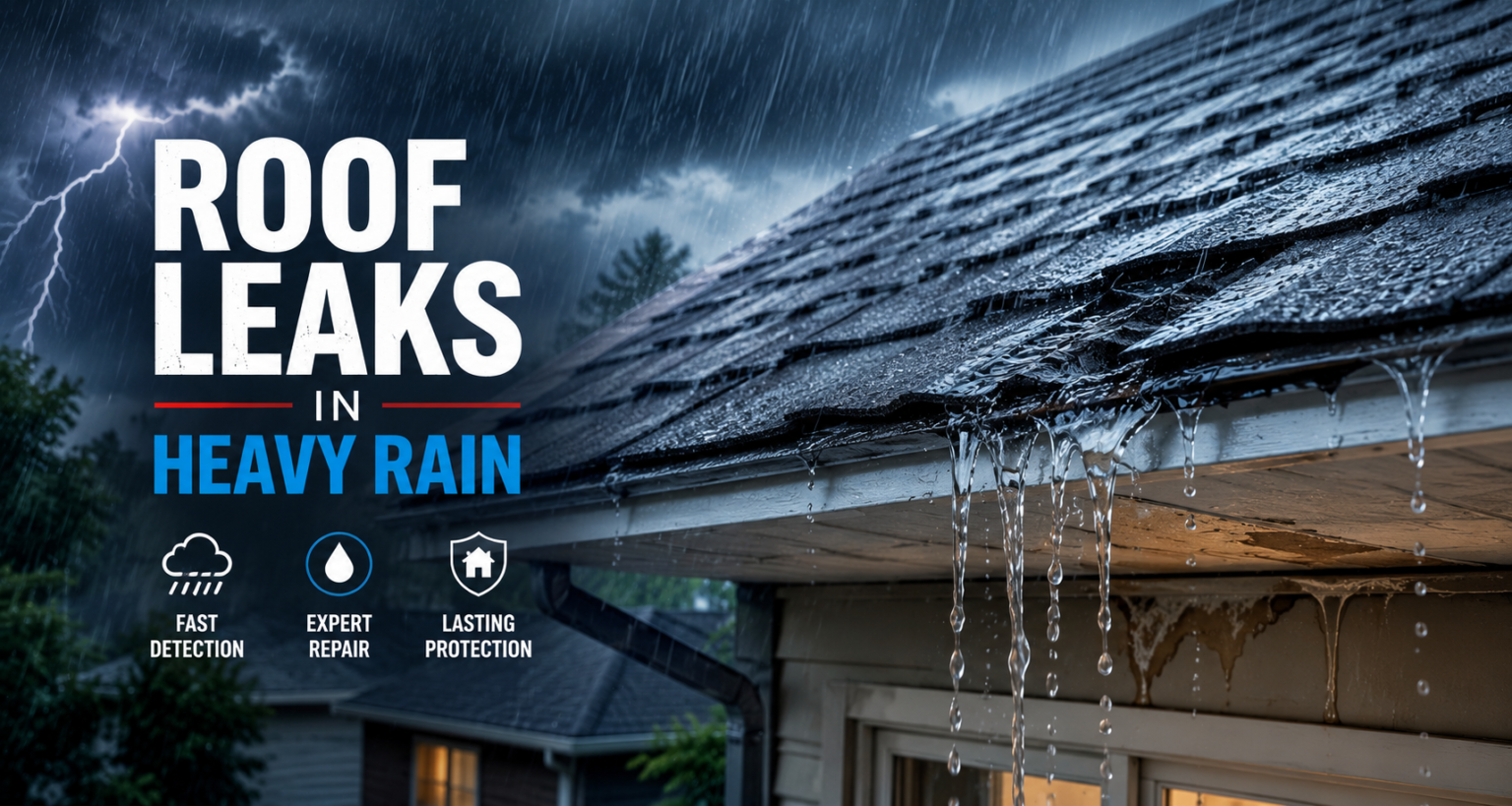

A roof that only leaks during a storm can feel like a strange problem: dry weather brings no trouble, yet heavy rain somehow finds a way inside. In most homes, this is not random bad luck. Heavy rainfall puts extra pressure on weak points that already exist in the roofing system, such as a cracked tile, a blocked gutter, or a flat section where water pools instead of draining away.
Understanding why these leaks happen makes it far easier to stop small problems before they turn into costly repairs.
Why Roof Leaks Happen in Heavy Rain
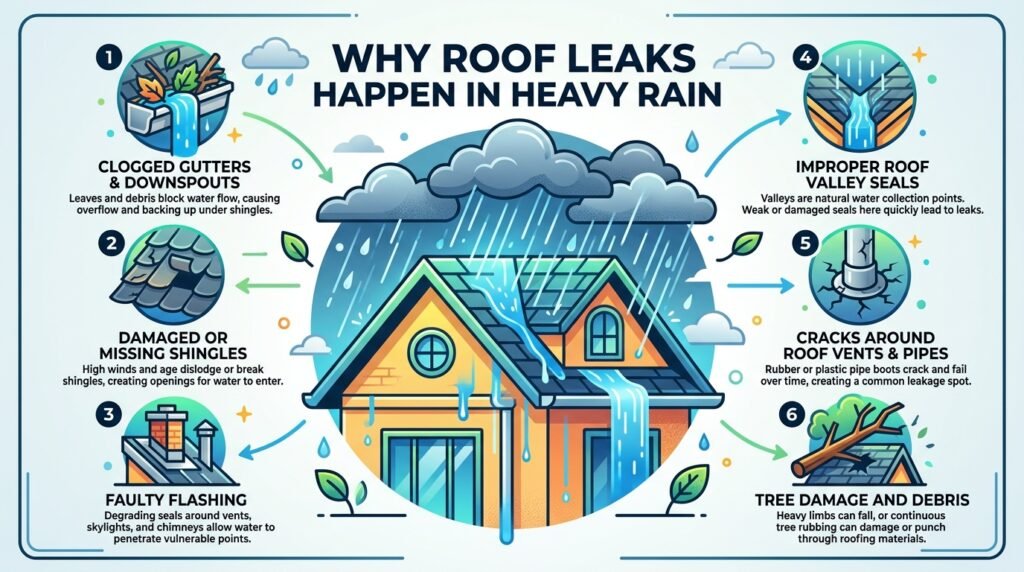
Roof leaks in heavy rain typically start the moment water arrives faster than the roof can shed it. Once that balance tips, even minor flaws turn into active entry points for moisture.
Water Overwhelms Weak Points
Every roof carries small imperfections from age, installation, or wear that stay harmless in a light shower. Heavy rain sends a much larger volume of water across the same surface in far less time.
Once that volume exceeds what a weak seam or gap can resist, water pushes through and starts dripping inside.
Pressure Builds on Seams and Joints
Seams, joints, and fasteners are built for a normal flow of rainwater, not a sudden surge. During a storm, water collects around nails, screws, and overlapping materials, creating pressure that forces moisture sideways or upward into gaps.
This is why a roof can stay watertight for years and then suddenly leak once a heavier storm arrives.
Pooling Water Increases Risk
On roofs with a lower pitch, water does not always run off as quickly as it should. When rain pools instead of draining, it sits on top of vulnerable areas for longer, giving moisture more time to find a way through cracks or failed seals.
The longer water sits, the greater the chance it breaks through into the structure below.
Most Common Causes Behind Roof Leaks in Storms
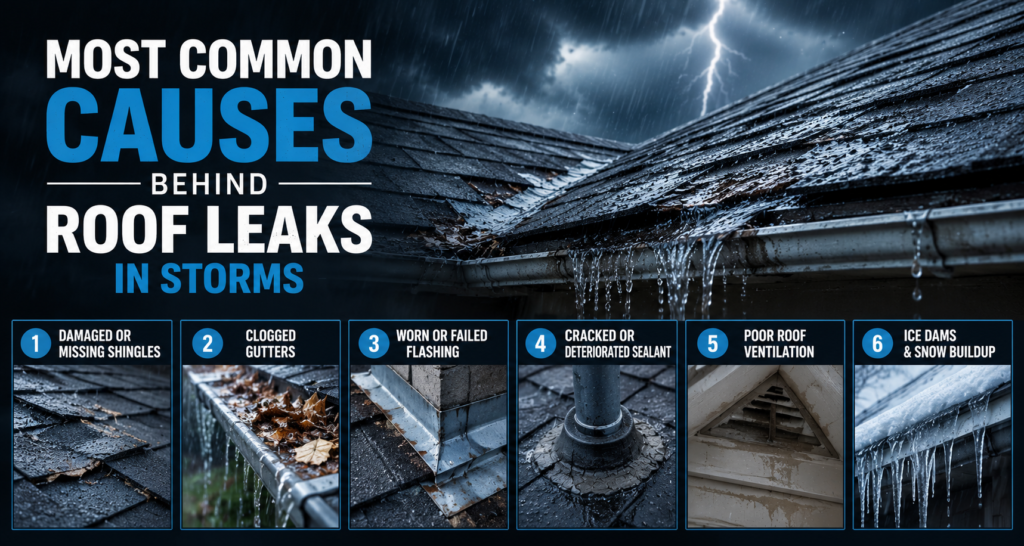
While every roof is different, the same issues show up again and again whenever roof leaks in heavy rain are investigated. Most trace back to damaged materials, blocked drainage, or installation that did not quite go to plan.
Damaged or Missing Roofing Materials
Cracked, curled, or missing shingles and tiles are among the most frequent causes of leaking roofs during storms.
A damaged tile may cause no trouble in light rain, but directly above an exposed seam in heavy weather, water can pass straight through to the layers beneath. Repeated exposure also wears down the underlay meant to act as a backup barrier.
Clogged Gutters and Roof Valleys
Leaves, twigs, and debris build up in gutters and in roof valleys, where two slopes meet. When heavy rain arrives, this blockage stops water from draining properly, forcing it to back up under tiles or shingles instead.
Valleys are especially prone to this because debris naturally collects at that low point of the roof.
Worn Flashing and Failed Seals
Flashing protects the trickiest parts of a roof, such as chimneys, skylights, and pipe penetrations, but only while it stays intact. Once flashing cracks, lifts, or corrodes, those areas become open doors for water during a downpour.
Skylights and pipe boots often develop hairline gaps that only reveal themselves once rainfall is heavy enough to test them.
Ageing Roofs and Loose Nails
Roofing materials do not last forever, and as they age, they lose the flexibility and coating that once kept water out. Nails can also work loose or corrode over time, leaving small gaps around the decking.
An older roof with a few loose fasteners is far more likely to leak in heavy rain than a newer, well-maintained one.
Why Flat Roofs Leak More Often in Heavy Rain
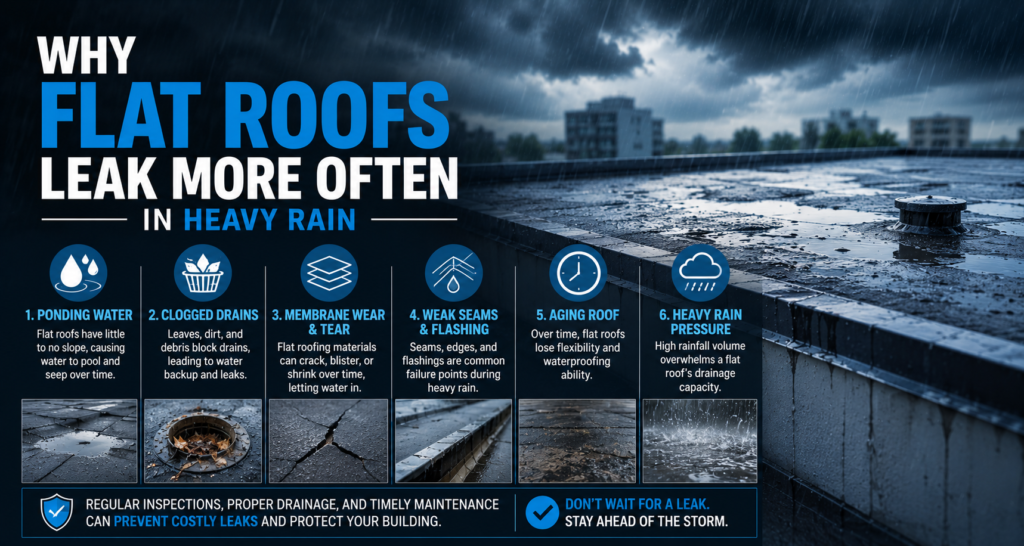
Flat roofs are convenient and popular, but they do not shed water the way a pitched roof does. That difference is exactly why flat roof leaks in heavy rain tend to be more frequent and harder to trace.
Slow Drainage Causes Standing Water
Even a flat roof usually has a gentle slope built in, but it is often too slight to clear heavy rainfall quickly. Water can sit on the surface for hours after a storm passes, placing constant pressure on the membrane and any seams underneath.
The longer standing water remains, the more likely it is to find a way through a weak spot.
Blocked Drains and Surface Cracks
Outlets and drains on flat roofs are easy to overlook until they stop working properly. A blocked drain during heavy rain can turn standing water into a small pond, while surface cracks from temperature changes or foot traffic give that water somewhere to travel into the structure.
A single heavy storm can be enough to expose these weak points.
Worn Waterproof Membranes
The waterproof membrane is the main line of defence on a flat roof, and once it wears thin, blisters, or splits, its ability to resist standing water drops sharply. Because flat roofs rely so heavily on this one layer, even small membrane damage can lead to a noticeable leak the next time rain settles on the surface.
Routine checks make this kind of wear easier to catch early.
A quick look at how different roof types tend to behave once heavy rain sets in:
| Roof Type | Typical Weak Point in Heavy Rain | Common Warning Sign |
| Pitched (shingle or tile) | Damaged shingles, tiles, or flashing | Ceiling stains directly below the damaged area |
| Flat | Pooling water, blocked drains, worn membrane | Damp patches near the centre of the ceiling |
| Metal | Loose fasteners or ageing seams | Drips near seams rather than across the panels |
Spotting the Warning Signs Early
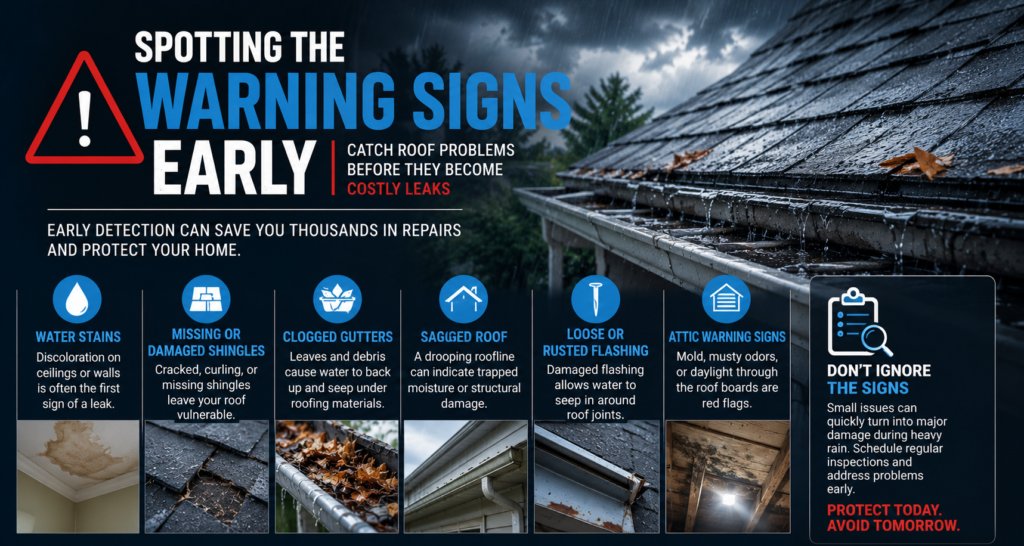
Roof leaks in heavy rain do not always announce themselves with an obvious drip. Many start as small signs that quietly worsen with every storm that follows.
Stains, Drips, and Damp Patches
Yellow-brown stains on ceilings or walls are usually the clearest sign that water has found a way in. Some leaks announce themselves with an audible drip during a storm, while others only show up as a damp patch that comes and goes with recent weather.
Checking the loft after a storm often reveals these signs before they reach the ceiling.
Mould and Musty Odours
A musty smell, especially one that grows stronger after rain, often points to moisture trapped inside the roof structure. Mould on ceilings, in corners, or around vents is a strong sign water has been getting in for some time, even without a visible drip.
Dealing with the source of moisture quickly stops mould from spreading further.
Why Professional Inspections Matter
Many of these weak points are hard to spot from the ground or even from inside the loft. A professional inspection can identify damaged flashing, a worn membrane, or blocked drainage before they cause a leak, rather than after the damage is done.
Catching issues early is almost always cheaper than repairing what a leak leaves behind.
What Happens If a Leak Is Left Untreated
Ignoring a leak that only shows up during storms rarely makes it disappear. In most cases, the damage continues out of sight until it becomes far harder to fix.
Structural and Material Damage
Water that keeps reaching the roof decking gradually weakens the wood underneath, reducing its ability to support the rest of the roof. Insulation absorbs moisture in much the same way, losing most of its effectiveness and sometimes needing full replacement.
In severe cases, sagging or soft spots can develop, signalling repairs are needed without delay.
Health and Electrical Risks
Damp conditions from repeated leaks create ideal ground for mould, which can affect air quality and aggravate allergies or respiratory issues.
Water reaching electrical wiring or fixtures near the roof also introduces a genuine safety hazard beyond cosmetic damage. A leak near light fittings or wiring should be treated as a priority, not a routine repair.
Rising Repair Costs Over Time
A leak caught early might only need a patch or a replaced section of flashing. The same leak left untreated through several storms can spread into ceilings, walls, and insulation, turning a manageable repair into a far costlier renovation.
Acting quickly after the first sign of trouble almost always saves money in the long run.
How to Respond and Prevent Future Leaks
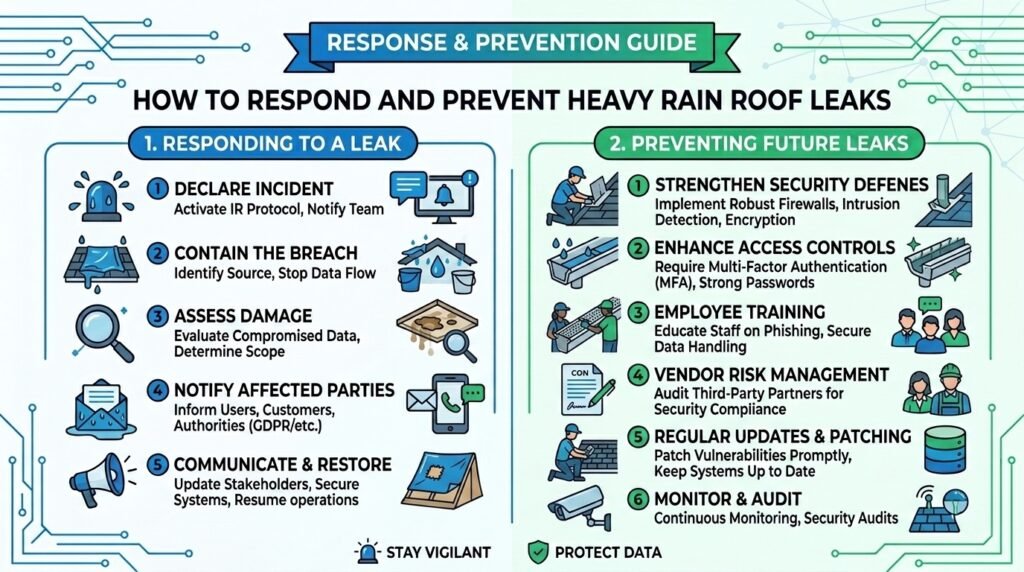
Once a leak is noticed, quick action limits the damage, while ongoing maintenance reduces the chance of it happening again. Both steps matter as much as fixing the immediate problem.
Temporary Steps to Limit Damage
A bucket under an active drip, with belongings moved out of the way, can prevent further damage while a permanent repair is arranged. Where a ceiling bulge has formed, carefully releasing the trapped water can stop it spreading further, though this is best done with professional guidance.
These steps only manage symptoms; a lasting fix depends on finding exactly where the water is entering.
When to Call a Roofing Professional
Climbing onto a wet roof is dangerous and rarely solves the issue, since the actual entry point is often somewhere other than where the leak appears indoors.
A qualified contractor can trace the leak to its source and repair the cause rather than the symptom. Calling in help as soon as a leak appears also lowers the chance of it returning.
Long-Term Prevention Habits
Regular gutter cleaning, periodic inspections, and prompt repair of damaged materials all reduce the chance of a leak developing in the first place.
Fixing small issues, such as a cracked tile or lifted flashing, before the next storm is far cheaper than dealing with the aftermath of a leak. Keeping a record of past repairs also makes recurring weak points easier to spot.
A short checklist worth keeping handy:
- Clean gutters and downspouts at least twice a year
- Clear debris from roof valleys after major storms
- Replace damaged shingles, tiles, or flashing promptly
- Book a professional roof inspection once a year or after severe weather
Frequently Asked Questions
Why does my roof only leak when it rains heavily?
Heavy rain sends more water across the roof in less time than a light shower, exposing weak points such as damaged materials or blocked drainage that stay hidden in normal weather.
Why do flat roofs leak more in heavy rain?
Flat roofs drain more slowly than pitched roofs, so water pools on the surface and has more time to seep through cracks or a worn membrane.
Can I temporarily stop a roof leak myself?
A bucket can catch dripping water and tape can cover a small area for now, but climbing onto the roof is best left to a professional.
How often should a roof be inspected?
Most roofs benefit from a professional inspection once a year, with an extra check after any unusually heavy storm.
What is the biggest risk of ignoring a roof leak?
Left unaddressed, a small leak can spread into the decking, insulation, and ceilings, turning an inexpensive repair into a costly renovation.
Conclusion
Roof leaks in heavy rain are rarely random; they usually mean an existing weakness, such as a damaged tile, a blocked gutter, or pooling water on a flat surface, has finally been put under enough pressure to let water through.
Spotting the early warning signs and arranging a professional inspection can stop a minor issue from becoming a major repair bill. With regular maintenance and prompt fixes, most homes can stay dry through the next heavy storm.
Related Articles
How to Install a Curtain Rod? Complete Beginner’s Guide
How to Clean Shower Tiles: Step-by-Step Guide for a Spotless Bathroom
Joist Tape for Decking: The Complete Guide to Protecting Your Deck’s Substructure
Roof Repairs Worcester: Your Complete Local Guide to a Safe and Lasting Roof
How to Get Rid of Mold in the Bathroom: Complete Step-by-Step Guide