

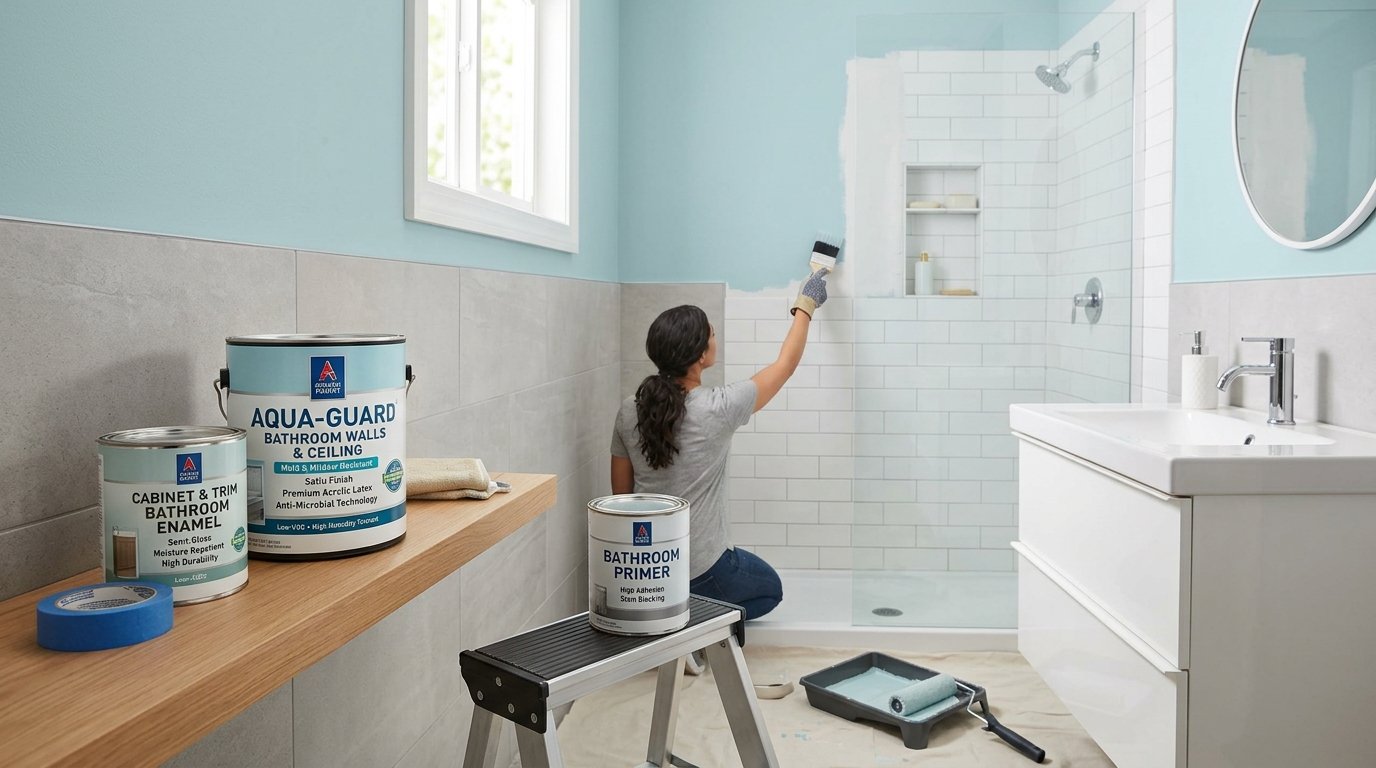

Choosing the right paint for your bathroom is not the same as picking paint for a bedroom or living room. Bathrooms deal with steam, splashes, and constant humidity, so the paint you use has to handle moisture without peeling, bubbling, or growing mold.
This guide breaks down exactly what type of paint for bathroom spaces works best, along with the finishes, brands, and application tips that matter.
Why Bathroom Paint Needs Special Consideration
Regular wall paint is made for dry rooms and cannot survive the constant humidity a bathroom produces every day. If you use the wrong paint, you will see cracking, peeling, or mold within a few months.
Moisture and Humidity Levels
Every time someone showers or runs hot water, the bathroom air fills with moisture that settles on walls and ceilings. Standard paint absorbs this moisture over time, which weakens its bond to the wall.
This is why bathroom-specific paint is formulated to resist water absorption rather than soak it in.
Risk of Mold and Mildew
Damp walls create the perfect environment for mold spores to grow, especially in corners, near the shower, and behind fixtures. Ordinary paint offers no protection against this, but bathroom paints usually contain anti-microbial additives that stop mold from forming on the surface.
This keeps the wall looking clean and also protects the health of everyone using the bathroom.
Ventilation Impact on Paint Choice
Bathrooms with poor ventilation or no exhaust fan hold moisture in the air much longer after a shower. In such cases, choosing a higher-quality moisture-resistant paint becomes even more important because the walls stay damp for extended periods.
If your bathroom has a window or a strong exhaust fan, you have a bit more flexibility, but it is still safer to stick with paints designed for wet areas.
Best Types of Paint for Bathroom Walls
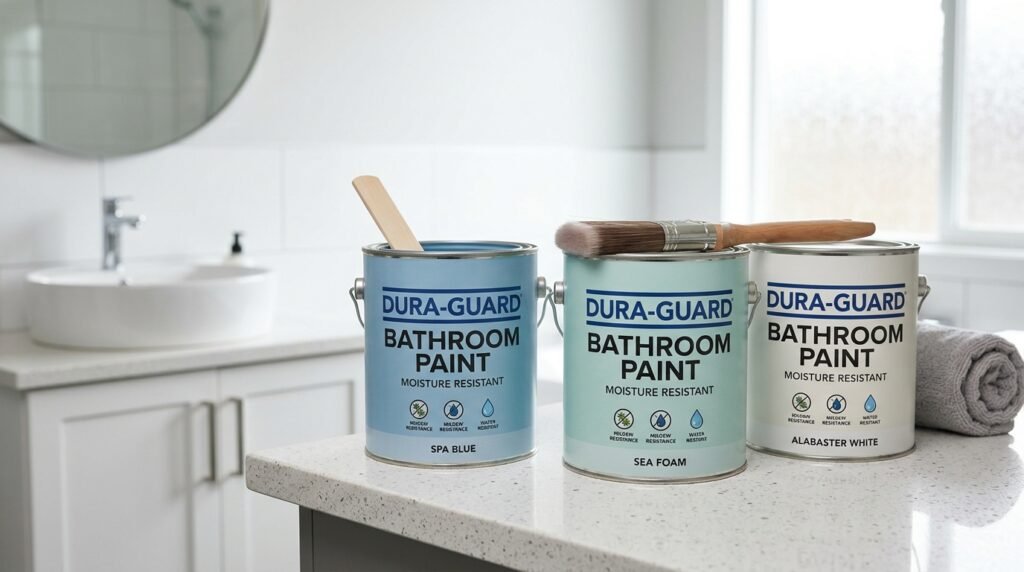
There are a few paint categories that consistently perform well in bathroom conditions, and each one has its own strengths depending on your budget and needs.
Semi-Gloss Paint
Semi-gloss is one of the most recommended options because it creates a slightly shiny, smooth surface that resists water and is easy to wipe clean. It reflects light well, which can make a small bathroom feel brighter and more open.
The slight sheen also makes it simple to spot and clean off soap scum or splashes without damaging the paint.
Satin Paint
Satin paint offers a soft, low-sheen finish that still holds up reasonably well against moisture, though it is a step below semi-gloss in durability.
Many homeowners prefer satin because it hides small wall imperfections better than glossier finishes. It works well in bathrooms with decent ventilation where extreme moisture resistance is not the top priority.
High-Gloss Paint
High-gloss paint provides the strongest water resistance of all standard finishes and is very easy to clean, making it ideal for areas that get splashed often, like around the sink or tub.
The downside is that its shiny surface highlights every bump, crack, or imperfection on the wall. It works best when the wall surface has been properly prepped and smoothed beforehand.
Specialty Bathroom or Kitchen Paint
Many paint brands now sell paints specifically labeled for bathrooms and kitchens, formulated with built-in mold and mildew inhibitors. These paints are engineered from the start to handle constant humidity, so they generally outperform regular paint even in a matching sheen level.
They tend to cost slightly more, but the added durability usually makes them worth the investment over time.
Best Paint Finishes for Bathroom Ceilings
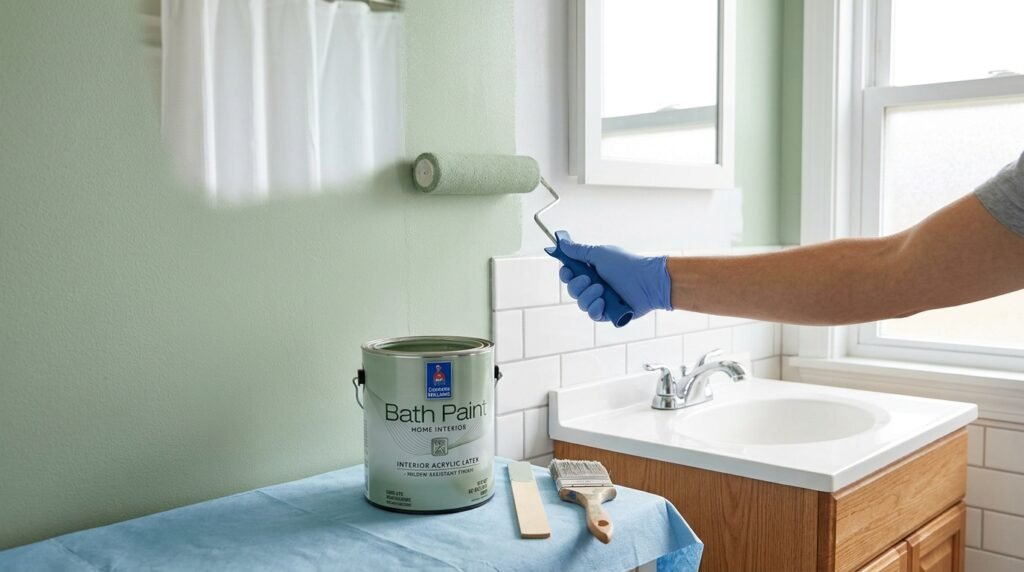
Bathroom ceilings face even more direct exposure to steam than the walls, since heat and moisture naturally rise. Choosing the right finish here helps prevent peeling and staining above the shower area.
Flat Ceiling Paint Limitations
Flat paint is common for ceilings elsewhere in the house because it hides imperfections well, but it struggles in bathrooms since it absorbs moisture easily.
Over time, this can lead to staining, bubbling, or mold spots forming on the ceiling surface. It is generally best avoided directly above showers or tubs.
Recommended Satin or Semi-Gloss for Ceilings
A satin or semi-gloss finish on the ceiling offers much better resistance to the steam that rises during hot showers.
These finishes are easier to wipe down if condensation leaves marks or light staining. Using the same finish as the walls also creates a more seamless, cohesive look throughout the room.
Best Paint Colors for Bathrooms
While the type of paint matters most for durability, color choice affects how the finished bathroom actually feels and looks.
Light and Neutral Tones
Light colors like soft white, pale gray, and light blue make small bathrooms appear larger and brighter, especially when paired with a semi-gloss finish.
These tones also make it easier to spot dirt or mildew early, so you can clean it before it spreads. They pair well with most tile and fixture colors, giving flexibility for future updates.
Bold and Dark Shades
Darker colors such as navy, deep green, or charcoal can give a bathroom a more dramatic, spa-like atmosphere, particularly in larger spaces.
These shades work best when the bathroom has good natural or artificial lighting to avoid feeling too closed in. A glossy finish in a dark color also adds a rich, polished look while still offering moisture resistance.
Paint Type Comparison Table
| Paint Finish | Moisture Resistance | Best Use Area | Maintenance |
| Semi-Gloss | High | Walls, trim | Easy to wipe clean |
| Satin | Medium | Walls with good ventilation | Moderate cleaning ease |
| High-Gloss | Very High | Splash zones, sink area | Very easy to clean |
| Specialty Bath Paint | High | Entire bathroom | Built-in mold resistance |
| Flat | Low | Not recommended | Hard to clean, absorbs moisture |
Application Tips for Long-Lasting Results
Even the best paint will fail early if it is not applied correctly, so a few preparation steps make a real difference in how long the job lasts.
Prepping the Walls Properly
Before painting, walls should be cleaned to remove soap residue, dust, and any existing mold, since paint will not bond well over these surfaces. Sanding down old paint and filling in cracks or holes creates a smoother base for the new coat.
Skipping this step is one of the most common reasons bathroom paint jobs fail early.
Using a Primer Designed for Wet Areas
A moisture-resistant primer creates a sealed base layer that helps the topcoat adhere better and last longer. This is especially important if the bathroom previously had mold issues, since certain primers are formulated to block stains from bleeding through.
Skipping the primer step often leads to peeling paint within just a year or two.
Allowing Proper Drying Time Between Coats
Rushing between coats traps moisture inside the paint layers, which can cause bubbling or an uneven finish once it fully dries. It’s best to wait for the recommended drying time on the paint can, and to keep the bathroom well-ventilated during the process. Two thin, well-dried coats almost always outperform one thick, rushed coat in both looks and durability.
Conclusion
Picking the right type of paint for bathroom walls comes down to balancing moisture resistance, finish, and how the space is used daily.
Semi-gloss and specialty bathroom paints remain the safest choices for most homeowners, while satin can work in well-ventilated spaces. Pairing the right paint with proper prep and primer ensures the finish stays fresh and mold-free for years rather than months.
FAQs
Can I use regular wall paint in a bathroom?
Regular paint can be used but tends to peel, stain, or grow mold much faster than moisture-resistant options, so it is not recommended for long-term use.
Is semi-gloss or satin better for bathrooms?
Semi-gloss generally offers stronger moisture resistance and easier cleaning, making it the safer pick, while satin works fine in bathrooms with strong ventilation.
How long does bathroom paint usually last?
With proper prep, primer, and a moisture-resistant finish, bathroom paint typically lasts five to seven years before needing a refresh.
Do I need a special primer for bathroom walls?
Yes, a moisture-resistant or mold-blocking primer significantly improves paint adhesion and lifespan compared to skipping this step.
What paint finish is best for a bathroom ceiling?
Satin or semi-gloss finishes handle rising steam much better than flat paint, which tends to absorb moisture and stain over time.
Related Articles
How Deep Are Kitchen Counters? Standard Depths for Every Counter Type
How to Get Rid of Mold in the Bathroom: Complete Step-by-Step Guide
How to Clean and Store Kitchen Tools: The Complete Guide
How to Get Rid of Mold in the Bathroom: Complete Step-by-Step Guide