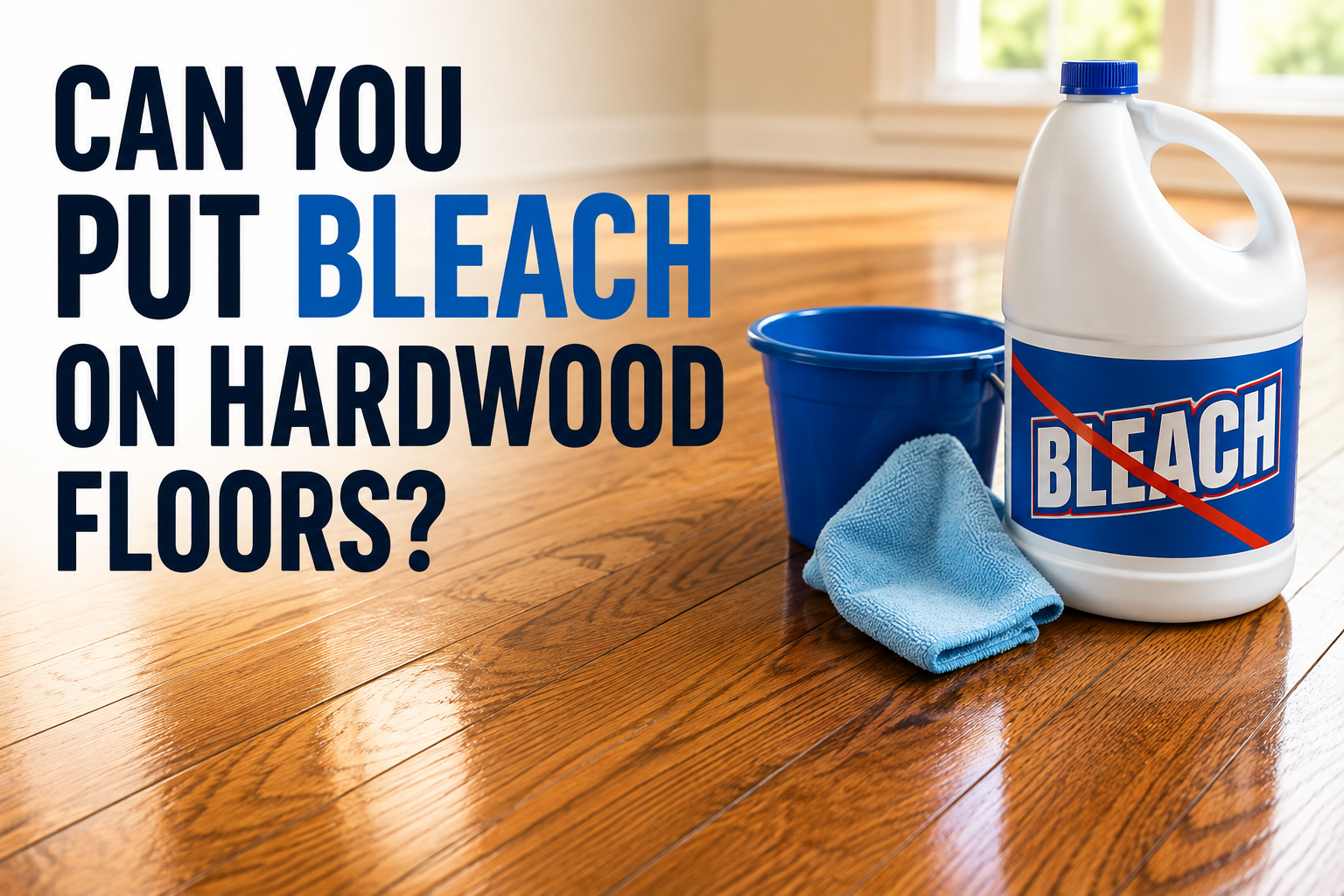

No, you should not put bleach on hardwood floors because it reacts with the wood fibers and breaks down the protective finish that keeps your floor looking new. Bleach can cause uneven discoloration, dull patches, and in some cases permanent staining that no amount of scrubbing can fix.
Over time, repeated exposure to bleach also weakens the wood itself, making it more prone to warping and cracking. Homeowners often reach for bleach because it feels like a strong, trustworthy cleaner, but hardwood needs a gentler approach.
The good news is that there are several safe, effective alternatives that clean and even disinfect hardwood without putting your investment at risk. This guide walks through exactly why bleach is a bad idea and what you should use instead.
Why Bleach Is Harmful to Hardwood Floors?
Bleach is a harsh chemical that was never designed with wood surfaces in mind, and hardwood floors are especially sensitive to it. Understanding exactly how bleach interacts with wood helps explain why so many flooring experts warn against using it at home.
Chemical Reaction With Wood Fibers
Wood is a porous, organic material, and bleach is an oxidizing agent that breaks down organic compounds on contact. When bleach seeps into the tiny pores of hardwood, it starts to break apart the natural lignin and cellulose that give the wood its strength and color. This reaction doesn’t just sit on the surface; it can penetrate deeper than most people realize, altering the wood from the inside out.
Damage to the Protective Finish
Most hardwood floors are coated with a protective finish such as polyurethane, wax, or oil-based sealant, and this layer is what actually takes the first hit from bleach.
The chemical eats away at the finish, leaving it dull, cloudy, or patchy in places. Once that protective barrier is compromised, the bare wood underneath becomes exposed to moisture, dirt, and further damage.
Discoloration and Uneven Bleaching Spots
Because hardwood floors are rarely perfectly uniform in porosity, bleach doesn’t spread or absorb evenly across the surface. This results in blotchy, inconsistent light patches that stand out sharply against the surrounding wood tone. These spots are notoriously difficult to blend back in, even with sanding or restaining.
Weakening and Warping Over Time
Repeated or prolonged bleach exposure doesn’t just affect appearance; it physically weakens the wood’s structural integrity. As the fibers break down, the wood becomes more susceptible to swelling, warping, or cupping, especially in humid environments. This kind of damage often means replacing entire boards rather than a simple refinish.
Effect on Different Finish Types
Not all finishes react to bleach in the same way, and knowing the difference can help you understand the risk level for your specific floor.
| Finish Type | Reaction to Bleach |
| Polyurethane | Becomes cloudy, may peel or lose sheen |
| Wax-based | Strips away quickly, leaving bare wood exposed |
| Oil-based | Reacts chemically, causing dark or uneven blotches |
What Happens If You Accidentally Spill Bleach on Hardwood?
Accidents happen, and a bleach spill doesn’t have to mean permanent disaster if you act fast. Knowing the right response in the first few minutes can make a real difference in how much damage occurs.
Immediate Steps to Take
The moment bleach touches your hardwood floor, blot it up immediately with a dry cloth rather than wiping, since wiping can spread the chemical further.
Follow this by rinsing the area gently with clean water on a damp cloth to dilute any remaining residue. Avoid scrubbing the spot, as this can push the bleach deeper into the wood grain.
How to Minimize Damage
Once the area is blotted and rinsed, dry it thoroughly with a towel and allow the floor to air out in a well-ventilated space. Placing a fan nearby can help speed up drying and reduce the chance of the bleach continuing to react with residual moisture. Avoid walking on the spot or placing rugs over it until you’re confident it’s fully dry and stable.
Signs of Permanent Damage
If the spot has turned noticeably lighter, feels rough or raised compared to the surrounding floor, or the finish looks cracked, these are signs the damage may be permanent.
In these cases, sanding and refinishing that specific area, or consulting a flooring professional, is usually the only real fix. Catching it early gives you the best chance of a full recovery.
Safe Alternatives to Bleach for Cleaning Hardwood Floors
Since bleach is off the table, it helps to know exactly what you can reach for instead that won’t put your floor at risk. Each of these alternatives targets everyday dirt and grime without the harsh side effects.
pH-Neutral Hardwood Floor Cleaners
Cleaners specifically formulated for hardwood are designed to lift dirt without stripping the finish or altering the wood’s pH balance. These products are widely available and are the safest go-to option for routine cleaning. Always check the label to confirm it’s labeled safe for sealed hardwood surfaces.
Vinegar and Water Solution
A mild solution of about one-quarter cup of white vinegar mixed with a gallon of warm water works well for light cleaning. This natural combination cuts through grease and grime without leaving behind a harsh chemical residue. It’s important to use a well-wrung mop so you’re not saturating the wood with liquid.
Mild Dish Soap and Warm Water
A few drops of gentle dish soap mixed into warm water can handle everyday spills and foot traffic marks effectively. This method is budget-friendly and uses ingredients most households already have on hand. Just be sure to dry the floor immediately after mopping to prevent water damage.
Commercial Wood-Safe Disinfectants
For situations that call for more than basic cleaning, look for disinfectants that are explicitly labeled safe for hardwood or sealed wood surfaces. These products are formulated to kill germs without the aggressive chemical reaction that bleach causes. Reading the manufacturer’s instructions ensures you’re using the right dilution and contact time.
Steam Cleaning
Steam cleaners can sanitize hardwood using heat and moisture instead of chemicals, though this method comes with some trade-offs. On one hand, it’s chemical-free and effective at killing bacteria; on the other hand, excess moisture and heat can damage certain finishes if used too frequently. If you choose this route, use a steam mop specifically designed for sealed hardwood and keep sessions brief.
How to Disinfect Hardwood Floors Without Bleach?
Disinfecting hardwood doesn’t require bleach at all, and there are several wood-safe methods that get the job done just as effectively. This is especially useful for households dealing with pet messes, illness, or general peace of mind.
EPA-Approved Wood-Safe Disinfectants
Look for disinfectant sprays or wipes that carry an EPA registration number and are specifically marked safe for sealed wood floors. These products are tested to kill common germs and bacteria without breaking down the finish. Always follow the recommended contact time listed on the packaging for full effectiveness.
Rubbing Alcohol Method
Isopropyl alcohol diluted with water in a one-to-one ratio can disinfect small areas effectively while evaporating quickly, which reduces moisture exposure. This makes it a good spot-treatment option rather than a full-floor solution. Test it on a hidden area first to confirm it doesn’t affect your specific finish.
Diluted Hydrogen Peroxide
A weak hydrogen peroxide solution, heavily diluted with water, can act as a mild disinfectant and stain treatment in one step. It’s gentler than bleach but should still be used sparingly and wiped up promptly. As with any new product, a small test patch is a smart precaution.
When Disinfection Is Actually Necessary
Most everyday hardwood cleaning doesn’t require full disinfection, and reserving these stronger methods for situations like illness in the home or pet accidents keeps your floor healthier long-term. Overusing any disinfectant, even a wood-safe one, can gradually wear down the finish. Regular sweeping and mild cleaning solutions are usually enough for daily maintenance.
How to Remove Stains from Hardwood Floors Safely?
Stains are one of the biggest reasons people consider bleach in the first place, but there are far safer ways to tackle them depending on what caused the mark.
Identifying the Stain Type
Before treating any stain, it helps to figure out what caused it, since pet stains, water rings, and ink marks each respond to different treatments. Water rings often sit on the surface of the finish, while pet stains and ink can penetrate deeper into the wood. Taking a moment to identify the source saves time and prevents using the wrong method.
Baking Soda Paste Method
Mixing baking soda with a small amount of water into a paste creates a gentle abrasive that can lift light stains and water rings without scratching the finish. Apply it directly to the stain, let it sit for a few minutes, then wipe away with a soft, damp cloth. This method works particularly well for surface-level marks.
Mineral Spirits for Tough Stains
For stubborn stains like ink, marker, or certain oil-based marks, mineral spirits applied with a soft cloth can break down the substance without harming the wood. Always work in a well-ventilated area and test on an inconspicuous spot first. Wipe the area clean afterward to remove any residue.
When to Call a Professional
If a stain has soaked deep into the wood or covers a large area, sanding and refinishing by a professional is often the most reliable fix. Professionals can match stain color and finish sheen far more precisely than a DIY attempt. This is especially worth considering for antique or high-value flooring.
Tips for Long-Term Hardwood Floor Maintenance
Keeping hardwood floors in great condition long-term comes down to consistent, gentle care rather than occasional deep cleaning with harsh products.
Daily and Weekly Cleaning Routine
Sweeping or vacuuming daily removes grit that can scratch the surface over time, while a weekly damp mop with a wood-safe cleaner keeps floors looking fresh. Sticking to this rhythm prevents dirt buildup that would otherwise require more aggressive cleaning later. Consistency matters more than intensity when it comes to hardwood care.
Protecting Floors From Spills and Moisture
Wiping up spills as soon as they happen prevents water damage and staining before it has a chance to set in. Using furniture pads and doormats also reduces scratches and tracked-in moisture from shoes. These small habits go a long way in preserving the wood’s finish.
Recommended Cleaning Tools
A microfiber mop is ideal for hardwood since it traps dirt effectively without scratching, and it requires far less water than traditional string mops. Soft-bristle brooms and vacuum attachments designed for hard floors are also worth having on hand. Avoiding steel wool or abrasive scrub pads protects the finish from unnecessary wear.
Refinishing Schedule
Most hardwood floors benefit from refinishing every three to five years, depending on foot traffic and how well they’ve been maintained. Watching for signs like dullness, minor scratches, or fading finish can help you time this before damage becomes severe. Regular refinishing keeps the protective layer strong and the wood underneath well protected.
Frequently Asked Questions
Can diluted bleach be used at all?
Even heavily diluted bleach carries risk for hardwood, since the chemical reaction with wood fibers and finish can still occur, just more slowly. It’s safer to avoid bleach entirely and rely on wood-specific cleaners instead.
What about laminate or engineered wood floors?
Laminate and engineered wood have different surface layers than solid hardwood, but bleach is still generally not recommended due to similar finish and discoloration risks. Always check the manufacturer’s care guidelines for the specific product.
Does bleach kill mold on hardwood?
While bleach can kill mold on many surfaces, using it on hardwood risks driving moisture and spores deeper into the wood while damaging the finish. A wood-safe antimicrobial cleaner is a better option for mold issues on hardwood.
How do I fix bleach damage if it already happened?
Minor bleach damage can sometimes be sanded down and refinished locally, while more severe cases may require board replacement. Consulting a flooring professional early gives you the best chance at an affordable fix.
Conclusion
So, can you put bleach on hardwood floors? The clear answer is no, since bleach damages both the finish and the wood fibers underneath, leading to discoloration, weakening, and costly repairs.
Fortunately, safer alternatives like pH-neutral cleaners, diluted vinegar solutions, and wood-safe disinfectants clean just as effectively without the risk. Pairing these products with consistent daily care and a proper refinishing schedule keeps hardwood floors looking their best for years to come.
Related Articles
How to Clean Vinyl Floors: The Complete Step-by-Step Guide
Joist Tape for Decking: The Complete Guide to Protecting Your Deck’s Substructure
What Is an Asbestos Stucco Ceiling? Learn the risks and stay safe.