
Choosing what color carpet with gray walls works best can feel confusing because gray is such a flexible shade that pairs with almost everything, yet picking the wrong tone can still make a room feel flat or mismatched.
This guide walks through every practical option, from warm beige to bold navy, so you can match your carpet to your gray walls with confidence. We will cover undertones, lighting, room type, and common mistakes people make.
By the end, you will have a clear shortlist of carpet shades that suit your specific gray wall tone. Whether your walls lean warm or cool, there is a carpet color here that will complement them beautifully.
Understanding Gray Walls
Gray is not a single color but a family of shades that can lean warm, cool, or neutral depending on the pigments mixed into it. Before picking a carpet, it helps to understand exactly which type of gray is on your walls.
Types of Gray
Gray walls generally fall into three categories: warm gray, cool gray, and true neutral gray. Warm gray contains hints of brown or beige and feels cozy, while cool gray leans toward blue or green and feels crisp. Neutral gray sits in between and is the easiest to pair with almost any carpet shade.
How Lighting Changes Gray
Natural light, especially in the morning and evening, can make the same gray wall look noticeably different throughout the day.
A gray that looks soft and blue in daylight might appear warmer under yellow-toned artificial bulbs at night. Testing your carpet swatch under both lighting conditions prevents unpleasant surprises later.
Identifying Undertones
Every gray has an undertone hiding beneath the surface, and spotting it is the key to a good carpet match.
Hold a white sheet of paper next to your wall in daylight; if the gray looks slightly blue, purple, green, or beige in comparison, that is your undertone, and your carpet should either complement or gently balance it.
Color Theory Basics for Pairing Carpet with Walls
Good pairing comes down to a simple principle: either you match tones for harmony or contrast them for drama. Understanding a few basic rules makes carpet shopping much faster and less stressful.
Complementary vs Analogous Schemes
A complementary scheme pairs gray with a contrasting warm tone like terracotta or blush, creating visual energy in the room.
An analogous scheme instead sticks to nearby cool tones like blue-gray or lavender-gray carpet, producing a calmer, more unified look that many homeowners prefer for bedrooms.
Warm vs Cool Pairing Rules
As a general guideline, cool gray walls look best with either cool-toned carpet for harmony or warm carpet for contrast, while warm gray walls typically look best paired with warm or neutral carpet tones.
Mixing a strongly warm gray with a strongly cool carpet color can sometimes create a visual clash that feels unintentional rather than stylish.
Contrast vs Harmony
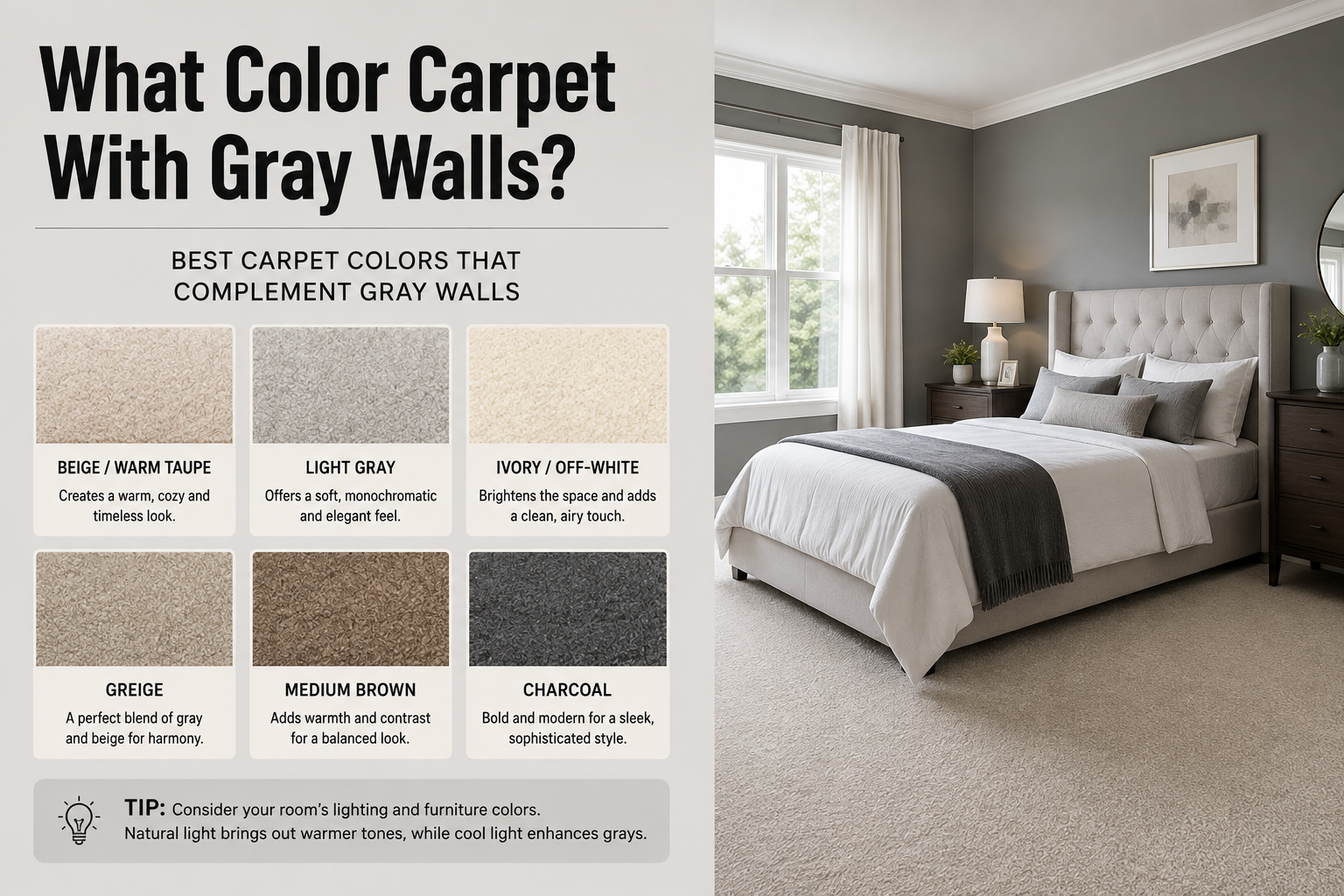
Choosing between contrast and harmony really depends on the mood you want to create in the space. High-contrast pairings, like charcoal carpet with light gray walls, feel bold and modern, whereas harmonious pairings, like taupe carpet with warm gray walls, feel soft and restful.
Best Carpet Colors for Gray Walls
There is no single universal answer to what color carpet with gray walls works everywhere, but certain shades consistently perform well across most gray tones. The options below range from safe and classic to bold and characterful.
Beige and Tan Carpet
Beige and tan remain the most popular and foolproof choices for gray walls because they add warmth without overpowering the room. This combination works particularly well in living rooms and family spaces where a cozy, welcoming feel is the goal.
Taupe Carpet
Taupe sits neatly between beige and gray, making it an excellent bridge color that ties warm furniture and cool walls together. It is especially flattering with warm gray or greige walls, since the shared undertones create a seamless, elegant transition.
Navy or Blue-Gray Carpet
For a more sophisticated, monochromatic look, navy or blue-gray carpet pairs beautifully with cool gray walls. This combination feels calm and grounded, and works especially well in bedrooms or home offices where a serene atmosphere matters most.
Charcoal or Dark Gray Carpet
Pairing dark charcoal carpet with lighter gray walls creates strong contrast and a distinctly modern, contemporary feel. This option suits minimalist interiors but can make smaller rooms feel more enclosed, so it works best in larger spaces with good natural light.
Cream or Ivory Carpet
Cream and ivory carpet brighten a room instantly and soften the coolness of gray walls without introducing too much contrast. This is a strong option for rooms that receive limited natural light, since lighter carpet reflects available light back into the space.
Blush Pink or Mauve Carpet
For homeowners wanting a touch of personality, blush pink or mauve carpet introduces gentle warmth and femininity against gray walls. This pairing has become increasingly popular in bedrooms and nurseries for its soft, welcoming character.
Green Carpet Tones
Sage, olive, and deep emerald carpet bring a nature-inspired warmth that pairs surprisingly well with both warm and cool gray walls. Green carpet works particularly well in living rooms and studies where a grounded, organic feel is desired.
Patterned or Multi-Tone Carpet
If a solid color feels too plain, a patterned or multi-tone carpet can add texture and visual interest while still incorporating gray as one of its shades. This option works well in hallways and high-traffic areas since patterns also help disguise everyday wear and dirt.
Matching Carpet Color by Gray Wall Shade
Different intensities of gray call for slightly different carpet strategies, and matching them correctly avoids a flat or mismatched appearance.
Light Gray Walls
Light gray walls pair well with almost any carpet color, but beige, taupe, and soft blue tend to look the most balanced. Darker carpet shades like charcoal also work nicely here, since the contrast remains pleasant rather than overwhelming.
Medium Gray Walls
Medium gray is the most versatile shade and pairs comfortably with cream, taupe, navy, or even patterned carpet. This middle-ground gray rarely clashes with any carpet choice as long as the undertones are considered.
Dark or Charcoal Gray Walls
Dark gray walls benefit from lighter carpet, such as cream, ivory, or light beige, to prevent the room from feeling too heavy or closed in. Introducing a lighter carpet also helps balance the visual weight of deep-colored walls.
Warm Gray or Greige Walls
Warm gray, often called greige, pairs naturally with warm carpet tones like tan, taupe, and soft brown. Avoiding overly cool carpet shades here keeps the room’s warmth consistent and prevents an awkward temperature mismatch.
Cool or Blue Gray Walls
Cool or blue-toned gray walls look best with either cool carpet shades like blue-gray and navy, or warm neutrals like beige to create gentle contrast. Steering clear of overly warm, orange-leaning carpet tones helps maintain the room’s cool, calm character.
Carpet Color Based on Room Type
The right carpet color also depends heavily on how a particular room is used and what mood suits that space best.
Living Room
Living rooms generally suit warm, inviting carpet tones like beige, taupe, or soft green, since these colors encourage comfort during long hours of relaxation and socializing. Darker carpet can also work well if the living room has ample natural light.
Bedroom
Bedrooms benefit from soft, calming carpet colors such as blush, cream, or blue-gray, which support restful sleep and a peaceful atmosphere. Avoiding overly bold or high-contrast carpet keeps the space feeling restorative rather than stimulating.
Home Office
A home office often works best with neutral or cool-toned carpet like taupe or navy, since these shades support focus without becoming distracting. Patterned carpet can also help disguise scuff marks in a frequently used workspace.
Kids’ Room
For a child’s room, playful colors such as soft green, muted blue, or patterned carpet add personality while still complementing gray walls. Stain-resistant materials are especially important here, given the higher likelihood of spills and messes.
Basement or Rec Room
Basements and recreation rooms often suit darker, more durable carpet colors like charcoal or deep taupe, which better hide dirt and wear in high-traffic zones. Since basements typically have less natural light, balancing darker carpet with lighter wall tones is worth considering.
Factors to Consider Before Choosing
Beyond color theory alone, several practical factors influence which carpet shade will actually work well in your specific space.
Lighting Conditions
Rooms with abundant natural light can handle darker or bolder carpet colors, while dimly lit rooms usually look better with lighter shades that reflect available light. Always view carpet samples in your actual room rather than relying on in-store lighting.
Room Size and Ceiling Height
Smaller rooms tend to feel more spacious with lighter carpet colors, while larger rooms can comfortably absorb darker, richer tones. Ceiling height also plays a role, since dark flooring in a low-ceilinged room can sometimes feel visually heavy.
Existing Furniture and Decor
Your carpet should complement, not compete with, the colors already present in your furniture, curtains, and decor. Bringing a fabric swatch or photo of your furniture when carpet shopping helps ensure everything coordinates properly.
Maintenance and Stain Visibility
Lighter carpet shows dirt and stains more easily, while mid-tone and patterned carpet tends to hide everyday wear better. Households with children or pets often find mid-tone taupe or patterned options more practical long term.
Personal Style and Mood
Ultimately, your personal preference matters just as much as design rules, since the room needs to reflect how you want to feel in it. Some homeowners prioritize a calm, cozy mood, while others prefer a bold, editorial look, and both approaches can work successfully with gray walls.
Carpet Material and Texture Considerations
Color is only part of the equation, since the material and texture of a carpet also influence how its color appears in a room.
How Texture Affects Color Perception
Textured or looped carpet can appear slightly darker or more muted than the same color in a smooth, flat weave, due to the way light interacts with the surface. Always check a physical sample under your home lighting rather than judging color from a flat photo.
Popular Carpet Materials
Wool carpet offers a rich, deep color payoff and excellent durability, while nylon and polyester blends are more budget-friendly and highly stain-resistant. Each material takes dye slightly differently, so the same color name can look subtly different depending on the fiber used.
Pile Height and Visual Effect
Higher pile carpet tends to create shadowing that makes colors look richer and more dimensional, while low-pile carpet shows a flatter, more uniform color. Higher pile also tends to show footprints and vacuum lines more visibly, which is worth considering for busy households.
Common Mistakes to Avoid
Even with good color theory in mind, a few recurring mistakes tend to catch people off guard when choosing carpet for gray walls.
Ignoring Undertones
Skipping the undertone check is one of the most common mistakes, since a carpet that looks neutral in isolation can clash badly once placed against a wall with a strong blue or beige undertone. Always compare samples directly against your wall before finalizing a decision.
Skipping Sample Testing
Choosing a carpet color from a small swatch or an online photo without testing it in your actual room’s lighting often leads to disappointment once it is installed. Large samples viewed at different times of day give a far more accurate impression.
Overmatching the Room
Making the carpet color nearly identical to the wall color can flatten a room’s visual depth, leaving it looking monotonous rather than intentional. Introducing at least subtle contrast usually creates a more polished, layered result.
Overcontrasting the Space
On the opposite end, pairing extremely dark carpet with extremely light gray walls, or vice versa, can feel jarring if not balanced with transitional decor elements. Using rugs, cushions, or curtains in a middle-tone shade can help soften an overly stark contrast.
Design Tips from Interior Experts
Interior designers consistently recommend a few practical habits that make choosing the right carpet color far less stressful.
Sampling and Swatch Testing
Always request large carpet swatches rather than tiny clippings, and place them in multiple spots around the room to see how they read in different lighting. Leaving samples out for a few days allows you to judge them fairly rather than reacting to a first impression.
Using Accent Rugs First
If committing to permanent carpet feels risky, laying down an accent rug in your target color is a low-cost way to preview the pairing before making a full purchase. This trial approach is especially useful for renters or anyone unsure about a bolder color choice.
Balancing With Other Elements
Curtains, furniture upholstery, and wall art should echo at least one tone from your chosen carpet color to create a cohesive, intentional design rather than isolated color choices.
This layered coordination is often what separates a professionally designed room from a mismatched one.
Trending Carpet and Wall Color Combinations
Currently, warm neutral carpet paired with soft warm gray walls remains one of the most requested combinations, reflecting a broader shift toward cozy, livable interiors.
Blue-gray and navy carpet against cool gray walls also continues to trend in bedrooms and home offices for its calm, grounded aesthetic. Meanwhile, sage and olive green carpet is gaining popularity as homeowners lean into nature-inspired, organic color palettes throughout the house.
Frequently Asked Questions
Does gray carpet go with gray walls?
Yes, gray carpet can work with gray walls if there is a noticeable difference in shade or undertone between the two, creating subtle contrast rather than a flat, matching look.
What is the safest carpet color for gray walls?
Beige and taupe are widely considered the safest choices, since they complement nearly every shade of gray without risking a clash.
Can I use a bold color carpet with gray walls?
Yes, bold colors like emerald green or navy can work beautifully against gray walls when balanced with neutral furniture and decor.
Does gray carpet make a room look smaller?
Darker gray carpet can make a room feel more enclosed, especially with limited natural light, while lighter gray carpet tends to preserve a sense of openness.
What carpet color hides dirt best with gray walls?
Mid-tone taupe, charcoal, and patterned carpets tend to hide everyday dirt and wear better than very light or very dark solid colors.
Conclusion
There is no single correct answer to what color carpet with gray walls suits every home, since the best choice depends on your wall’s undertone, room lighting, and personal style.
Warm neutrals like beige and taupe offer a safe, timeless pairing, while navy, charcoal, or green carpet can add bolder personality for those wanting more contrast. Testing samples in your actual room lighting remains the most reliable way to confirm your final choice before committing.
Related Articles
How to Clean and Store Kitchen Tools: The Complete Guide
Pot Lights in Cathedral Ceiling: A Complete Planning and Installation Guide
Factors Affecting Door Installation Cost: What You Need to Know