


If you’ve ever stood at the top of your basement stairs wondering whether you should insulate basement ceiling joists or leave them bare, you’re not alone. This is one of the most common questions homeowners ask when they’re trying to make their house more comfortable and energy-efficient. The truth is, the answer isn’t the same for everyone. It depends on how you use your basement, whether it’s heated, and what your long-term goals are for the space.
In this guide, we’ll walk through everything you need to know in simple, everyday language. By the end, you’ll have a clear idea of whether insulating your basement ceiling makes sense for your home, or whether your money and effort are better spent elsewhere.
Quick Answer
In most cases, you should not insulate the basement ceiling if you plan to heat or finish the basement as usable living space. Instead, insulate the basement walls so the whole basement stays close to the same temperature as the floors above it. You should insulate the basement ceiling only if the basement will remain unheated and unconditioned, such as a storage area or a space that just houses mechanical equipment.
Now let’s dig into the details so you understand exactly why this is the case, and how to figure out what applies to your specific home.
Understanding Basement Ceiling Insulation
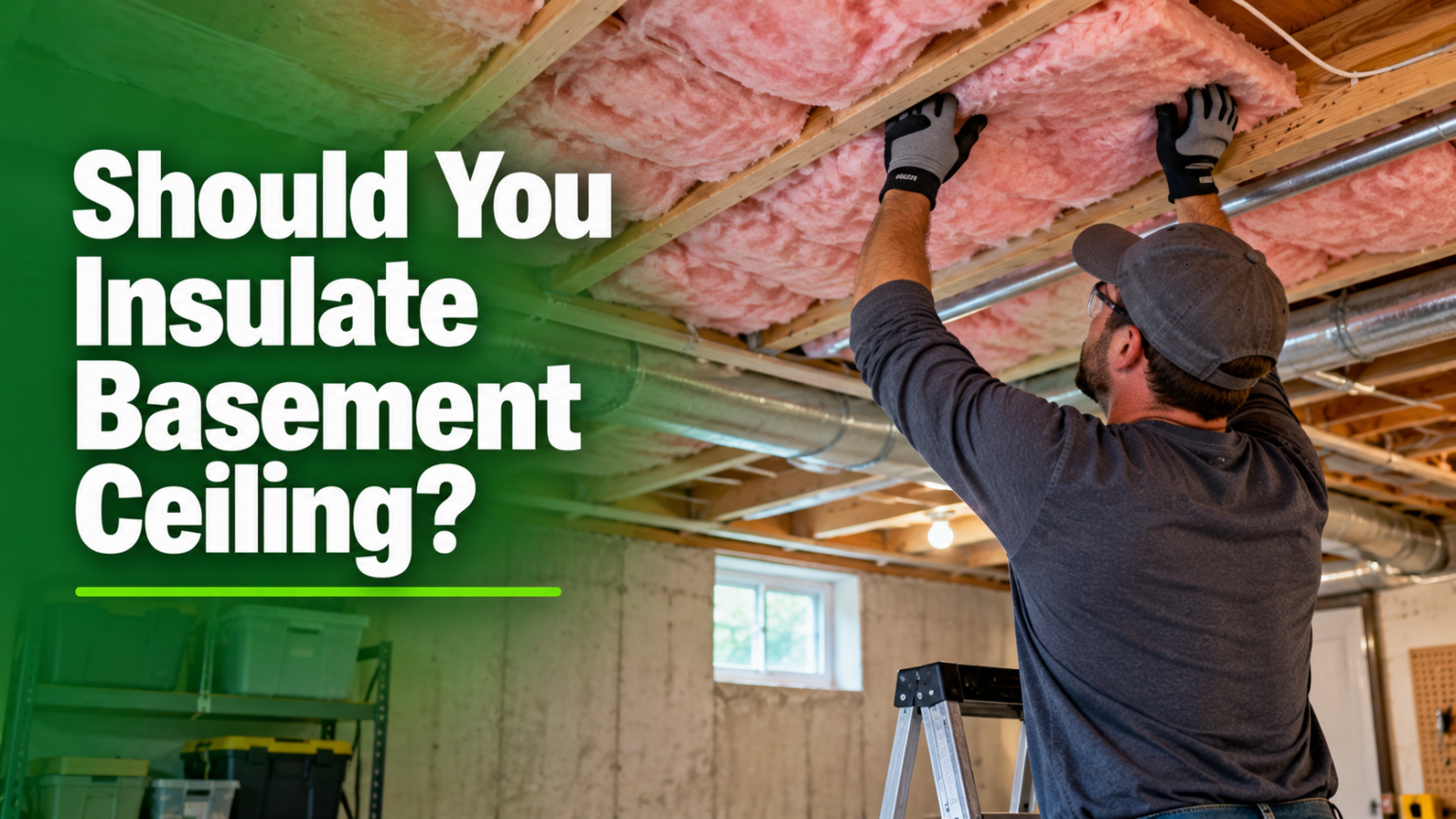
Basement ceiling insulation refers to the insulation material placed between the floor joists that separate your basement from the living space directly above it. It’s easy to picture: if you go down into an unfinished basement and look up, the “ceiling” you see is actually the underside of your main floor. Insulating that structure means filling the gaps between those joists with fiberglass, foam, or another insulating material.
This is different from basement wall insulation, which is applied to the foundation walls around the perimeter of the basement itself. The distinction matters a lot, because each approach treats the basement differently.
- Ceiling insulation treats the basement as a separate zone from the rest of the house, similar to an unheated garage or crawl space.
- Wall insulation treats the basement as part of the home’s conditioned living space, keeping it closer in temperature to the rooms above.
Basements naturally influence the comfort of the floors above them. A cold, damp, uninsulated basement can make hardwood or tile floors feel chilly on the main level, while a basement that’s properly sealed and insulated at the walls tends to keep the whole home more consistent in temperature year-round.
When You Should Insulate the Basement Ceiling
There are specific situations where insulating the basement ceiling actually makes sense. Here’s when it’s the right call:
If the basement is unheated or unconditioned. If you don’t run heating or cooling into the basement and never plan to, insulating the ceiling helps stop heat from escaping the main floor downward into a space that isn’t being warmed anyway.
If the basement is used only for storage or mechanicals. Basements that house furnaces, water heaters, or just boxes of holiday decorations don’t need to be comfortable for people. In that case, treating the ceiling like the boundary of your conditioned home makes sense.
If you want to reduce noise between floors. Insulation isn’t just about temperature. Materials like fiberglass batts or mineral wool absorb sound, so if footsteps or noise from above bother people in the basement (or vice versa), ceiling insulation can help even in a heated basement.
If local building codes require it. Some municipalities have specific requirements for fire-rated or insulated basement ceilings, especially in multi-family buildings or homes with rental units below. It’s always worth checking before you start any work.
When You Should Not Insulate the Basement Ceiling
On the flip side, there are common scenarios where insulating the basement ceiling actually works against you.
If you plan to finish the basement as living space. Once a basement becomes a bedroom, home office, or family room, you want it to feel like part of the house, not a separate cold zone. Insulating the ceiling in this case traps the basement in its own temperature bubble, separate from the rest of the home.
If the basement is heated or conditioned. If you’re already running ductwork, a mini-split, or baseboard heat into the basement, insulating the ceiling blocks that conditioned air from helping regulate the temperature of the floor above, and vice versa.
If ductwork or plumbing runs through the joist space. Many homes route HVAC ducts and water pipes through the basement ceiling area. Insulating around these can create uneven temperatures, and in cold climates, it may actually increase the risk of frozen pipes because the pipes lose the ambient warmth of the basement air.
Why insulating walls instead makes more sense here. By insulating the foundation walls instead, you keep the whole basement inside your home’s “thermal envelope.” This generally leads to a more even temperature throughout the house and avoids many of the moisture and freezing issues that come with ceiling insulation.
Pros of Insulating the Basement Ceiling
Insulating the basement ceiling does have real benefits in the right circumstances.
It helps keep the upper floors warmer, since heat isn’t escaping downward into an unconditioned basement. It also reduces sound transfer between floors, which is especially helpful in homes with multiple generations living together or a rental unit downstairs. Additionally, ceiling insulation acts as a buffer that clearly separates an unconditioned basement from the conditioned living space above, and depending on the material used, some products also offer improved fire resistance.
Cons of Insulating the Basement Ceiling
That said, there are downsides worth understanding before committing to this approach.
Insulating the ceiling makes the basement itself colder in winter, since it’s cut off from the warmth of the floor above. This can be a real problem for homes in colder climates, where pipes running through an insulated ceiling cavity are at greater risk of freezing once that warmth is blocked off. Poorly installed insulation can also trap moisture, leading to mold or mildew problems over time. Finally, in situations where the basement was already reasonably comfortable, you may end up spending money on materials and labor without seeing much return in energy savings.
Basement Walls vs. Basement Ceiling: Which Should You Insulate
To make this decision easier, here’s a simple side-by-side comparison:
| Factor | Insulate Basement Walls | Insulate Basement Ceiling |
|---|---|---|
| Best for | Finished or heated basements | Unheated, storage-only basements |
| Effect on basement temperature | Keeps basement warmer, closer to house temp | Basement stays colder, separate from house |
| Pipe freezing risk | Lower | Higher, if pipes are in the ceiling cavity |
| Energy efficiency | Better for whole-home efficiency | Better only if basement is truly unused |
| Sound control | Minimal | Better sound dampening between floors |
| Common use case | Basements used as living space | Basements used for storage/mechanicals only |
For most homeowners, especially those planning to use the basement in any regular way, insulating the walls is the recommended approach. In multi-family homes or homes with a rental unit in the basement, insulating the ceiling for sound and fire separation can still make sense, even if the basement is heated.
Types of Insulation Materials to Consider
If you’ve decided that ceiling insulation is right for your situation, here’s a look at the most common materials.
Fiberglass batts are the most widely used option, largely because they’re affordable and simple to install between standard joist spacing. Rigid foam board offers a higher R-value per inch and resists moisture better than fiberglass, though it requires more careful cutting and fitting. Spray foam creates an excellent air seal and is particularly effective at blocking both air movement and moisture, but it costs more and typically requires professional installation. Mineral wool, meanwhile, stands out for its fire resistance and strong soundproofing qualities, making it a popular choice when noise reduction between floors is the main goal.
Moisture and Mold Considerations
Basements are naturally more prone to moisture than the rest of the home, thanks to their below-grade position and proximity to soil and groundwater. This is one of the biggest reasons insulation projects in basements need extra care.
When insulation is installed incorrectly, it can trap moisture against wood framing or drywall, creating the perfect environment for mold growth. This is especially true if there’s no vapor barrier or if the vapor barrier is placed on the wrong side of the insulation for your climate. Before insulating any part of your basement, it’s worth checking for signs of existing moisture problems, such as musty odors, visible water stains, efflorescence (white, chalky deposits) on foundation walls, or peeling paint. Addressing these root causes first will save you from bigger headaches down the road.
Step-by-Step: How to Insulate a Basement Ceiling
If you’ve weighed the pros and cons and decided ceiling insulation is right for your unheated basement, here’s a general overview of the process.
- Gather your tools and materials. You’ll typically need insulation batts or rolls, a utility knife, safety gloves, a dust mask, and staples or insulation supports if required by your chosen material.
- Prepare the space. Clear the area beneath the joists, check for any existing moisture issues, and make note of where pipes, wiring, and ductwork run through the joist cavities.
- Measure and cut. Measure the space between each joist and cut the insulation to fit snugly without compressing it, since compressed insulation loses much of its effectiveness.
- Install the insulation. Fit the insulation between the joists with the vapor barrier facing the correct direction for your climate, and secure it using the appropriate fasteners or supports.
- Work around obstacles carefully. Cut insulation to fit around pipes and wiring rather than compressing it, and be mindful of maintaining clearances required by code around heat sources like flues.
- Inspect your work. Walk the space afterward to check for gaps, compressed sections, or areas where insulation may have shifted.
Common mistakes to avoid include compressing insulation to make it fit, skipping the vapor barrier, and forgetting to insulate around pipes that could be at risk of freezing.
Cost Considerations
Costs for basement ceiling insulation vary depending on the material and whether you hire a professional. Fiberglass batts tend to be the most budget-friendly option, while spray foam sits at the higher end due to both material and labor costs. DIY installation with fiberglass batts is very achievable for most homeowners with basic tools, while spray foam almost always requires a professional crew with specialized equipment.
When weighing the upfront cost against long-term energy savings, remember that ceiling insulation only pays off in the specific scenario where the basement is meant to stay unconditioned. If you insulate the ceiling of a basement you later decide to finish and heat, you may end up removing or reworking that insulation, which adds unnecessary expense.
Building Codes and Local Requirements
Before starting any insulation project, it’s worth checking with your local building department. Some areas have specific fire-rating requirements for basement ceilings, particularly in homes with rental units, multi-family dwellings, or basements used as sleeping areas. In some cases, a permit or inspection may be required, especially if the work involves altering existing fire separation between floors. Taking the time to check local codes upfront can prevent costly rework later and ensure your home stays safe and compliant.
Frequently Asked Questions
Does insulating the basement ceiling save energy? It can, but only in specific situations, mainly when the basement is unheated and you want to prevent heat loss from the floor above. If your basement is heated or finished, insulating the walls instead is generally more effective for overall home energy efficiency.
Should I insulate between floor joists? Insulating between floor joists is essentially the same as basement ceiling insulation. It makes sense if the basement below is unconditioned, but it’s usually not recommended for basements that are part of your living space.
What R-value should I use for basement ceilings? Recommended R-values vary by climate zone, but many building codes suggest R-13 to R-30 for basement ceilings in unconditioned spaces. Checking your local energy code is the best way to confirm the right value for your area.
Can I insulate only part of the basement ceiling? Yes, some homeowners choose to insulate only the sections above unheated areas or near exterior walls, while leaving other sections open. This can be a reasonable middle-ground approach in certain layouts.
Does insulation help with soundproofing between floors? Yes, insulation materials like mineral wool and fiberglass do a good job of dampening sound between floors, which is one of the main reasons some homeowners choose to insulate the ceiling even when the basement is heated.
Conclusion
So, should you insulate basement ceiling framing, or is it better to focus on the walls instead? As we’ve covered, the right answer depends entirely on how your basement is used. If it’s unheated and serves mainly as storage or mechanical space, insulating the ceiling can help protect the comfort of the floors above. But if you plan to heat, finish, or regularly spend time in your basement, insulating the walls is almost always the smarter long-term choice.
Here’s a simple checklist to help you decide:
- Is the basement heated or conditioned? → Insulate the walls.
- Is the basement unheated and used for storage only? → Insulate the ceiling.
- Do you need sound control between floors? → Consider ceiling insulation regardless of heating.
- Are there pipes or ductwork in the ceiling cavity? → Be extra cautious about freezing risk before insulating the ceiling.
Taking the time to match your insulation strategy to how you actually use your basement will save you money, prevent moisture problems, and keep your whole home more comfortable for years to come.
Related Articles
Average Door Thickness: A Complete Guide to Standard Sizes and Measuring Tips
Kitchen Chopping Block Table: Complete Guide, Types, Benefits, Care & Buying Tips
How to Install Insulation in Ceiling: Step-by-Step Guide (2026)