
You open a closet or a storage box and find white or green fuzz spreading across your favorite leather bag. It looks ruined. In most cases, it isn’t. Surface mold on leather is common and usually easy to clean at home, as long as you act soon and dry the leather properly afterward.
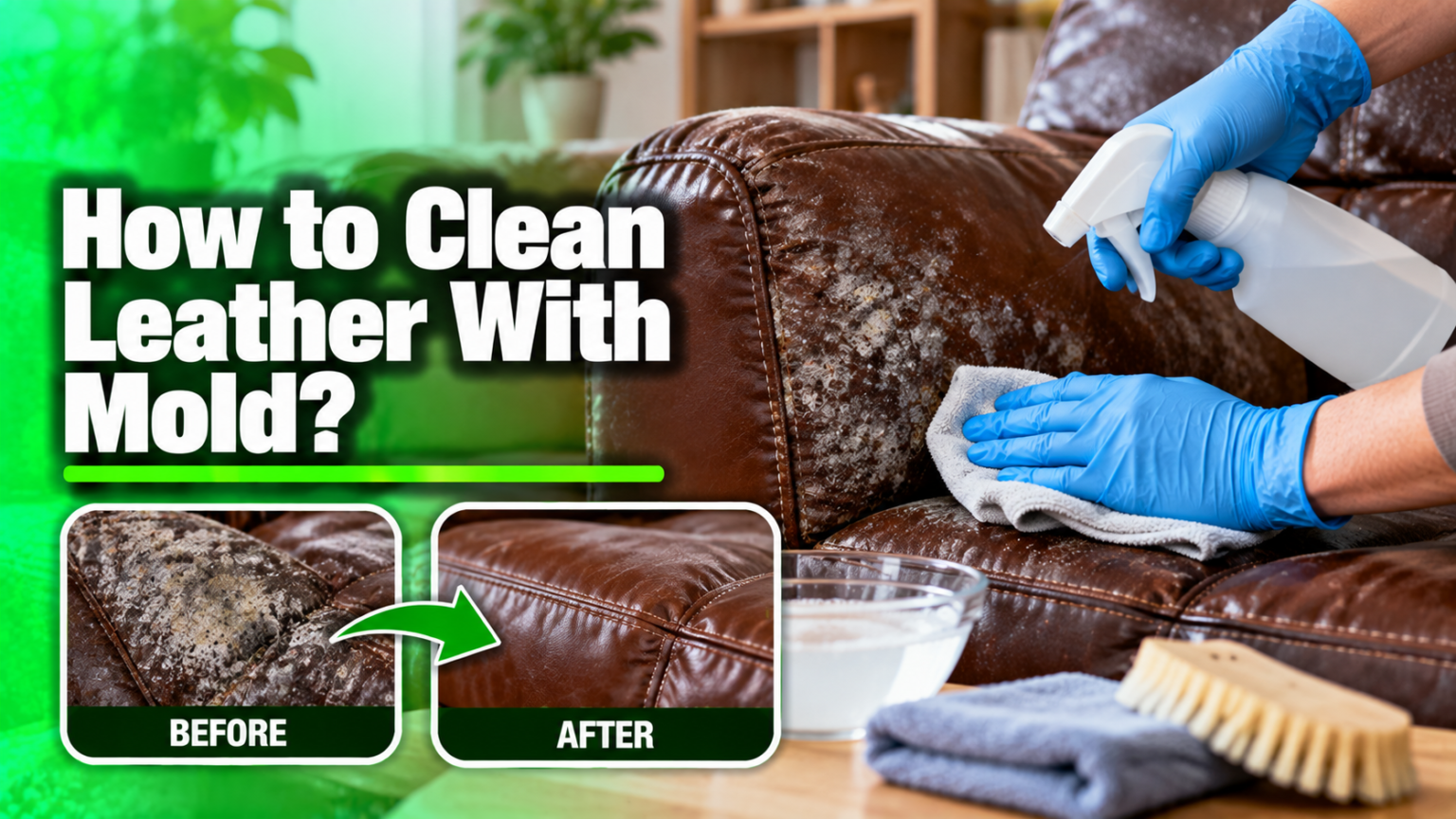
To clean leather with mold, take the item outside and brush off the loose mold with a soft dry brush. Then wipe the surface with a cloth dampened in a 1:1 mix of rubbing alcohol and water. Let the leather dry fully in a shaded, airy spot for a day or two, then rub in a leather conditioner to replace the oils the cleaning strips away.
That is the whole method in a sentence. The rest of this guide walks through each step, shows how to adjust it for bags, shoes, jackets, sofas, and car seats, and covers how to keep the mold from coming back.
What you need before you start
You don’t need much, and you probably have most of it already. Gather these first so you can work in one go:
- A soft-bristled brush (an old toothbrush works for seams)
- Rubbing alcohol, 70% strength, plus clean water
- A few soft microfiber cloths
- A leather conditioner or leather cream
- Rubber gloves and a face mask (N95 if you have one)
- A shaded outdoor spot with good airflow
Safety first: mold spores can trigger coughing, a stuffy nose, and allergy flare-ups. Always work outdoors, wear a mask, and keep gloves on so the spores stay off your skin and out of your lungs.
Step-by-step: how to clean mold off leather
Work through these steps in order. The early steps get the mold off. The last two, drying and conditioning, are what actually protect the leather and stop a repeat.
- Take the item outside. Mold releases spores the moment you disturb it. Cleaning indoors just spreads them onto walls, carpet, and other clothes. Move the piece to a shaded outdoor area with a breeze.
- Brush off the loose mold. With a soft dry brush, sweep the surface mold away using light, short strokes. Don’t press hard, or you push the spores deeper into the grain. Get into seams, folds, and stitching, where mold likes to hide.
- Test your cleaner on a hidden spot. Alcohol can lift a little dye from lighter leather. Dab the alcohol-and-water mix on an inside seam or the underside first and wait a minute. If the color holds, you’re good to go.
- Mix and wipe with alcohol and water. Combine equal parts rubbing alcohol and water. Dampen a cloth, wring it out so it’s barely wet, and wipe the moldy areas in small circles. Fold to a clean part of the cloth after each pass so you’re not smearing spores around. Alcohol kills mold and mildew on contact.
- Don’t soak the leather. Leather hates being drenched. Use the least moisture that does the job. Too much water is what caused the mold in the first place, and it can leave stains or stiffen the material.
- Wipe away residue. Go over the surface once more with a slightly damp clean cloth to pick up any leftover cleaner and dead mold. Then pat it dry with a fresh cloth.
- Dry it slowly and completely. This is the step people rush, and it’s the most important one. Leave the leather in a shaded, well-aired place for 24 to 48 hours until it’s dry to the touch. Skip direct sun and never use a heater or hair dryer, since high heat cracks leather. For bags and shoes, stuff the inside with plain white paper to soak up inner moisture and hold the shape.
- Condition the leather. Cleaning strips the natural oils that keep leather soft. Once the piece is bone dry, rub in a thin, even layer of leather conditioner with a clean cloth. This restores flexibility and rebuilds the surface that protects against future mold.
If the mold has been growing for months, one round may not clear it. Repeat the alcohol wipe and full drying on the next day, up to two or three times, until no mold or musty smell returns.
What about vinegar, and what to skip
White vinegar comes up a lot for mold, and its mild acidity does kill many mold types. It works fine on hard surfaces and on tougher, well-oiled leather like saddles and tack, usually mixed 1:1 with water. On finished leather goods, though, vinegar’s acidity can dry the surface and dull the finish over time, so rubbing alcohol is the safer everyday pick for bags, shoes, and furniture.
A few things you should never reach for:
- Bleach. It discolors leather and eats at the fibers.
- Undiluted alcohol or vinegar. Full strength is too harsh and strips dye and oils.
- Lots of water. Soaking warps and stains leather and feeds new mold.
- Direct heat or strong sun. Both bake the leather and cause cracks.
Prefer a ready-made product? A pH-balanced leather cleaner such as Lexol Leather Cleaner is gentle enough for most finished leather and works well as a follow-up to the alcohol wipe on stubborn spots.
Cleaning mold by leather item
The core method is the same everywhere, but a few details change with the item. Here’s a quick guide:
| Item | What to adjust |
| Bags & purses | Empty every pocket. Clean the lining too if it lifts out. Stuff with white paper while drying to hold the shape. |
| Shoes & boots | Pull out the laces and insoles and clean them separately. Air them outside at the first musty smell. |
| Jackets & clothing | Check for a removable fabric lining and wash it if the care label allows. Hang to dry, never in a tumble dryer. |
| Sofas & furniture | Vacuum the surface first with a soft brush head, then spot-clean. Keep moisture very light so cushions don’t stay damp. |
| Car seats | Run the seats in fresh air with doors open. Dry fully before closing the car, since a sealed hot cabin invites regrowth. |
| Saddles & tack | Tougher, oiled leather tolerates a vinegar-water mix. A little sun helps disinfect, then re-oil to replace lost moisture. |
When the mold is too deep to fix at home
Most surface mold cleans up fine. But some cases are past the point where a home wipe helps, and pushing on can waste your effort or spread spores. Stop and call a professional leather cleaner if:
- The mold covers more than half the surface
- You see deep black pits or spots that won’t wipe away, meaning the mold roots have reached deep into the fibers
- The leather has started to crack, crumble, or flake at the moldy spots
- A strong musty smell stays even after two or three cleanings
Those black spots are often a fungus that pushes filaments below the surface, so wiping the top clean can leave the roots alive underneath. Pros use HEPA vacuuming and color-matching methods that are hard to copy at home. For a valuable jacket, designer bag, or antique piece, that expert help is usually worth the cost.
How to stop mold from coming back
Mold needs three things: moisture, warmth, and something organic to feed on. Leather offers all three, so prevention is really about controlling moisture and air. Once your item is clean and dry, keep it that way:
- Store it somewhere cool, dry, and airy. Mold thrives in dark, still, damp corners.
- Never seal leather in plastic. Plastic bags and airtight bins trap moisture and create a tiny humid greenhouse. Use a breathable cotton dust bag instead.
- Keep humidity below 60%. In damp climates, a small dehumidifier in the closet makes a big difference.
- Add silica gel packets. Tuck a few into bags, shoe boxes, and storage bins to pull excess moisture out of the air.
- Clean before you store. Sweat, skin oils, and crumbs are food for mold. Wipe items down before they go away for the season.
- Condition regularly and use your things. A conditioned surface resists mold, and taking pieces out every month or two to air keeps damp from settling in.
Conclusion
Finding mold on leather is a scare, not a death sentence. Brush the mold off outdoors, wipe the surface with a 1:1 rubbing alcohol and water mix, and then give the leather a slow, full dry before conditioning it. Done right, the piece comes back clean, soft, and smelling fresh. Keep it in a dry, airy place with silica gel and out of plastic, and the mold has little reason to return.
Frequently asked questions
Does rubbing alcohol damage leather? Used diluted at 1:1 with water, it’s safe for most finished leather. It can lift a little dye from light colors, so test a hidden spot first, and always condition afterward to replace lost oils.
Can I use vinegar to clean mold off leather? Yes, mixed equally with water, and it kills many molds while cutting odor. But its acidity can dry out finished goods over time, so rubbing alcohol is the safer choice for bags, shoes, and sofas.
Will the mold come back after cleaning? Only if the conditions that caused it remain. Store the item somewhere dry and airy, keep humidity under 60%, skip plastic bags, and use silica gel packets, and it should stay clear.
Should I throw away moldy leather shoes? Usually not. If the mold is on the surface and the shoes are still solid, they clean up well. Only toss them if the leather is cracking or crumbling where the mold sat.
How do I get the musty smell out of leather? Clean and dry it fully first, since smell means moisture is still present. Airing it outside in the shade for a day helps, and a light conditioning afterward leaves it fresh.
Related Articles
What Does a Roof Pipe Do? Complete Guide 2026
How Do You Wash Shower Curtains: Complete Cleaning Guide
How to Get Rid of Gnats in Bathroom Fast
How to Remove Ink from Leather Sofa: Easy Step-by-Step Guide