

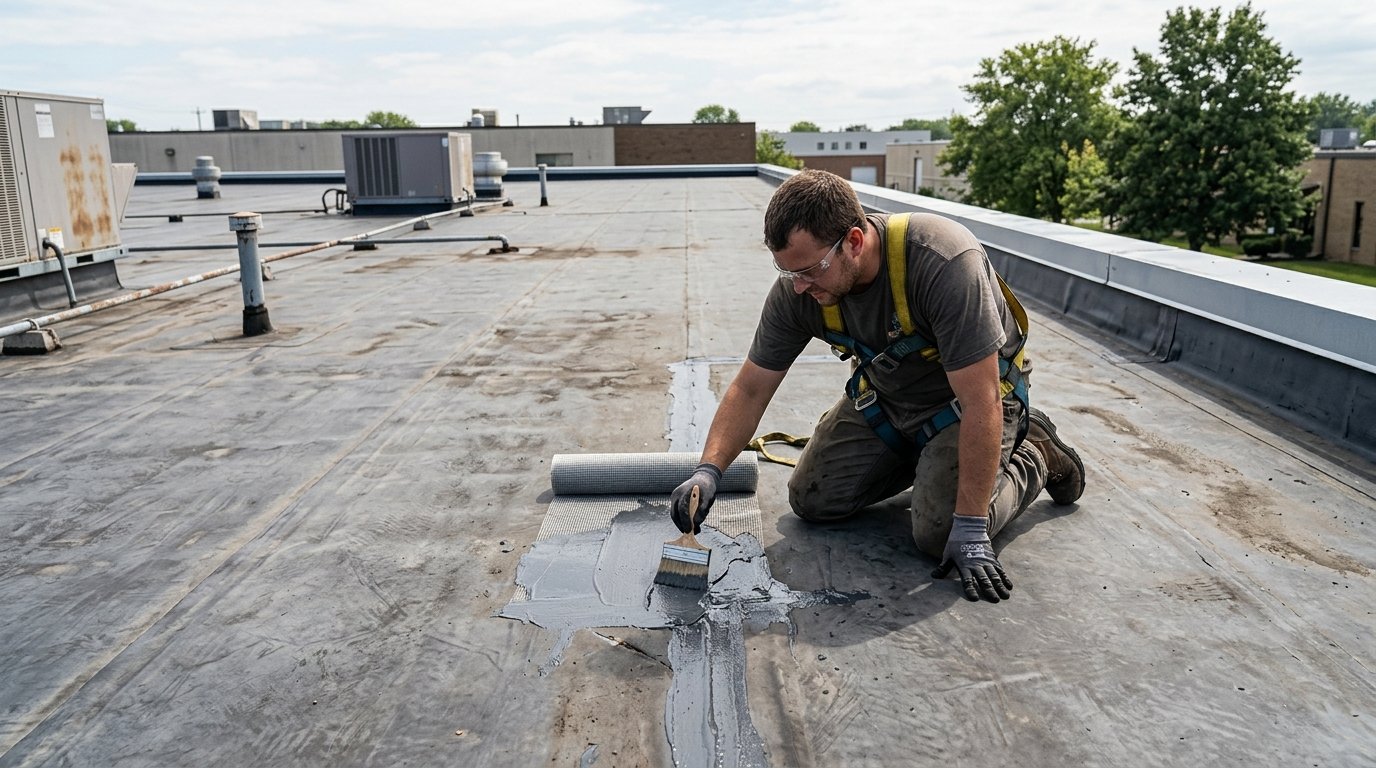

Flat roofs are common on commercial buildings, garages, extensions, and modern homes because they are cost-effective and easy to install. However, flat roof repair becomes necessary over time because these roofs are more exposed to water pooling, weather damage, and material wear than sloped roofs. Understanding how flat roof repair works can save property owners from bigger structural problems and expensive replacements later.
Why Flat Roofs Need Repair More Often
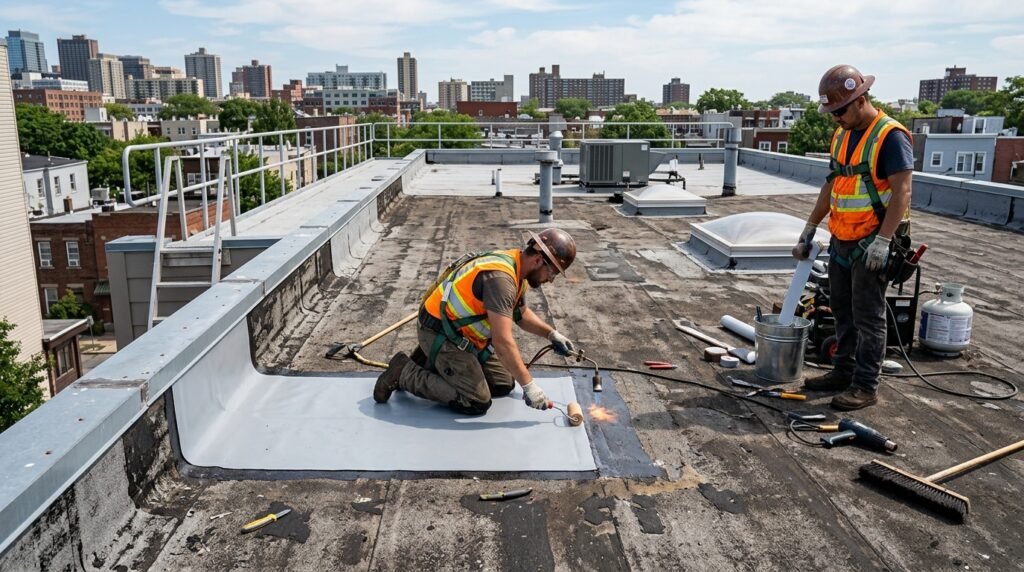
Flat roofs do not have a steep slope, so rainwater and debris tend to sit on the surface instead of draining away quickly. This constant exposure to moisture makes flat roof repair a regular requirement compared to pitched roofs, especially in areas with heavy rainfall or extreme temperature changes.
Poor Drainage Issues
Flat roofs rely on a very slight slope or built-in drains to remove water. When these drainage points get blocked with leaves, dust, or debris, water starts to pool on the surface. Over time, this standing water seeps into small cracks and weakens the roofing membrane, making repair unavoidable.
Material Wear and Aging
Roofing materials such as bitumen, EPDM rubber, or PVC membranes naturally lose flexibility as they age. Constant exposure to sunlight and temperature shifts causes the material to crack or shrink. Once the surface loses its protective strength, leaks and damage start appearing much faster than expected.
Weather and Temperature Impact
Extreme heat can cause roofing materials to expand, while cold weather makes them contract and become brittle. This continuous expansion and contraction weakens seams and joints. Over several seasons, this movement is one of the biggest reasons flat roof repair becomes necessary for long-term protection.
Common Signs You Need Flat Roof Repair
Recognizing early warning signs helps prevent minor issues from turning into major structural damage. Most flat roof problems show visible or physical symptoms before they become serious leaks.
Water Stains on Ceilings
One of the clearest indicators of a damaged flat roof is water staining or discoloration on interior ceilings. This usually means water has already penetrated through the roofing layers and is affecting the structure underneath, which calls for immediate attention.
Bubbling or Blistering Surface
When moisture gets trapped beneath the roofing membrane, it creates bubbles or blisters on the surface. This is a sign that the material is separating from the roof deck, and ignoring it usually leads to bigger leaks during the next rainfall.
Cracks and Splits in the Membrane
Visible cracks, splits, or punctures in the roofing membrane allow water to enter directly into the building. These cracks often start small but widen quickly under weather pressure, so timely flat roof repair prevents further structural damage.
Flat Roof Repair Methods
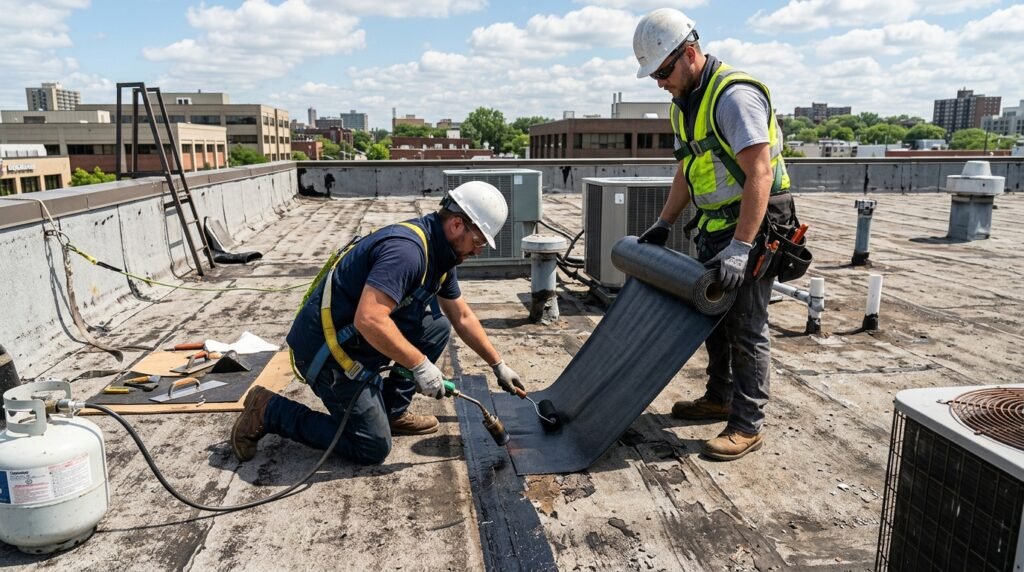
There are several approaches to repairing a flat roof, and the right method depends on the type of material, extent of damage, and age of the roof. Choosing the correct repair technique ensures durability and cost efficiency.
Patch Repair
Patch repair is used for small punctures, cracks, or localized damage. A section of new roofing material is applied over the damaged area using adhesive or heat welding, depending on the roof type. This method is affordable and works well for minor, isolated issues.
Membrane Recoating
Recoating involves applying a fresh protective layer over the existing roofing membrane. This method restores waterproofing ability and extends the roof’s lifespan without needing a full replacement. It is commonly used when the roof has widespread wear but no major structural damage.
Seam and Joint Resealing
Seams and joints are the most vulnerable points on a flat roof because they are where two sections of material meet. Resealing these areas with proper sealant prevents water infiltration and is often combined with other repair methods for complete protection.
Flat Roof Repair Cost Overview
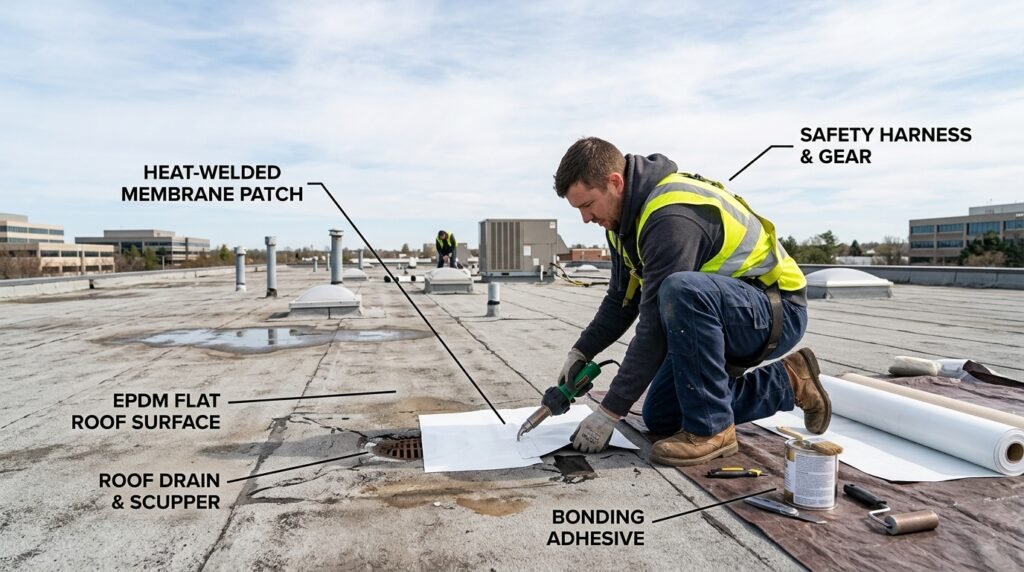
The cost of flat roof repair varies depending on the size of the damage, roofing material, and labor rates in different regions. Below is a general cost comparison to help set realistic expectations.
| Repair Type | Typical Use Case | Approximate Cost Range |
| Patch Repair | Small cracks or punctures | Low cost |
| Seam Resealing | Leaking joints | Low to moderate cost |
| Membrane Recoating | General wear across roof | Moderate cost |
| Partial Section Replacement | Large damaged areas | Moderate to high cost |
Actual pricing depends on local contractor rates, roof size, and material type, so getting a professional inspection before starting flat roof repair work is always recommended.
Maintenance Tips to Reduce Future Repairs
Regular maintenance plays a major role in reducing how often flat roof repair is needed. Simple upkeep habits can significantly extend the life of the roofing system.
Regular Drain Cleaning
Keeping drains, gutters, and outlets free from leaves and debris ensures water flows away properly instead of pooling on the surface. This single habit prevents a large percentage of common flat roof problems.
Scheduled Professional Inspections
Having a roofing professional inspect the flat roof at least once or twice a year helps catch small issues before they turn into costly repairs. Early detection is one of the most effective ways to avoid emergency flat roof repair situations.
Prompt Repair of Minor Damage
Ignoring small cracks or blisters often leads to much larger and more expensive repairs later. Addressing minor damage as soon as it is noticed keeps repair costs low and protects the overall structure of the building.
Conclusion
Flat roof repair is an essential part of maintaining any property with a flat roofing system, since these roofs are more prone to water pooling, material wear, and weather damage compared to sloped roofs. Recognizing early warning signs, choosing the right repair method, and following a consistent maintenance routine can help property owners avoid major structural issues and costly replacements in the future.
Frequently Asked Questions
How long does a flat roof repair last?
A properly done flat roof repair can last several years, depending on the material used and how well the roof is maintained afterward.
Can I repair a flat roof myself?
Minor patch repairs are sometimes possible for experienced DIYers, but professional help is recommended for larger leaks or structural damage.
How often should a flat roof be inspected?
Most experts recommend inspecting a flat roof at least twice a year, along with additional checks after severe weather events.
Is flat roof repair cheaper than full replacement?
Yes, in most cases repairing a flat roof costs significantly less than a full replacement, as long as the damage is caught early.
Related Articles
How Much Does It Cost to Waterproof a Basement?
How to Clean a Shower Curtain? Everything You Need to Know
Can You Use Ceiling Paint on Walls? The Surprising Benefits and Drawbacks
How Much Does It Cost to Waterproof a Basement?
Joist Tape for Decking: The Complete Guide to Protecting Your Deck’s Substructure