


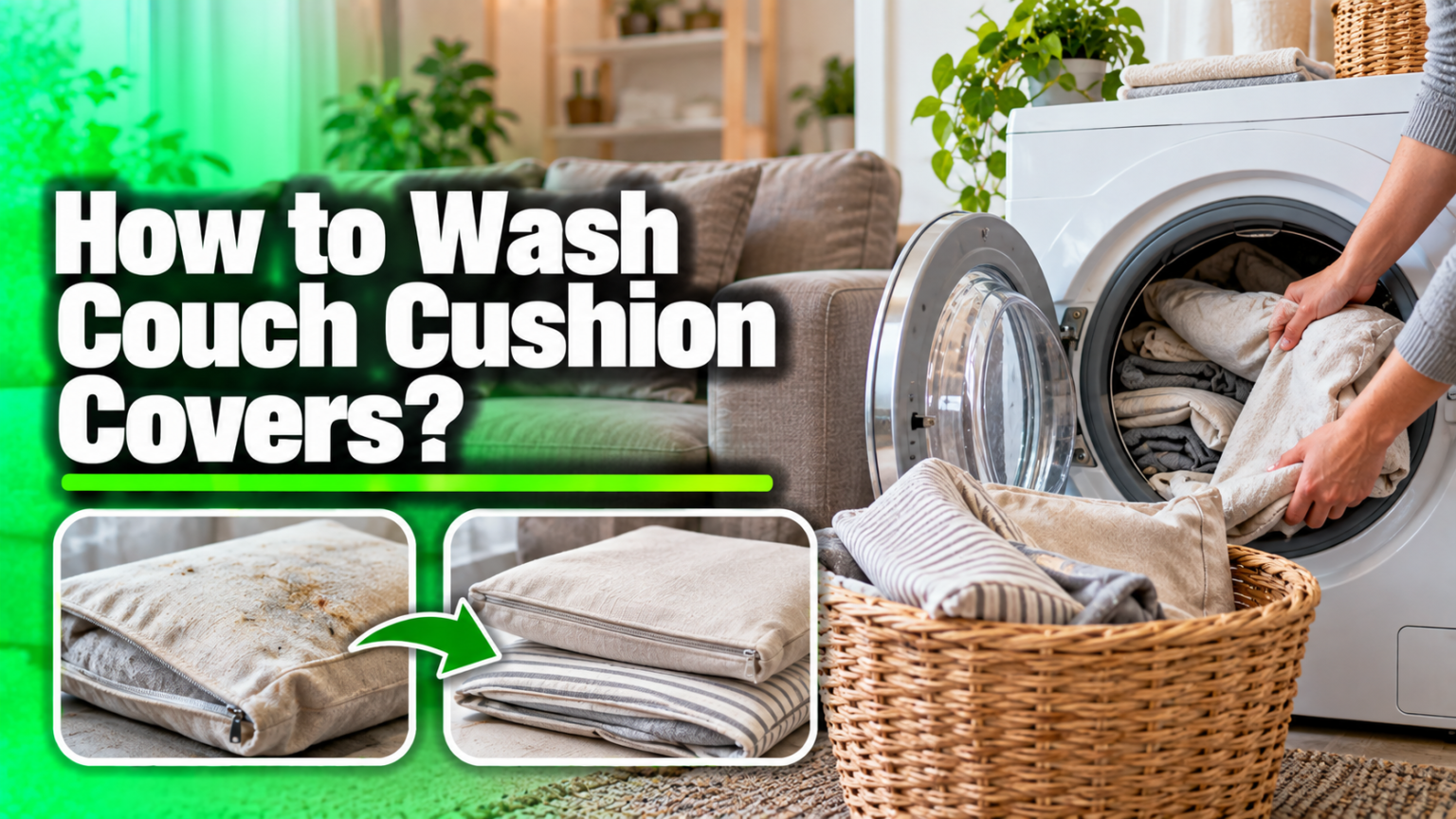

To wash couch cushion covers, check the care tag, then wash removable covers inside out on a cold, gentle cycle with a mild detergent, and let them air dry. The single biggest thing to get right is drying. Heat from a dryer shrinks the fabric, and once a cover shrinks it may never stretch back over the cushion again.
That one rule saves more couches than any fancy cleaner. Below is the full process, from reading the tag to getting stains and smells out, so your cushions come out clean and still fit.
Can you actually wash them?
Not every couch cushion cover can go in the wash, so this is the first thing to sort out. Some covers are machine washable. Some are spot-clean only. And some, like leather or certain delicate fabrics, should never touch water at all.
Two things decide it: whether the cover comes off, and what the care tag says. If your cushions have a zipper, usually along the bottom or back edge in a corner, the cover is meant to be removed. If there’s no zipper and the cover is sewn on, treat the whole cushion as spot-clean only.
Fabric matters too. Sturdy synthetics like polyester, nylon, and acrylic handle a wash well, which is why they show up on most family couches. Natural fibers like linen, cotton, wool, and silk are fussier. They can shrink, wrinkle, or lose their shape, so even when the tag allows washing, they often do better with gentle care or a professional clean.
Quick test: if you have matching throw pillows in the same fabric, wash one of those first. If it still fits back in its cover afterward, your cushion covers should survive the same wash.
Read the care tag first
The care tag tells you exactly how the maker wants the fabric cleaned, and ignoring it is the top reason covers end up shrunk, faded, or ringed with water marks. The tag is usually sewn under a seat cushion, along the base of the couch, or inside a seam. It sits next to the fabric type and the maker’s name.
Look for a single letter or two. This is the upholstery cleaning code, a standard system the furniture industry uses. Here’s what each one means for you:
| Code | What it means | What you can do |
| W | Water-based cleaning is safe. | Machine or hand wash if the tag also allows it. Common on polyester and many blends. |
| S | Solvent only. No water. | Do not machine wash. Spot clean with a dry solvent or use a pro. |
| W/S | Water or solvent both work. | Washing is usually fine. Start with the gentlest method and test first. |
| X | No liquids at all. | Vacuum or light brush only. Never wash. Call a pro for stains. |
If the tag also shows a laundry symbol, a tub of water usually means machine washable and a hand in a tub means hand wash only. When you’re unsure what a symbol means, the standard ISO care symbol guide spells them all out.
If the tag is missing or faded, play it safe. Vacuum only, then test a hidden spot with a little water and mild detergent before you commit to a full wash.
How to wash couch cushion covers, step by step
Once you know the covers are washable, the process is simple. Follow these steps in order for the safest result.
- Vacuum first. Run a vacuum with the brush attachment over the cushions to pull off crumbs, hair, and loose dirt. Skipping this pushes grit deeper into the fabric during the wash. Think of it like sweeping before you mop.
- Unzip and remove the covers. Open the zippers slowly so you don’t snag the seams or the zipper teeth. If the foam inserts are exposed, handle them gently, as foam tears easily. Set the inserts aside; only the covers go in the wash.
- Turn them inside out. Washing covers inside out protects the outer surface from rubbing and helps keep the color from fading. Zip the zippers back up so they don’t catch on other items in the load.
- Pre-treat any stains. Dab a little mild detergent or a gentle stain remover straight onto marks and let it sit a few minutes. Test the product on a hidden corner first to be sure it won’t lift the color.
- Wash cold on the gentle cycle. Use cold water, the delicate or gentle setting, and a small amount of mild, dye-free detergent. Cold water and dye-free soap guard against both shrinking and discoloration. Skip bleach and fabric softener unless the tag clearly allows them.
- Use a mesh bag for delicate fabrics. If the fabric is thin or prone to snagging, put the covers in a mesh laundry bag. Wash a few at a time rather than cramming the whole set in at once.
A few small choices make a real difference here. Load size is one: an overstuffed machine can’t move the covers around enough to clean them, and it creases the fabric hard. Detergent is another. A dye-free, mild formula rinses out cleaner and won’t tint a light-colored cover. And warm or hot water may feel like it cleans better, but on cushion fabric it mostly just invites shrinking, so cold is the safer default nearly every time.
While the covers are in the machine, it’s a good moment to clean the rest of the couch. Vacuum under where the cushions sit, spot-clean the base fabric, and run a fabric shaver over any pilling, those little tangled balls that build up on older upholstery. A few passes and the surface looks smooth and fresh again, which makes the whole couch feel newer once the clean covers go back on.
Drying: the part that ruins covers
Air dry your cushion covers. Do not put them in the dryer. This is where most people lose their covers, because dryer heat shrinks the fabric and warps the fit, and a cover that shrinks even a little may not stretch back over its cushion.
The best method is to lay the covers flat on a clean towel or a drying rack, out of direct sun so the color doesn’t fade. Reshape them gently while they’re damp so they dry in the right form.
Pro move: put the covers back on the cushions while they are still slightly damp. Damp fabric stretches, so this helps them settle back to the exact right size and beats any shrinkage before it starts.
If your dryer has a true no-heat or air-only setting, a short tumble to knock out wrinkles can be okay for sturdy synthetic covers. But when in doubt, air dry every time. It costs you a few hours and saves the whole set.
Drying time depends on the fabric and the air. A thin polyester cover might be ready in a few hours, while thicker or natural-fiber covers can take most of a day. Good airflow speeds things up, so a fan or an open window helps. Make sure the covers are fully dry before they go back on for good, because damp fabric left sealed against foam can start to smell musty.
Getting out stains and smells
Treat stains before the wash, not after, since a hot dryer can bake a missed stain in for good. For most fresh spills, blot the area with a clean cloth first. Never rub, because rubbing spreads the stain and works it deeper into the weave.
For common stains
- Everyday marks: Dab a mild detergent or a gentle stain remover onto the mark and give it a few minutes before washing.
- Pet accidents: An enzyme-based cleaner made for pet messes works best, as it breaks down the odor rather than masking it.
- Germs or sickness: A little hydrogen peroxide can help lift and sanitize, but always spot-test it on a hidden area first, as it can lighten some colors.
For a musty smell
Sometimes the covers are clean but the foam inside still smells. Sprinkle baking soda over the cushion inserts, leave it for four to six hours to absorb the odor, then vacuum it all off. Letting the inserts air out in a breezy spot helps too.
What if they can’t be machine washed?
Hand wash them, or call a pro. If the tag says hand wash, or you’re just nervous about the machine, fill a tub or sink with cold water and a small amount of mild detergent. Turn the covers inside out, swish them gently, and let them soak for a short while.
Do not wring or twist the fabric, as that stretches and distorts it. Press the water out gently instead, or roll the cover in a clean dry towel and press to pull out the moisture. Then lay the covers flat to air dry, exactly as you would after a machine wash.
Hand washing takes more effort, but it gives you full control and is far gentler than any machine cycle. For a cover that’s only lightly soiled, it can also be quicker than running a whole wash load.
For solvent-only fabrics (that S code), delicate materials like velvet, wool, or silk blends, or anything you can’t identify, hand the job to a professional cleaner. Paying for a proper clean is far cheaper than replacing a ruined cushion set.
How often should you wash them?
Deep clean your couch cushion covers about once or twice a year. That’s enough for a normal household to keep them fresh without wearing the fabric down from constant washing.
Wash more often if you have pets, young kids, or you eat on the couch a lot. Between deep cleans, vacuum the cushions weekly and spot-clean spills as they happen. Little bits of upkeep mean the covers rarely get dirty enough to need a full wash in the first place.
Conclusion
Washing couch cushion covers comes down to a few safe habits: read the care tag, wash removable covers inside out on a cold gentle cycle with mild detergent, and always air dry instead of using heat. Pre-treat stains before they set, and put covers back on while slightly damp to keep the fit. Do that and your cushions come out clean, bright, and still the right size, no shrinking and no regret.
Frequently asked questions
Can I put couch cushion covers in the dryer?
It’s best not to. Dryer heat shrinks and warps the fabric, and shrunken covers often won’t fit back on the cushions. Air dry them flat instead, or use a no-heat setting only for sturdy synthetic covers.
What temperature should I wash cushion covers on?
Cold water on a gentle or delicate cycle. Cold protects against shrinking and stops colors from bleeding or fading. Pair it with a mild, dye-free detergent for the safest result.
How do I stop cushion covers from shrinking?
Wash cold, skip the dryer, and air dry flat. To be extra safe, slip the covers back onto the cushions while they’re still slightly damp so they stretch back to the exact right size as they finish drying.
My covers don’t have a zipper. Can I still wash them?
If the cover is sewn on and won’t come off, treat the whole cushion as spot-clean only. Blot stains with a mild cleaner suited to the fabric code, and never soak a cushion with the foam still inside.
How often should couch cushion covers be washed?
Deep clean them once or twice a year for a normal home, and more often with pets or kids. Vacuum weekly and spot-clean spills in between so the covers stay fresh longer.
Related Articles
How Much Does a Retaining Wall Cost? Complete Guide 2026
What Paint Finish for Exterior Door? Best Sheen Guide