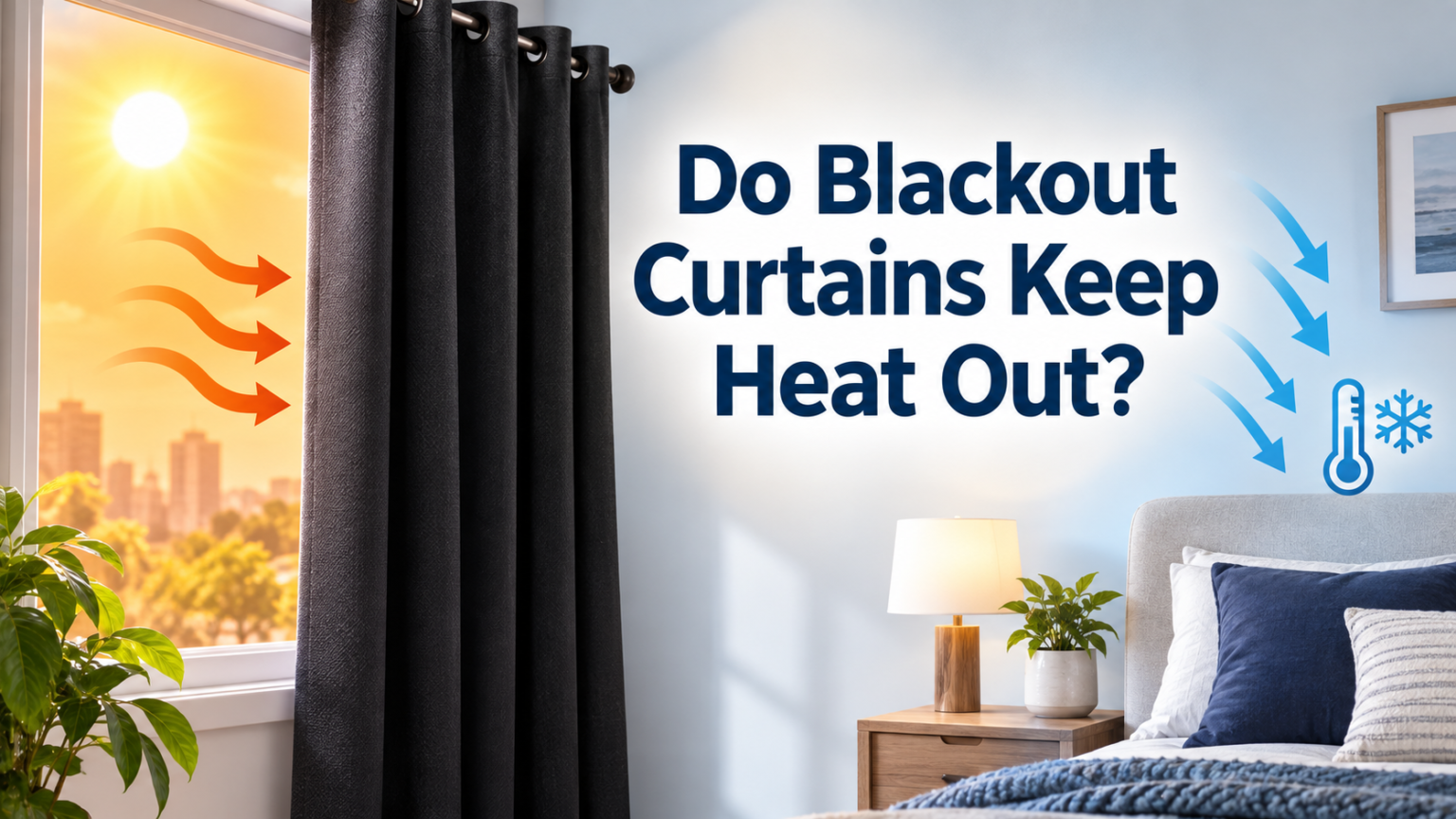

Yes, blackout curtains do keep heat out, and they do this job better than most people expect from a simple piece of fabric hanging on a rod. These curtains are made with thick, tightly woven layers that stop sunlight from entering a room, and along with light, a large portion of solar heat is blocked too.
When the sun’s rays hit a window covered with a quality blackout curtain, the fabric reflects and absorbs much of that heat before it can spread into the living space. This makes rooms noticeably cooler during hot afternoons, especially in spaces that face direct sunlight for long hours. However, the actual amount of heat reduction depends on the curtain’s color, thickness, lining, and how well it is installed around the window frame.
What Are Blackout Curtains?
Blackout curtains are window coverings designed with dense, multi-layered fabric that blocks almost all outside light from entering a room. Because of this tight construction, they also end up playing a strong role in controlling indoor temperature.
Definition and Basic Construction
A blackout curtain is built using several layers stitched together instead of a single thin sheet of cloth. The outer layer usually faces the window, while an inner foam or fabric lining sits behind it to add thickness. This layered structure is what allows the curtain to block both light and a noticeable amount of heat at the same time.
How Do They Differ From Regular Curtains?
Regular curtains are usually made from lightweight or sheer materials that let sunlight pass through with ease. Blackout curtains, on the other hand, use heavier fabric with a dense weave that does not allow light or heat to pass as freely. This difference in material density is the main reason blackout curtains perform so much better in hot weather.
Common Materials Used
Most blackout curtains are made from polyester, cotton blends, or fabric with a foam backing layer sewn into the lining. Polyester is popular because it holds its shape and blocks light well, while foam-backed versions add extra thickness for better insulation. Some higher-end options combine multiple materials to boost both durability and heat resistance.
How Blackout Curtains Block Heat?
Blackout curtains work by physically stopping sunlight before it reaches the glass or spreads into the room. This process involves reflection, absorption, and insulation working together rather than just one single mechanism.
The Science of Solar Heat Gain Through Windows
Windows are one of the biggest sources of heat entering a home because glass allows sunlight to pass through easily and warm up the air inside. This is known as solar heat gain, and it becomes stronger during peak daylight hours when the sun is directly facing a window. Curtains act as a barrier that interrupts this transfer of heat energy into the living space.
Role of Light-Blocking Layers in Reflecting Sunlight
The dense layers in blackout curtains are designed to reflect a portion of sunlight back before it fully enters the room. This reflection reduces the amount of solar energy that would otherwise convert into heat once it hits interior surfaces. The thicker and more reflective the backing material, the more heat gets bounced away from the window.
Insulating Effect of Thick or Multi-Layer Fabric
Beyond reflection, the thickness of blackout fabric also creates an insulating barrier between the window and the room. This layer slows down the transfer of outside temperature into the indoor air, similar to how insulation works in walls. As a result, rooms stay cooler for longer periods even when the sun is strong outside.
Light-Colored vs. Dark-Colored Curtains and Heat Absorption
Dark-colored blackout curtains tend to absorb more heat because darker shades naturally attract sunlight instead of reflecting it. Light-colored or white-backed curtains reflect sunlight more effectively, which makes them a smarter choice for hot climates. This is why many heat-focused buyers choose curtains with a white or silver-coated backing facing the window.
Blackout Curtains vs. Thermal Curtains
Blackout curtains and thermal curtains are often confused, but they are designed with slightly different primary goals in mind. Understanding this difference helps in choosing the right option for heat control specifically.
Key Differences in Design and Purpose
Blackout curtains are primarily built to block light, while thermal curtains are engineered specifically to regulate temperature. Thermal curtains often include specialized insulating layers meant purely for heat and cold control, whereas blackout curtains achieve a similar effect as a secondary benefit. Both can overlap in function, but their core design intent is not identical.
Which Is Better for Heat Control?
Thermal curtains generally offer more consistent temperature regulation because insulation is their main purpose from the start. Blackout curtains still perform well against heat, but their heat-blocking ability can vary more depending on brand and material quality. For someone prioritizing temperature control above all else, thermal curtains may have a slight edge.
Can Blackout Curtains Double as Thermal Curtains?
Many modern blackout curtains are now manufactured with thermal-style linings, allowing them to serve both purposes at once. These hybrid versions are marketed as blackout-thermal curtains and are becoming increasingly common in the market. Buyers looking for both privacy and heat control often find these combined options more practical.
How Effective Are They, Really?
Blackout curtains do not block one hundred percent of heat, but their impact on indoor temperature is still significant and measurable. Effectiveness depends heavily on external and installation-related factors rather than the fabric alone.
Percentage of Heat Reduction
Studies and manufacturer estimates suggest that quality blackout curtains can reduce solar heat gain by a noticeable margin, often cited in the range of a moderate percentage depending on fabric type. This reduction is enough to make a room feel comfortably cooler without relying entirely on air conditioning. The exact number varies based on curtain quality and window exposure.
Factors That Affect Performance
| Factor | Impact on Heat Blocking |
| Window size | Larger windows let in more heat, requiring thicker curtains |
| Sun exposure direction | South and west-facing windows receive more direct heat |
| Curtain color | Lighter colors reflect more heat than darker shades |
| Fabric thickness | Thicker fabric blocks more heat transfer |
| Installation fit | Tighter coverage reduces heat leaking around edges |
Limitations — What They Can’t Do?
Blackout curtains cannot fully replace proper insulation, double-glazed windows, or air conditioning in extremely hot climates. Gaps around the curtain edges can still let heat seep in if the curtain is not wide or long enough for the window. They work best as a supporting solution rather than a complete standalone fix for extreme heat.
Best Practices for Maximum Heat Blocking
Getting the most heat-blocking benefit from blackout curtains depends on a few simple installation and usage habits. Small adjustments can significantly increase how well these curtains perform against outside heat.
Choosing the Right Color
Selecting curtains with a light-colored or reflective backing facing the window helps bounce sunlight away more efficiently. Darker curtains may look stylish, but they tend to absorb rather than reflect heat, reducing overall effectiveness. For hot regions, a white or silver-lined backing is generally the smarter pick.
Proper Curtain Length and Coverage
Curtains that extend slightly beyond the window frame on all sides prevent heat from sneaking in through uncovered gaps. Curtains that are too narrow or short leave exposed edges where sunlight and heat can still pass through. Full coverage plays a major role in how effectively the curtain blocks heat.
Installing Curtain Rods Closer to the Wall or Ceiling
Mounting curtain rods higher and wider than the window itself allows the fabric to cover more surface area without gaps. This installation style also creates a small pocket of trapped air that adds an extra layer of insulation. It is a simple adjustment that noticeably improves heat-blocking performance.
Using Curtain Liners or Double-Layering
Adding a separate thermal liner behind a blackout curtain increases the overall thickness and insulation of the window covering. Double-layering with two curtains, one for light blocking and one for insulation, is another effective method. This approach is especially useful in rooms that receive intense direct sunlight.
Closing Curtains During Peak Sun Hours
Keeping curtains closed during the hottest part of the day, typically midday to late afternoon, prevents heat from building up indoors. Opening them only during cooler morning or evening hours helps maintain a more stable indoor temperature. This simple habit requires no extra cost but makes a real difference.
Other Benefits of Blackout Curtains
Beyond heat control, blackout curtains offer several additional advantages that make them a practical investment for most households. These extra benefits often make them worth choosing even outside of temperature concerns.
Light Blocking for Better Sleep
By blocking nearly all outside light, these curtains create a darker room environment that supports deeper and more consistent sleep. This is particularly useful for people who work night shifts or live in areas with strong streetlights. A darker room is widely known to improve overall sleep quality.
Noise Reduction
The thick fabric layers that block light and heat also help dampen outside noise to some extent. While not a full soundproofing solution, they do reduce the intensity of street noise, traffic, and other outdoor sounds. This makes rooms feel calmer and more private overall.
Privacy
Because blackout curtains block visibility as well as light, they offer strong privacy during both day and night. Unlike sheer curtains, they prevent outsiders from seeing inside even when interior lights are switched on. This adds a practical layer of security to any room.
Energy Savings on Cooling Costs
By reducing the amount of heat entering a room, blackout curtains can lower the workload on air conditioning units. This often translates into modest energy savings over time, especially during peak summer months. Over a full cooling season, these savings can add up meaningfully.
Blackout Curtains vs. Other Heat-Blocking Solutions
Several other window treatments also claim to block heat, and comparing them helps clarify where blackout curtains stand. Each option has its own strengths depending on budget and installation preference.
Comparison with Window Film
Window film is applied directly to the glass and works by reflecting UV rays and heat before they enter the room. It is more permanent than curtains and does not require daily opening or closing. However, it lacks the styling flexibility and privacy control that curtains naturally offer.
Comparison with Blinds and Shades
Blinds and shades can block heat when closed tightly, but gaps between slats often allow some sunlight and heat to pass through. Blackout curtains generally provide more complete coverage since there are no slats or gaps in the fabric. For maximum heat blocking, curtains usually outperform standard blinds.
Comparison with Reflective Window Coatings
Reflective coatings are designed specifically for heat rejection and often perform strongly in extremely hot climates. They are a more technical and semi-permanent solution compared to curtains, which are easier to install and remove. Curtains remain the more flexible and affordable option for most homeowners.
Combining Methods for Best Results
Many homeowners combine blackout curtains with window film or blinds for a layered heat-blocking approach. This combination often delivers stronger results than relying on a single method alone. Layering solutions is especially useful in rooms with intense direct sunlight throughout the day.
Common Myths About Blackout Curtains and Heat
Several misconceptions exist around how blackout curtains actually perform when it comes to heat control. Clearing up these myths helps set realistic expectations for buyers.
“They Completely Stop Heat”
This is a common misunderstanding, since no curtain can fully eliminate heat transfer through a window. Blackout curtains significantly reduce heat but do not create a completely heat-proof barrier. Some heat will still pass through glass and gaps regardless of curtain quality.
“Any Dark Curtain Works the Same”
Not all dark curtains offer equal performance, since heat blocking depends more on fabric thickness and backing than color alone. A thin dark curtain may actually absorb more heat than a thick, well-lined lighter one. Material quality matters just as much as, if not more than, curtain color.
Tips for Buying the Right Blackout Curtains for Heat Control
Choosing the right blackout curtain involves looking beyond just the “blackout” label on the packaging. A few specific details can help identify curtains that genuinely perform well against heat.
What to Look for on Product Labels?
Look for terms like “thermal-insulated,” “energy-saving,” or “UV-reflective” alongside the blackout label for better heat performance. These labels usually indicate additional layers built specifically for temperature control. Plain blackout curtains without these terms may focus more on light blocking alone.
Fabric Weight and Layers
Heavier fabric with multiple stitched layers generally performs better against heat than thin single-layer options. Checking the fabric weight or layer count, when listed, can give a good indication of insulation quality. Thicker is almost always better when heat control is the priority.
Budget vs. Premium Options
Budget blackout curtains still offer decent light and moderate heat blocking, making them suitable for general use. Premium options with thermal linings and reflective backing provide stronger heat resistance for a higher price. The right choice depends on how much heat control matters compared to overall budget.
Conclusion
Blackout curtains do keep heat out, and their layered, dense fabric makes them a genuinely useful tool against rising indoor temperatures. While they are not a complete replacement for insulation or air conditioning, they noticeably reduce solar heat gain when chosen and installed correctly.
Compared to blinds, they usually offer better full coverage, though dedicated thermal curtains or window film may edge them out for pure temperature control. For most households, a good quality blackout curtain with proper fit and light-colored backing remains a practical, affordable step toward a cooler home.
FAQs
Do blackout curtains work in summer and winter? Yes, blackout curtains help in both seasons by blocking outside heat in summer and retaining indoor warmth in winter through their insulating layers.
Can they reduce AC bills? Yes, by lowering the amount of heat entering a room, they reduce the cooling load on air conditioning units, leading to modest energy savings.
Are white blackout curtains better than black ones for heat? Yes, white or light-colored blackout curtains reflect more sunlight, making them more effective at keeping heat out compared to darker shades.
Related Posts
Crack in Basement Wall: Everything You Need to Know
Should You Insulate Basement Ceiling? Complete Guide (Pros, Cons & Tips)
How to Determine Door Swing: Complete Guide