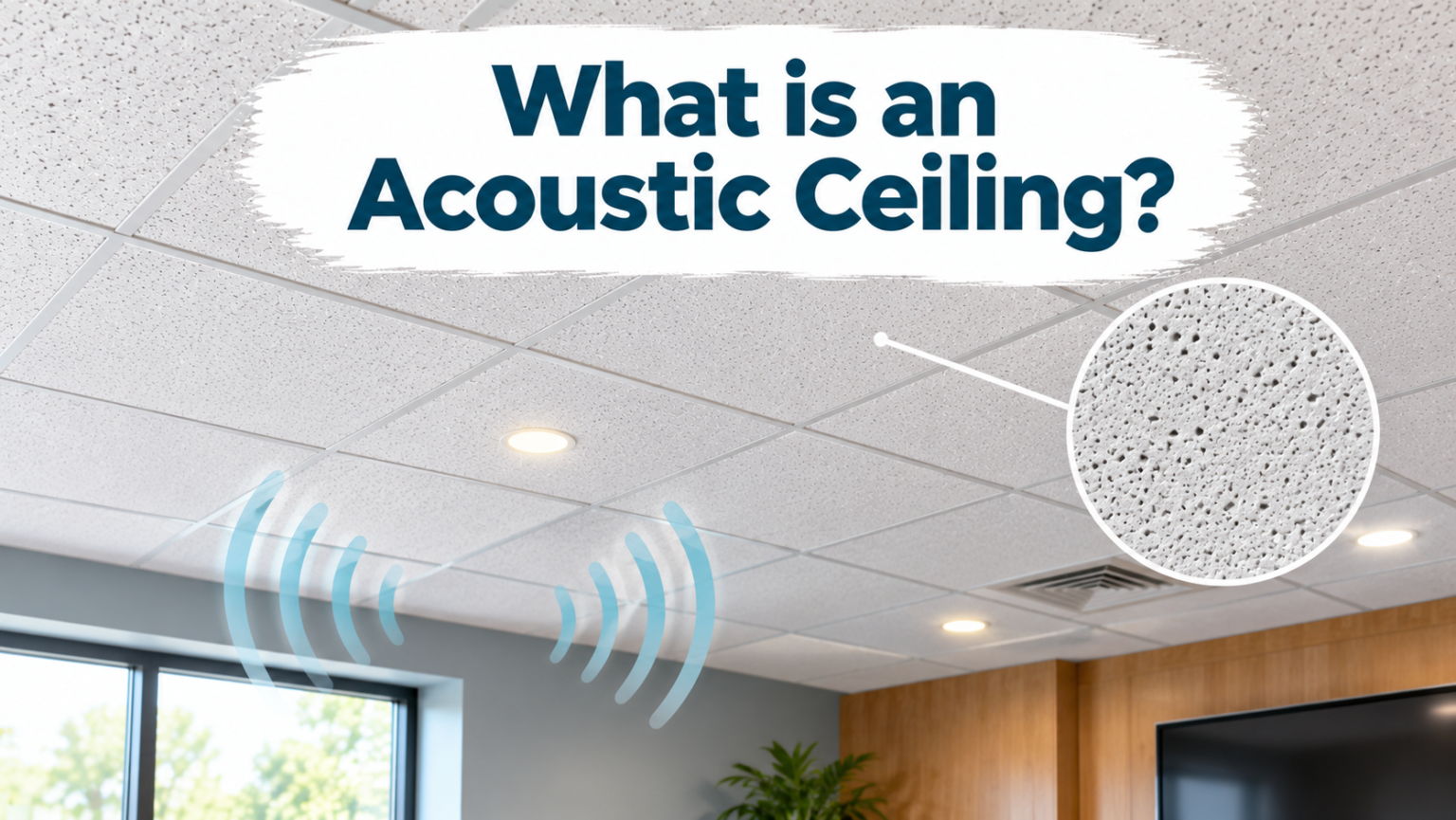

Anyone stepping into a noisy office or a quiet, comfortable meeting room has probably noticed the ceiling without realizing it.An acoustic ceiling is a specially designed ceiling system built to control sound rather than simply cover the space above a room.
It absorbs unwanted noise, reduces echo, and helps conversations feel clearer instead of muffled or overlapping.Unlike a plain plaster or drywall ceiling, it uses sound-absorbing materials and a specific surface texture to manage acoustics.
This guide explains what an acoustic ceiling is, how it works, the materials used, and where it is commonly installed.By the end, the difference between a regular ceiling and an acoustic one will be easy to understand and apply to any space.
What is an Acoustic Ceiling?
An acoustic ceiling is a ceiling system engineered to reduce noise and control the way sound travels within a room. It typically consists of tiles, panels, or a sprayed finish made from sound-absorbing materials such as mineral fiber, fiberglass, or foam.
Instead of reflecting sound waves back into the room like a hard, flat ceiling does, it absorbs a large portion of that sound energy. This makes spaces feel calmer, easier to hold conversations in, and less affected by outside noise or machinery hum.
How Does an Acoustic Ceiling Work?
An acoustic ceiling manages sound through a few core mechanical processes rather than a single trick. Understanding these processes makes it clear why some ceilings feel quiet while others amplify every footstep and conversation.
Sound Absorption
Sound absorption happens when the porous or fibrous surface of the ceiling material traps sound waves instead of bouncing them back. As sound energy enters the tiny air pockets within the material, it is converted into a small amount of heat through friction. This is the primary reason acoustic ceilings noticeably lower echo and background noise in a room.
Sound Diffusion
Diffusion refers to how an acoustic ceiling scatters sound waves in multiple directions instead of letting them travel as a single, concentrated wave. Textured or patterned ceiling surfaces break up sound reflections so no single point in the room receives an overwhelming echo. This spreads sound more evenly, which is especially useful in larger halls, classrooms, and open offices.
Noise Reduction Coefficient (NRC)
The Noise Reduction Coefficient is a rating, usually between 0 and 1, that measures how much sound a ceiling material absorbs. A higher NRC value means the material absorbs more sound and reflects less of it back into the room. Manufacturers list this rating so buyers can compare acoustic performance before choosing a ceiling product.
Types of Acoustic Ceilings
Acoustic ceilings are not all built the same way, and the right type depends on the space, budget, and desired look. The most common options range from simple tiles to fully custom fabric or plaster systems.
Acoustic Ceiling Tiles
Acoustic ceiling tiles are lightweight, pre-cut panels installed into a metal grid suspended below the actual structural ceiling. They are one of the most affordable and widely used acoustic solutions in offices and commercial buildings. Tiles are easy to remove individually, which also makes access to wiring or ducts above the ceiling simple.
Suspended (Drop) Acoustic Ceilings
A suspended or drop ceiling hangs a grid system a few inches below the original ceiling, with acoustic tiles or panels resting inside it. This design hides pipes, wiring, and ductwork while still delivering strong sound control. It is a popular choice in schools, offices, and retail spaces because of how quickly it can be installed.
Acoustic Ceiling Panels
Acoustic panels are often larger, decorative units that can be mounted flat against a ceiling or suspended as floating elements. They come in various shapes, colors, and finishes, making them a popular choice where appearance matters as much as sound control. Panels are commonly used in restaurants, studios, and modern office lobbies.
Stretch Fabric Acoustic Ceilings
This type uses a fabric membrane stretched across a frame, with acoustic insulation placed behind it to absorb sound. The fabric surface can be printed with designs, logos, or patterns, giving designers more creative freedom. It is frequently chosen for auditoriums, conference centers, and spaces that want both style and strong acoustic performance.
Acoustic Plaster Ceilings
Acoustic plaster is a seamless, spray-applied finish that looks like a regular smooth ceiling but contains sound-absorbing properties. It avoids the visible grid lines of tile systems, giving a cleaner and more modern appearance. This type is often selected for high-end interiors where a minimalist look is a priority alongside noise control.
Materials Used in Acoustic Ceilings
The material inside an acoustic ceiling determines how well it absorbs sound, resists fire, and holds up over time. Manufacturers typically choose from a handful of proven materials depending on performance needs and budget.
Mineral Fiber
Mineral fiber is one of the most common materials in acoustic ceiling tiles because it offers a good balance of sound absorption, fire resistance, and affordability. It is manufactured from a mix of natural minerals and recycled materials pressed into panel form. This material is widely used in offices, schools, and hospitals for its reliable performance.
Fiberglass
Fiberglass ceiling tiles are made from fine glass fibers that trap sound extremely well due to their lightweight, porous structure. They generally provide a higher NRC rating than mineral fiber, making them suitable for spaces that need stronger noise control. Fiberglass is often used in recording studios, theaters, and high-traffic commercial buildings.
Foam
Acoustic foam panels are made from open-cell polyurethane foam shaped into wedges, pyramids, or flat tiles to maximize sound absorption. This material is especially effective at reducing mid- to high-frequency noise, which is common in speech and music. Foam is a popular choice in home studios, gyms, and smaller acoustic treatment projects.
Wood Wool / Wood Fiber
Wood wool panels are created by binding thin wood fibers with a mineral binder, resulting in a textured, natural-looking surface. They combine decent sound absorption with a warm, organic appearance that suits schools, libraries, and residential interiors. This material also offers reasonable durability and a lower environmental footprint compared to some synthetic options.
PVC and Metal (Perforated)
Perforated PVC or metal ceiling panels use small, evenly spaced holes to let sound pass through into an absorbent backing material. These panels are valued for their durability, moisture resistance, and easy-to-clean surface. They are frequently chosen for kitchens, hospitals, and industrial spaces where hygiene and longevity matter.
Benefits of Acoustic Ceilings
Choosing an acoustic ceiling brings advantages that go well beyond simply making a room quieter. These benefits affect comfort, safety, and even how a space looks day to day.
Noise Reduction
The most obvious benefit of an acoustic ceiling is a noticeable drop in background noise, echo, and sound bouncing between hard surfaces. This is especially valuable in open-plan offices, classrooms, and busy commercial spaces where multiple conversations happen at once. Lower noise levels also reduce stress and improve focus for the people using the room.
Improved Speech Clarity
By absorbing excess reflected sound, an acoustic ceiling helps spoken words remain clear instead of blending into a muddled echo. This is particularly important in classrooms, conference rooms, and call centers where clear communication directly affects performance. Improved clarity also reduces the need for people to raise their voices, which lowers overall noise further.
Aesthetic Flexibility
Acoustic ceilings are available in a wide range of colors, textures, patterns, and finishes to match nearly any interior style. Options range from minimalist plaster finishes to bold, printed fabric panels for a more decorative look. This flexibility allows designers to meet acoustic requirements without compromising on the overall appearance of a space.
Fire Resistance & Safety
Many acoustic ceiling materials, particularly mineral fiber and certain fiberglass products, are manufactured to meet fire safety standards. This adds a layer of protection in commercial and public buildings where fire codes are strict. Choosing a fire-rated acoustic ceiling material is often a requirement rather than just an added benefit.
Thermal Insulation
Beyond sound control, many acoustic ceiling materials also provide a degree of thermal insulation for the room below. This can help maintain more stable indoor temperatures and reduce strain on heating and cooling systems. Over time, this added insulation may contribute to lower energy costs in commercial buildings.
Where Are Acoustic Ceilings Used?
Acoustic ceilings appear in far more places than most people realize, from busy corporate offices to quiet family homes. Each setting benefits from noise control in a slightly different way.
Offices and Commercial Spaces
Open-plan offices rely heavily on acoustic ceilings to reduce the noise created by phone calls, meetings, and general foot traffic. Without proper sound control, these spaces can quickly become distracting and reduce employee productivity. Acoustic ceiling tiles remain one of the most common commercial installations for exactly this reason.
Schools and Educational Institutions
Classrooms and lecture halls use acoustic ceilings to help students hear instructors clearly without excessive echo or background noise. Good acoustics in educational settings have been linked to better concentration and learning outcomes. Hallways and cafeterias also benefit from reduced noise levels during busy periods.
Hospitals and Healthcare Facilities
Hospitals use acoustic ceilings to create calmer environments for patients while also containing noise from medical equipment and staff activity. Reduced noise levels can contribute to better patient rest and recovery in clinical settings. Many healthcare facilities also require materials that are easy to clean and resistant to moisture.
Auditoriums, Theaters & Studios
Performance spaces depend on carefully engineered acoustic ceilings to control how sound travels and reflects throughout the room. In recording studios, this level of control is essential for capturing clean audio without unwanted echo. Auditoriums often combine multiple ceiling materials to balance absorption and diffusion for the best listening experience.
Residential Homes
Homeowners increasingly install acoustic ceilings in home theaters, offices, and open-concept living areas to reduce noise between rooms. This is especially useful in apartments or homes with high ceilings, where sound can travel and echo more than expected. Acoustic ceiling panels or tiles offer a practical way to improve comfort without major renovation work.
Acoustic Ceiling vs Regular Ceiling
The difference between an acoustic ceiling and a regular ceiling becomes clear once their core functions are compared side by side.
| Feature | Acoustic Ceiling | Regular Ceiling |
| Sound absorption | High | Low to none |
| Common materials | Mineral fiber, fiberglass, foam | Plaster, drywall |
| Echo control | Reduces echo significantly | Reflects sound, increases echo |
| Installation | Often suspended/grid-based | Usually fixed and flat |
| Best suited for | Offices, schools, studios | Homes without noise concerns |
Installation Process of Acoustic Ceilings
Installing an acoustic ceiling generally follows a consistent sequence, regardless of the specific material chosen. Understanding these steps helps set realistic expectations before starting a project.
Measuring and Planning
The process begins with measuring the room and planning the layout of the grid or panel arrangement. This step also involves checking ceiling height, structural points, and any existing wiring or ductwork above the space. Proper planning at this stage prevents material waste and uneven panel alignment later on.
Installing the Grid/Frame
For suspended systems, a metal grid or frame is anchored to the structural ceiling using wires or brackets at set intervals. This frame forms the skeleton that will hold the acoustic tiles or panels in place. Getting the grid level and properly spaced is essential for a finished look that sits evenly across the room.
Fitting the Tiles or Panels
Once the frame is secure, acoustic tiles or panels are lifted into place and slotted into the grid sections. Edge pieces are usually trimmed to fit the perimeter of the room accurately. This step is repeated across the entire ceiling until full coverage is achieved.
Final Finishing
The final stage involves checking for gaps, uneven panels, or visible seams that need adjustment. Lighting fixtures, vents, and sprinklers are fitted into designated cutouts within the ceiling system. A final inspection ensures the ceiling is both structurally secure and visually consistent throughout the space.
Cost Factors of Acoustic Ceilings
The cost of an acoustic ceiling depends on several factors, including the material chosen, room size, and complexity of installation. Basic mineral fiber tiles tend to be the most budget-friendly option, while fabric-wrapped or plaster finishes cost more due to labor and material quality.
Additional factors like ceiling height, existing structure, and the need for custom cuts around vents or lighting can also affect the final price. Getting quotes from local installers is the most reliable way to estimate an accurate cost for a specific space.
Maintenance Tips for Acoustic Ceilings
Acoustic ceilings generally require minimal maintenance, but a few habits help preserve both their appearance and performance. Regular dusting or vacuuming with a soft brush attachment prevents dust buildup from reducing sound absorption over time.
Damaged or stained tiles should be replaced individually rather than left in place, since most grid systems allow for easy panel swaps. Keeping the space free from excess moisture also helps prevent sagging or mold growth in porous materials.
FAQs
What is an acoustic ceiling used for?
It is used to absorb sound, reduce echo, and improve overall noise control within a room or building.
Are acoustic ceilings expensive?
Cost varies by material, with mineral fiber tiles being the most affordable and fabric or plaster options costing more.
Can acoustic ceilings be installed in homes?
Yes, they are increasingly used in home theaters, offices, and open living spaces to reduce noise between rooms.
How long do acoustic ceilings last?
With proper maintenance, most acoustic ceiling systems last many years, though individual tiles can be replaced if damaged.
Do acoustic ceilings help with fire safety?
Many acoustic ceiling materials are manufactured to meet fire-resistance standards, adding a layer of safety to a building.
Conclusion
An acoustic ceiling is far more than a decorative finishing touch for a room. It actively manages how sound behaves, absorbing noise, reducing echo, and making spaces easier to communicate in. From simple mineral fiber tiles to seamless acoustic plaster, there is an option suited to nearly every budget and design preference.
Offices, schools, hospitals, and even private homes all benefit from the improved comfort these ceilings provide. Understanding the materials, types, and installation process makes it easier to choose the right system for any space. Whether the goal is a quieter workplace or a more peaceful home, an acoustic ceiling offers a practical, long-term solution. With this guide, the meaning and value of an acoustic ceiling should now be clear.
Related Posts
Tiny Black Bugs in the Bathroom: Identification, Causes, and Complete Removal Guide
How to Strip Floors: A Complete Step-by-Step Guide for Every Floor Type
How to Keep Kitchen Sponges from Smelling ( Fixes That Work)
How Much Does a Retaining Wall Cost? Complete Guide 2026
Shower Door Repair: Complete Guide to Fix Common Shower Door Problems