



When heavy snow accumulates on a rooftop and suddenly slides off in a massive sheet, it creates what is commonly known as a roof avalanche. This event puts tremendous downward and outward force on gutters, often ripping them clean off the fascia board.
The question many homeowners face is whether gutter hangers the hardware that holds gutters to the house — can actually prevent this kind of damage. The short answer is yes, but only when the right type is selected, properly spaced, and correctly installed.
How Roof Avalanches Damage Gutters
A roof avalanche does not just push down on gutters — it creates a complex combination of forces that most standard gutter installations are simply not designed to handle.
The Physics Behind Snow Slide Damage
When a thick layer of snow and ice releases from a steep roof, it accelerates rapidly and strikes the gutter with a force that can exceed several hundred pounds in a fraction of a second. This sudden impact bends the gutter channel, pulls the hanger screws out of the fascia, and in severe cases, tears the entire gutter run away from the structure.
The fascia board itself can split or crack under this stress, which then becomes a more expensive repair than just replacing the gutter.
Why Standard Gutter Spikes Fail First
Traditional gutter spikes — the long nails driven through the front of the gutter and into the fascia — are the weakest point in most older gutter systems. Over time, repeated freeze-thaw cycles loosen these spikes, and when a roof avalanche strikes, they offer almost no resistance. Even in newer installations, spikes lack the holding strength that a threaded fastener or a wrap-around hanger provides.
This is the core reason why upgrading to the right gutter hanger is a critical first step in protecting gutters from snow and ice damage.
What Are Gutter Hangers and How Do They Work?
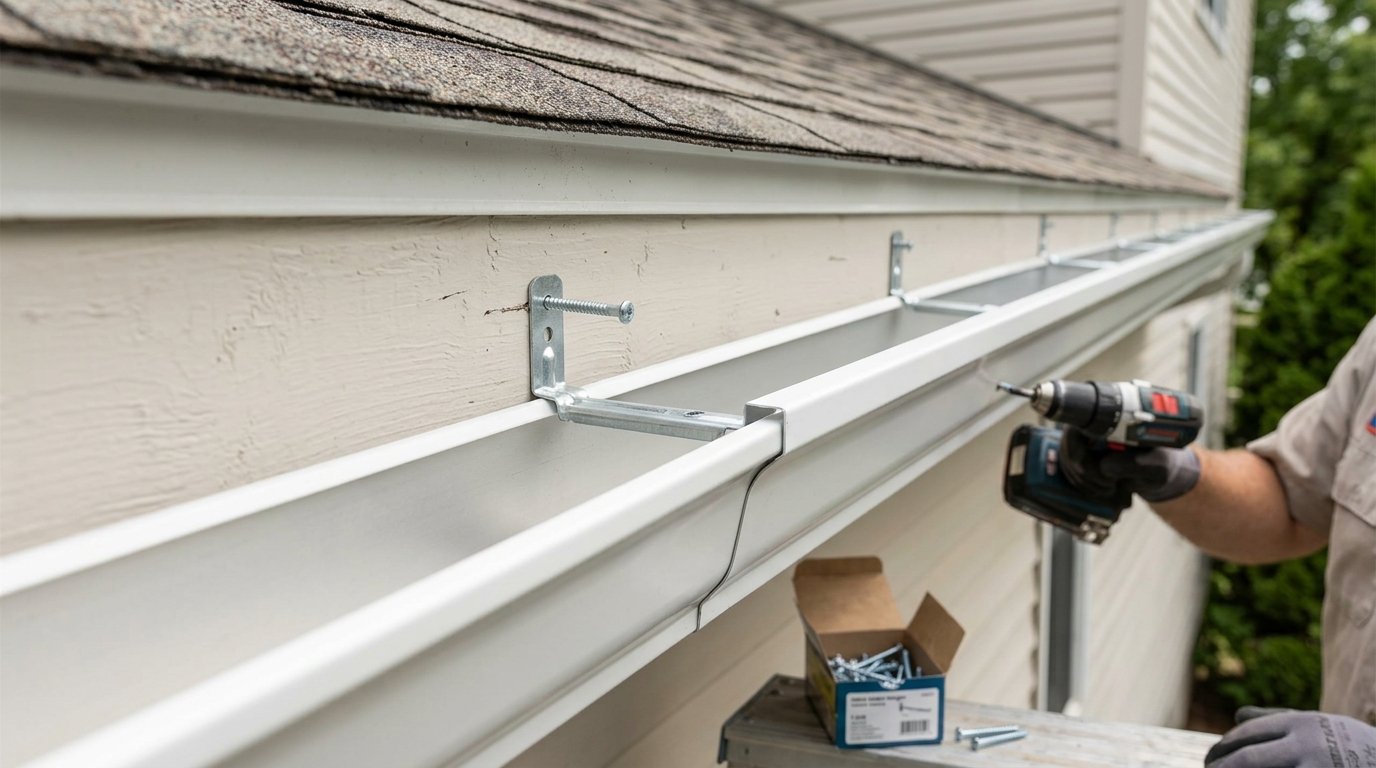
Gutter hangers are the fastening hardware used to secure gutters to the fascia board along the roofline. They distribute the weight of the gutter — along with water, debris, and snow — across multiple attachment points so no single point bears the full load.
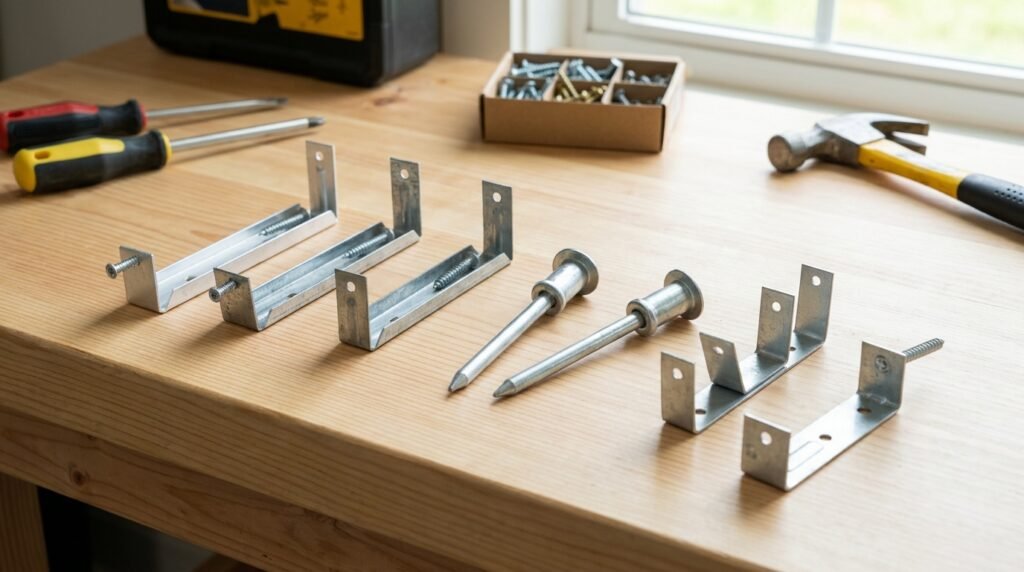
Types of Gutter Hangers Available
Understanding the different hanger types helps homeowners and contractors choose the right one for high-snowfall environments.
1. Hidden Hanger with Screw (Most Recommended)
This type sits inside the gutter channel and is invisible from the outside. It uses a long screw that passes through the hanger body and threads directly into the fascia or rafter tail. It provides the strongest hold and is the preferred choice in snow-prone regions.
2. Spike and Ferrule (Least Recommended)
The traditional nail-through-gutter method. Easy to install but low holding power. Spikes pull out over time and provide almost no resistance to lateral or impact forces from roof avalanches.
3. T-Bar Hangers
These wrap under and around the back of the gutter before screwing into the fascia. They distribute force more evenly but can still fail under extreme snow impact if not spaced closely enough.
4. Strap Hangers
Strap hangers loop over the back of the gutter and attach to the roof deck or rafter. They are useful for tile roofs or installations where fascia attachment is difficult, but they are not the strongest option for heavy snow loads.
5. K-Style Bracket Hangers
Designed specifically for K-style gutters, these wrap-around brackets bolt to the fascia and provide very strong lateral support, making them suitable for heavy-load environments.
| Hanger Type | Holding Strength | Snow Load Suitability | Visibility |
| Hidden Hanger with Screw | Very High | Excellent | Hidden |
| Spike and Ferrule | Low | Poor | Visible |
| T-Bar Hanger | Medium | Good | Partially Visible |
| Strap Hanger | Medium | Moderate | Visible |
| K-Style Bracket | High | Very Good | Partially Visible |
Can Gutter Hangers Actually Stop Roof Avalanche Damage?
Gutter hangers alone are not a complete solution — but they are the most foundational layer of protection. Their effectiveness depends on three key factors: hanger type, installation spacing, and the fastener used to attach them.
The Role of Hanger Spacing in Snow Regions
In standard climates, gutters are typically hung with hangers spaced every 24 to 36 inches apart. In areas that receive significant snowfall or are prone to roof avalanches, this spacing is not sufficient. Most roofing and gutter professionals recommend reducing the spacing to every 12 to 18 inches when there is a serious risk of snow sliding off the roof.
Closer spacing means the impact load from a sliding snow mass is distributed across more attachment points, dramatically reducing the chance that any single hanger will pull free.
Why Screw Depth and Fascia Condition Matter
Even the best gutter hanger will fail if it is screwed into a rotted or undersized fascia board. Screws should penetrate at least 1.5 inches into solid wood — ideally into the rafter tails behind the fascia for maximum holding power.
Using 1/4-inch hex-head screws rather than standard drywall screws also significantly increases pullout resistance. Before installing or upgrading hangers, it is worth inspecting the fascia for soft spots, rot, or damage from previous gutter failures.
Pairing Hangers with Snow Guards for Full Protection
Gutter hangers reduce the damage once snow hits the gutter, but snow guards prevent large snow sheets from building up and releasing all at once.
When used together, snow guards installed on the roof surface above the gutter line) break up the snow into smaller masses, and reinforced hangers ensure the gutter stays anchored even if some snow does reach it. This combination is the most effective approach for homes in high-snowfall regions.
Step-by-Step: Upgrading to Snow-Ready Gutter Hangers
Replacing old spike-and-ferrule hangers with hidden screw hangers is a manageable DIY project. Here is a clear process to follow:
- Remove existing spikes or old hangers — Use pliers or a pry bar to carefully pull out old spikes without bending the gutter channel.
- Inspect the fascia board — Press firmly along the fascia to check for soft or rotted areas. Replace damaged sections before proceeding.
- Insert hidden hangers inside the gutter — Slide the hanger body into the gutter channel so the front lip hooks over the outer edge of the gutter.
- Drive screws through the hanger into the fascia — Use a 1/4-inch hex-head screw at least 2.5 inches long and aim for the rafter tail if possible.
- Space hangers at 12 to 18 inches — In heavy snow areas, do not exceed 18 inches between hangers.
- Check gutter pitch — Gutters should slope approximately 1/4 inch per 10 feet toward the downspout to allow proper drainage.
- Test with water — Run water through the gutter to confirm there are no dips, sags, or overflow points.
Additional Measures That Work Alongside Gutter Hangers
Gutter hangers are the backbone of the system, but combining them with complementary measures creates a much more resilient setup.
- Gutter helmets or guards — Reduce the weight of debris inside the gutter that can compound damage during a snow slide.
- Heated gutter cables — Prevent ice dams from forming at the gutter edge, which adds weight and stress even before a roof avalanche occurs.
- Roof pitch assessment — Steeper roofs shed snow faster and more violently; homes with pitches above 6/12 benefit most from reinforced hangers and snow guards.
- Regular gutter inspection — Check hangers each fall for looseness and replace any that show corrosion or bending.
Frequently Asked Questions
Do gutter hangers work for all gutter types?
Hidden screw hangers are made in sizes to fit standard 4-inch, 5-inch, and 6-inch K-style gutters, as well as half-round gutters. Always match the hanger to the gutter profile and size.
How many gutter hangers do I need per linear foot?
In snow-prone areas, plan for one hanger every 12 to 18 inches. A 40-foot gutter run would need approximately 27 to 40 hangers depending on spacing.
Can I install gutter hangers without removing the gutters?
Yes, hidden hangers can be slid into an existing gutter without removing it, as long as the old spikes or hardware are removed first and the gutter channel is undamaged.
Are aluminum hangers strong enough for roof avalanche protection?
Heavy-gauge aluminum hangers work well for most homes. For steep roofs or areas with very heavy snowfall, stainless steel or galvanized steel hangers offer superior strength and corrosion resistance.
Will gutter hangers void my roof warranty?
Gutter hangers attach to the fascia board, not the roofing material itself, so they typically do not affect roof warranties. However, any rooftop work like snow guard installation may have implications — check with your roofing contractor.
Conclusion
Gutter hangers can absolutely prevent gutter damage from roof avalanches — but only when the right type is used, installed at the correct spacing, and anchored into solid structural wood. Hidden screw hangers installed every 12 to 18 inches represent the single most effective upgrade a homeowner can make to protect gutters in snow country.
When combined with snow guards above the gutter line and a healthy fascia board below, this system can withstand the forces that destroy standard gutter installations. Taking the time to assess and upgrade your gutter hanger system before winter arrives is a straightforward investment that prevents far more costly repairs down the road.
Related Articles
Factors Affecting Door Installation Cost: What You Need to Know
Garage Door Bottom Seal Replacement: Complete Guide for Homeowners
Can You Use Ceiling Paint on Walls? The Surprising Benefits and Drawbacks
How to Get Rid of Mold in the Bathroom: Complete Step-by-Step Guide
How Long Does It Take for Bathroom Caulk to Dry? Complete Guide