

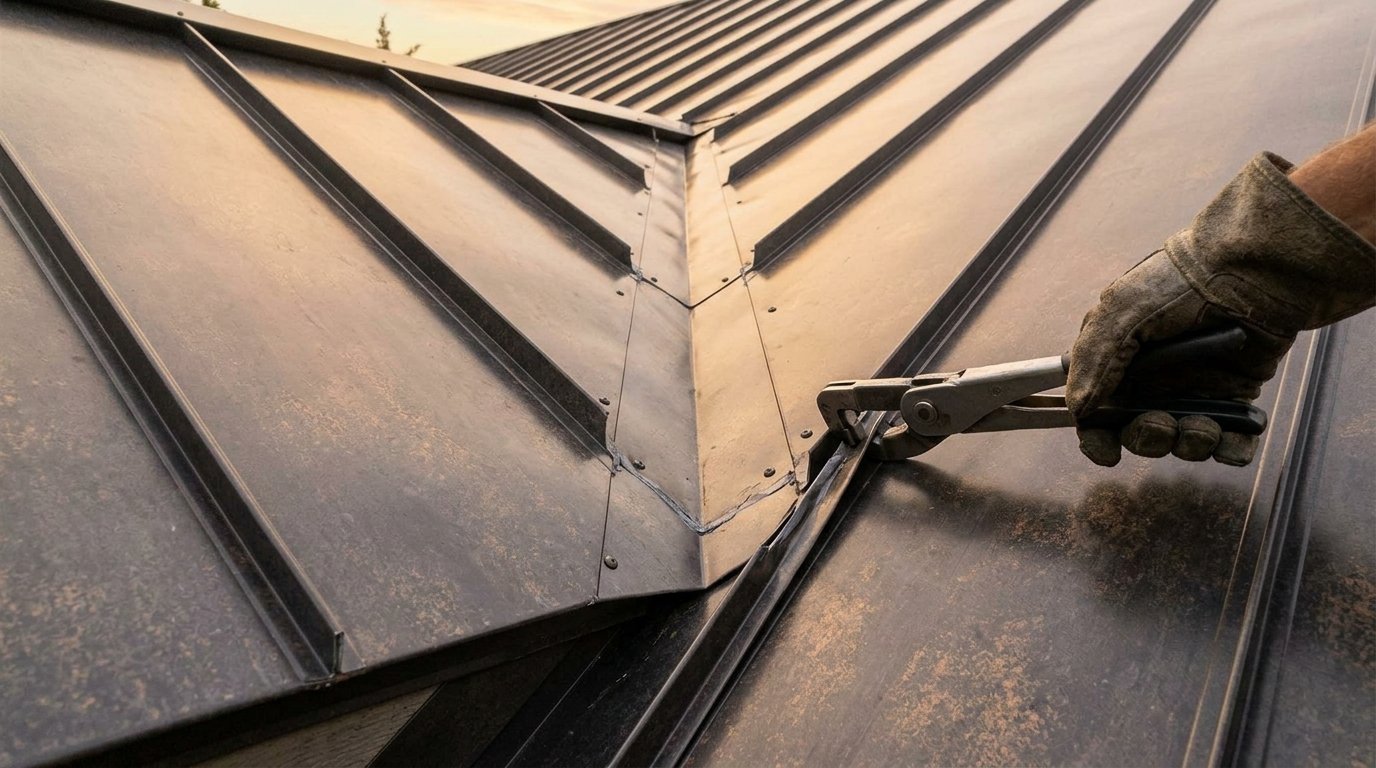

A burnished slate metal roof is a steel or aluminum roofing panel finished with a textured, low-gloss coating that mimics natural slate stone. This finish gives the roof a rich, dark, weathered appearance while keeping the strength and light weight of metal. Below we break down the finish itself and how it compares to real slate.
The Burnished Finish Explained
The burnished finish is created through a multi-layer coating process that adds subtle color variation across each panel, avoiding a flat, plastic-like look. Manufacturers often blend charcoal, grey and deep blue undertones so the surface reflects light unevenly, just as real stone does. This technique makes the panels blend naturally with brick, stone and wood exteriors.
Slate Look Without Slate Weight
Natural slate can weigh over 800 kilograms per square, requiring heavy structural framing to support it. A burnished slate metal roof delivers the same visual depth at a fraction of that weight, usually under 70 kilograms per square. This means most homes can install it without any additional roof reinforcement.
Why Homeowners Choose Burnished Slate Metal Roofing
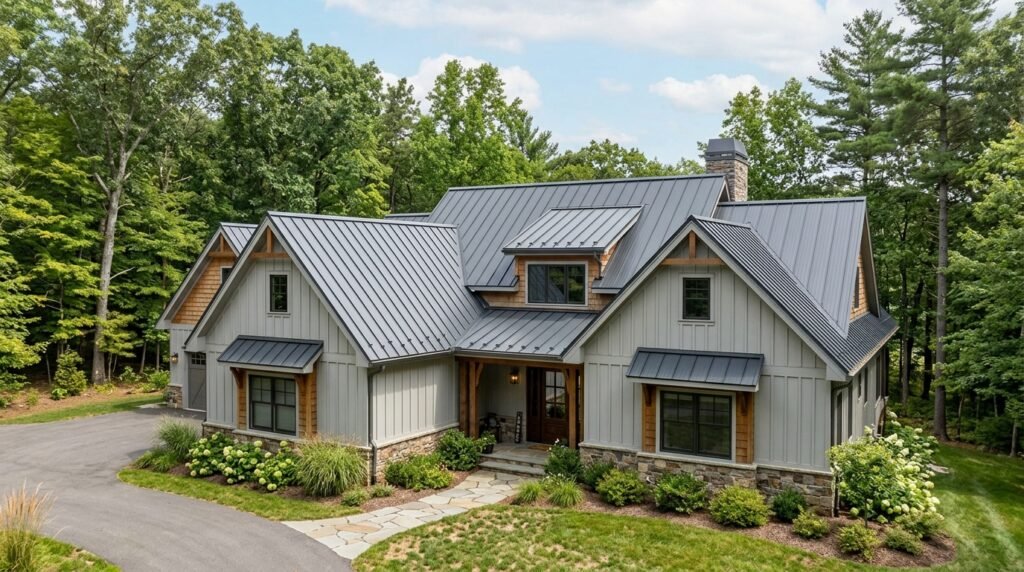
People select this roofing style because it balances classic aesthetics with modern performance. The next two subsections cover the visual appeal and the practical reasoning behind this growing trend.
Aesthetic Appeal for Traditional and Modern Homes
The dark, layered tone of a burnished slate metal roof suits colonial, farmhouse, craftsman and even contemporary architecture. Because the finish avoids a uniform, factory-made appearance, it gives older-style homes an authentic, aged charm while still looking sharp on newly built properties. This flexibility is a major reason designers recommend it for renovation projects.
Long-Term Value Over Real Slate
Real slate roofing requires specialized installers, frequent tile replacement, and higher insurance due to its fragility. A metal roof with a burnished slate finish avoids these issues while still offering a comparable upscale look. Homeowners get the prestige of a stone roof with the practicality of a modern roofing material.
Material Composition and Manufacturing Process
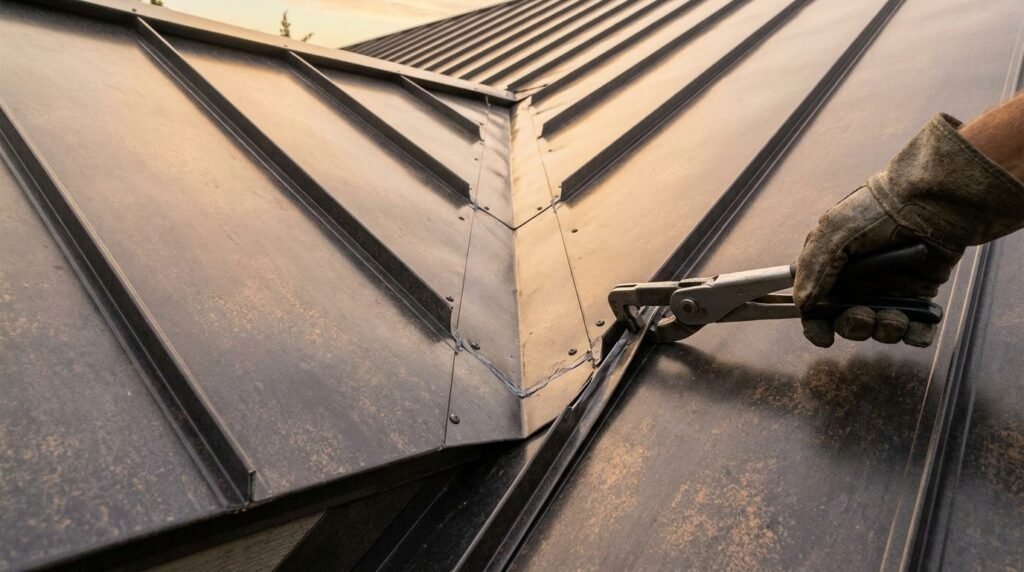
This roofing type is built from either steel or aluminum coils that go through several treatment stages before becoming a finished panel. The two subsections below explain the base metal choice and the coating technology used.
Steel vs Aluminum Base Panels
Steel panels are heavier and offer higher impact resistance, making them a strong choice for regions with hail or heavy debris. Aluminum panels are lighter, naturally rust-resistant, and preferred in coastal areas where salt air speeds up corrosion. Both metals can carry the burnished slate coating equally well.
Coating and Texture Application
Manufacturers apply a primer layer first, followed by a textured base coat that creates the stone-like surface pattern. A tinted top layer is then baked onto the panel at high temperature, locking in the multi-tone slate appearance permanently. This baked-on process is what allows the color to resist fading for decades rather than years.
Key Benefits of a Burnished Slate Metal Roof
This roofing option brings together several performance advantages that go beyond looks alone. The subsections below cover durability and energy efficiency in detail.
Durability Against Weather Extremes
Metal roofing with a burnished slate finish typically withstands wind speeds above 190 kilometers per hour and resists cracking in freeze-thaw cycles that damage clay or real slate tiles.
The coating also has strong resistance to hail denting when installed over proper underlayment. This makes it a dependable choice in regions with unpredictable seasonal weather.
Energy Efficiency and Reflectivity
Despite its dark tone, quality burnished slate coatings include reflective pigment technology that reduces heat absorption compared to standard dark roofing materials.
This helps lower attic temperatures during summer months, which can reduce cooling costs. Many manufacturers back this performance with Cool Roof certification ratings.
Installation Process and Requirements
Installing this roofing system involves specific steps that differ slightly from standard asphalt shingle installation. The subsections explain the preparation stage and the panel fitting stage.
Roof Preparation and Underlayment
Before panels go on, installers check the roof deck for structural soundness and lay a synthetic or self-adhering underlayment to prevent moisture penetration. Proper ventilation channels are also added beneath the metal to prevent condensation buildup. Skipping this step is one of the most common causes of premature roof failure.
Panel Fitting and Fastening Methods
Panels are installed using either exposed fastener systems or hidden clip systems, with hidden clips being preferred for the cleaner slate-like appearance.
Seams are aligned carefully so the textured coating pattern flows naturally across the roof. Skilled installers also stagger panel batches to avoid visible color banding.
Maintenance and Lifespan Expectations
A burnished slate metal roof requires far less upkeep than natural stone roofing, but it still benefits from periodic checks. The subsections below cover routine care and expected lifespan.
Routine Cleaning and Inspection
Light cleaning with water and a soft brush twice a year removes debris, algae growth, and dust buildup without damaging the coating. Inspecting seams, flashing points, and fasteners annually helps catch small issues before they turn into leaks. Most manufacturers recommend a professional inspection every three to five years.
Expected Lifespan and Warranty Coverage
These roofs commonly last between 40 and 60 years depending on the metal gauge and coating quality, far outlasting asphalt shingles.
Most reputable brands offer coating warranties between 30 and 50 years, alongside separate structural warranties for the metal itself. This long coverage period is a major selling point for buyers thinking long term.
Cost Breakdown and Budget Planning
Pricing for this roofing style varies based on material choice, panel profile, and regional labor rates. The table below gives a general cost comparison to help with budgeting.
| Roofing Type | Average Cost per Square Foot | Typical Lifespan |
| Burnished slate metal roof | $9 – $16 | 40 – 60 years |
| Natural slate roof | $15 – $30 | 75 – 150 years |
| Asphalt shingle roof | $4 – $7 | 15 – 25 years |
| Standard painted metal roof | $6 – $12 | 30 – 50 years |
Factors That Influence Final Pricing
Roof pitch, panel profile complexity, regional labor costs, and the number of penetrations such as chimneys or skylights all affect the final quote.
Homes with steep or cut-up roof shapes generally cost more due to increased labor time and material waste. Getting at least three local quotes helps homeowners understand fair market pricing in their area.
Return on Investment Considerations
Because of its long lifespan and low maintenance needs, this roofing type often delivers strong resale value, particularly in markets where buyers value low-upkeep homes.
Some insurance providers also offer premium discounts for impact-resistant metal roofing. These combined savings can offset the higher upfront cost over time.
How It Compares to Competitors in the Market
Several other stone-look metal roofing finishes exist, including basic matte grey coatings and stamped shingle-style metal panels. Compared to flat matte finishes, the burnished slate style offers noticeably more depth and tonal variation, making it look less artificial from ground level.
Compared to stamped shingle-style metal panels, it typically has a smoother, more architectural profile that suits both traditional and modern facades, giving it a slight edge for homeowners who want a premium stone appearance without a synthetic shingle texture.
Frequently Asked Questions
Is a burnished slate metal roof suitable for all climates?
Yes, it performs well in hot, cold, coastal, and storm-prone regions when the correct metal base and coating grade are selected for local conditions.
Does the color fade over time?
High-quality coatings resist significant fading for several decades, though very cheap coatings may lose some richness sooner.
Can it be installed over an existing roof?
In many cases yes, provided the existing deck is structurally sound and local building codes allow overlay installation.
Is it noisy during rain?
With proper underlayment and insulation, noise levels are similar to standard shingle roofing, not significantly louder.
Conclusion
A burnished slate metal roof offers a rare combination of authentic stone-like beauty, long-term durability, and manageable maintenance that few other roofing materials can match. While the upfront cost is higher than asphalt shingles, its extended lifespan, energy efficiency, and strong resale appeal make it a smart investment for homeowners planning to stay long term or seeking a premium exterior upgrade.
Related Articles
Can Gutter Hangers Prevent Gutter Damage from Roof Avalanche?
How to Improve Home Security with Better Locks: The Complete 2026 Guide
How to Clean Vinyl Floors: The Complete Step-by-Step Guide