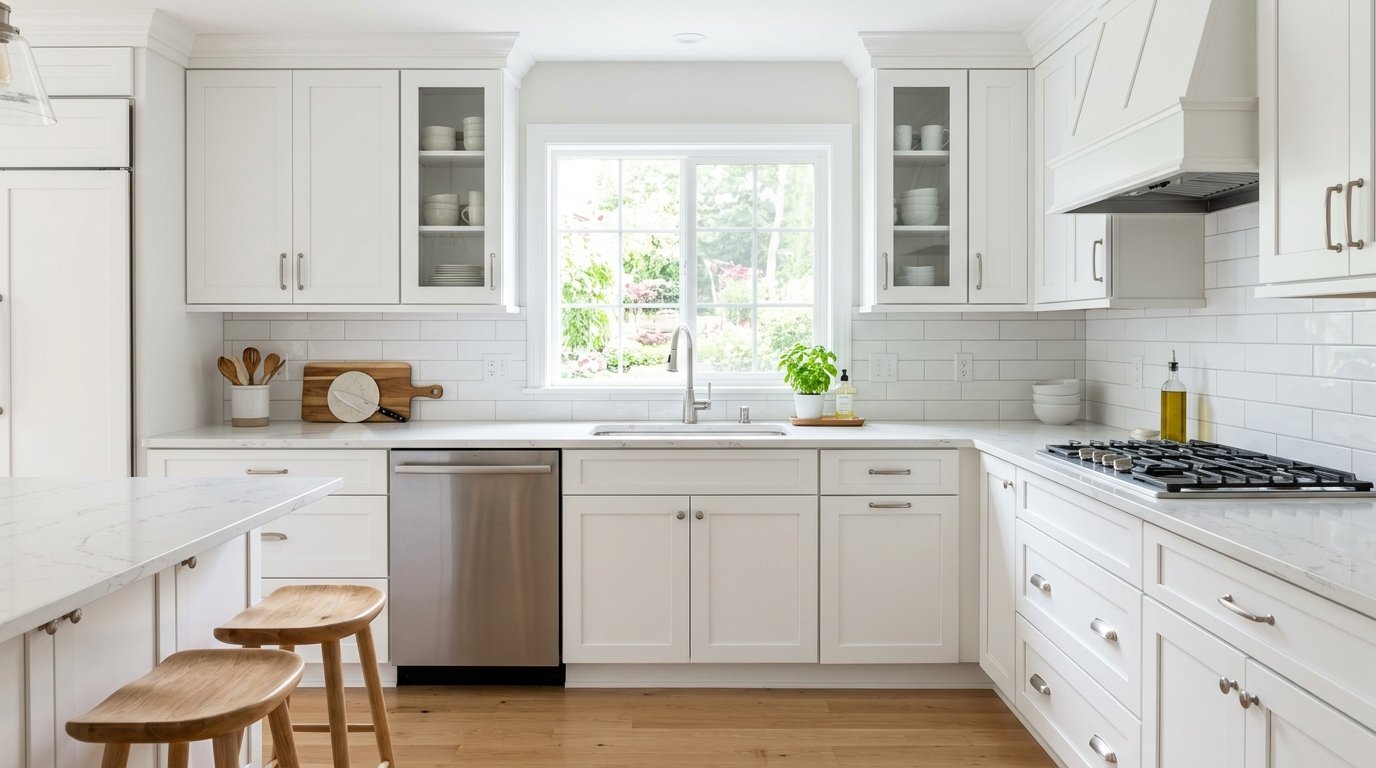

White kitchen cabinets bring a fresh, bright, and timeless look to any home, but they also show dirt, grease, and stains far more easily than darker finishes. Knowing how to clean white kitchen cabinets properly is essential to keep them looking new without accidentally damaging the paint or finish.
Many people make the mistake of using harsh chemicals or abrasive scrubbing pads, which can strip the coating or cause discoloration over time. This guide explains the safest and most effective cleaning methods, along with tips to prevent yellowing and maintain that crisp white appearance for years to come.
Why White Cabinets Need Special Cleaning Care
White cabinets show every fingerprint, grease splatter, and food stain much more visibly than darker cabinet colors. This makes regular and careful cleaning even more important to maintain their appearance.
The Risk of Yellowing Over Time
White cabinets, especially those painted rather than made from solid materials, can gradually yellow due to grease buildup, sunlight exposure, and cooking fumes. Regular cleaning helps slow down this yellowing process significantly.
Sensitivity to Harsh Chemicals
Many white cabinet finishes are sensitive to strong chemicals like bleach or ammonia-based cleaners, which can strip the protective coating. This makes choosing the right cleaning products just as important as the cleaning technique itself.
Everyday Cleaning Method for White Cabinets
For regular maintenance, a simple and gentle cleaning routine is enough to keep white cabinets looking fresh without causing any damage to the surface.
Using Warm Water and Mild Soap
Mix a few drops of mild dish soap into warm water and use a soft microfiber cloth to wipe down the cabinet surfaces. This simple solution is effective for removing everyday dust, light grease, and fingerprints without harming the finish.
Drying Cabinets Properly After Cleaning
After wiping the cabinets with soapy water, always dry them immediately with a clean, dry cloth to prevent water spots or streaks. Leaving moisture on the surface for too long can also damage certain cabinet finishes over time.
Removing Tough Grease Stains from White Cabinets
Kitchen cabinets near the stove or cooking area often accumulate stubborn grease stains that require a slightly stronger cleaning approach than everyday dusting.
Baking Soda Paste Method
Create a paste using baking soda and a small amount of water, then gently apply it to greasy areas using a soft cloth. Let it sit for a few minutes before wiping it off, as baking soda naturally breaks down grease without scratching the surface.
Vinegar and Water Solution
Mix equal parts white vinegar and warm water in a spray bottle and lightly mist it onto greasy cabinet surfaces. Vinegar cuts through grease effectively, but it should always be followed by a clean water wipe-down to avoid any residue.
Dealing With Stubborn Stains and Discoloration
Sometimes white cabinets develop stains or spots that regular cleaning methods cannot fully remove, requiring a slightly more targeted approach.
Using a Magic Eraser Carefully
Magic erasers can help remove tough stains and scuff marks from white cabinets, but they should be used gently since they can be slightly abrasive. Always test on a small, hidden area first to ensure it does not dull the finish.
Treating Yellowed Areas
For cabinets that have started yellowing, a mixture of baking soda and hydrogen peroxide can help restore some brightness when applied gently with a soft cloth. This method works best on painted wood cabinets rather than laminate finishes.
Table: Best Cleaning Methods for Different Cabinet Issues
| Cabinet Issue | Recommended Cleaning Method | Frequency |
| Daily Dust and Fingerprints | Warm water and mild soap | Daily or every few days |
| Grease Near Stove | Baking soda paste or vinegar solution | Weekly |
| Tough Stains | Magic eraser (tested first) | As needed |
| Yellowing | Baking soda and hydrogen peroxide mix | Monthly if needed |
What to Avoid When Cleaning White Cabinets
Certain cleaning habits and products can do more harm than good, leading to permanent damage or discoloration on white kitchen cabinets.
Avoiding Abrasive Scrubbers
Steel wool, rough scrub brushes, or abrasive sponges can scratch the surface of white cabinets, leaving visible marks that are difficult to fix. Always opt for soft microfiber cloths or gentle sponges instead.
Avoiding Excess Water
Using too much water while cleaning cabinets can cause the wood underneath to swell or the paint to peel over time. It is important to use a damp, not soaking wet, cloth during the entire cleaning process.
Skipping Harsh Chemical Cleaners
Bleach, ammonia, and other strong chemical cleaners should generally be avoided since they can strip away the protective coating on cabinet surfaces. Mild, natural cleaning solutions are almost always safer and just as effective.
Maintaining White Cabinets for the Long Term
Beyond regular cleaning, a few maintenance habits can help preserve the appearance of white kitchen cabinets for many years.
Wiping Spills Immediately
Cleaning up spills, splatters, and cooking residue as soon as they happen prevents stains from setting into the cabinet surface. This small habit can significantly reduce the need for deep cleaning later on.
Applying a Protective Wax Occasionally
For painted wood cabinets, applying a light coat of furniture wax every few months can help protect against grease and moisture. This adds an extra layer of defense against everyday wear and tear in the kitchen.
Conclusion
Learning how to clean white kitchen cabinets properly ensures they stay bright, fresh, and free from grease or stains for years to come. By using gentle methods like warm soapy water for daily cleaning and baking soda solutions for tougher grease, you can maintain your cabinets without risking damage. Avoiding harsh chemicals, abrasive scrubbers, and excess water is just as important as choosing the right cleaning technique. With consistent care and the right approach, your white cabinets can continue to brighten your kitchen for a long time.
FAQs
Can I use bleach to clean white kitchen cabinets?
It is best to avoid bleach since it can damage or discolor the cabinet finish over time.
How often should white cabinets be cleaned?
Light daily wiping is ideal, with deeper grease cleaning done on a weekly basis near cooking areas.
Why do white cabinets turn yellow over time?
Yellowing usually happens due to grease buildup, sunlight exposure, and cooking fumes accumulating on the surface.
Is a magic eraser safe for white cabinets?
Yes, but it should be tested on a small area first since it can be slightly abrasive on delicate finishes.
Related Articles
How to Program Genie Garage Door Opener Complete Guide 2026
Roof Washing: A Complete Guide 2026
How to Find a Water Leak Underground Complete Guide 2026
Acid Staining Concrete Floor: Complete Guide
How Long Does It Take for Bathroom Caulk to Dry? Complete Guide