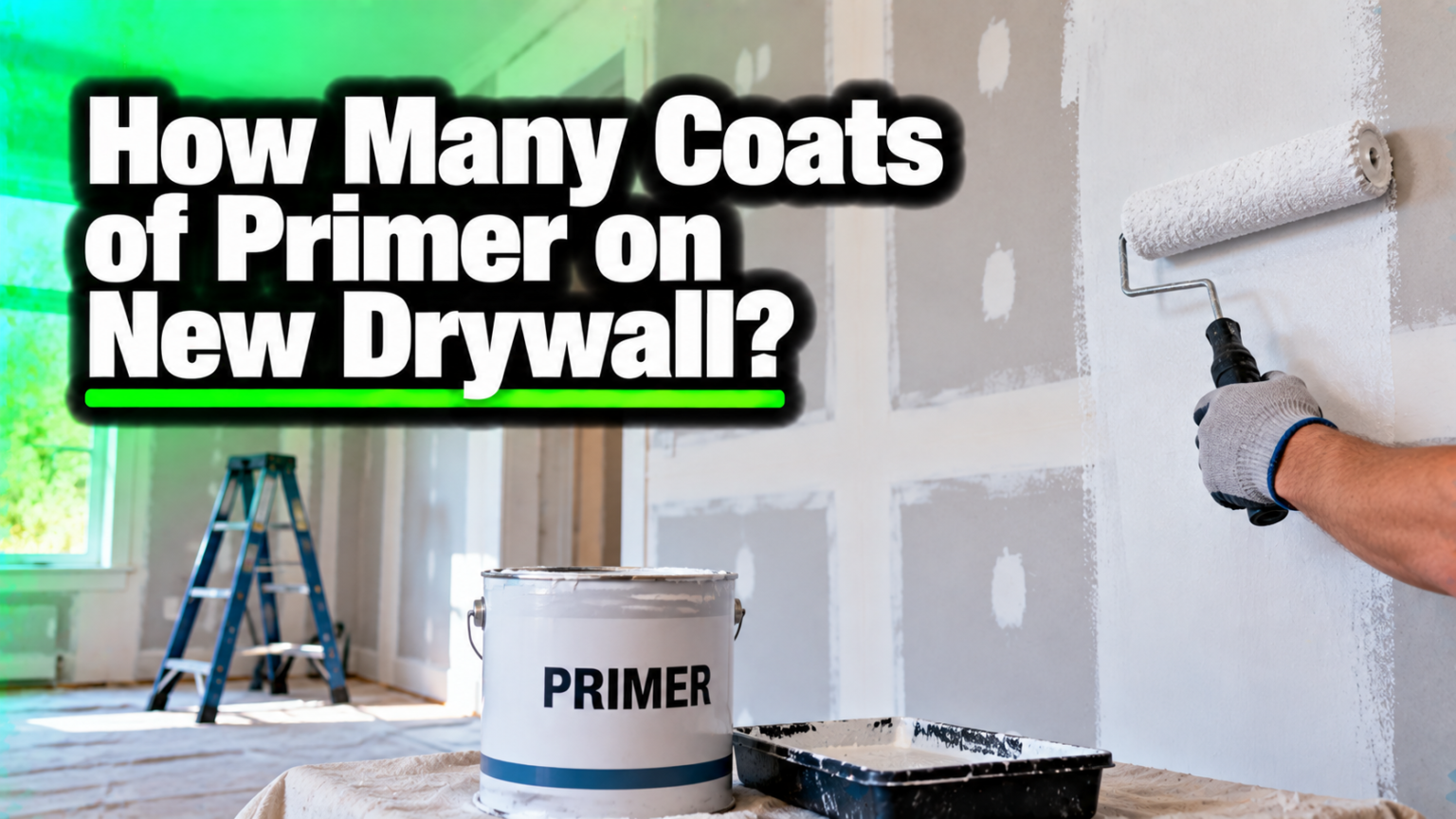

On new drywall, one coat of a good drywall primer is almost always enough. New drywall is bare and thirsty, so a single coat of a polyvinyl acetate (PVA) primer seals the paper and the dried joint compound, evens out how the surface soaks up paint, and gives your color a clean base to grip.
You only step up to a second coat in a few specific cases. This guide covers the plain answer, why one coat works, the handful of times you need two, which primer to buy, how much of it you need, and how to put it on so a single coat actually does the job.
Why new drywall needs a coat of primer first?
New drywall is really two surfaces pretending to be one. There is the paper face of the board, and there is the dried joint compound spread over the seams, corners, and screw holes.
These two surfaces drink paint at very different speeds. The paper is fairly porous. The joint compound is even thirstier and pulls moisture out of paint fast.
Paint straight onto bare drywall and those thirsty spots dry duller and slightly off in color. You end up seeing every seam and screw as a faint patch through the finish. Painters call this flashing, or joint banding, and it is the main reason a fresh paint job on raw drywall looks blotchy in certain light.
Primer solves this by sealing both surfaces to the same porosity. Painters sometimes call this sizing the wall. Once the drywall soaks up paint evenly everywhere, your topcoat dries to one steady color and sheen, and the seams disappear.
There are two more reasons the coat pays for itself. Primer grips the raw board and gives your paint something to bond to, so the finish is tougher and less likely to peel later. And because the primer, not your color, is the layer that sinks into the thirsty board, you use less of your more expensive finish paint on top. A gallon of primer is cheaper than a gallon of good paint, so priming first is usually the cheaper way to a solid finish, not an extra cost.
So how many coats of primer do you really need?
One coat. That is the standard for new drywall, and it is what most professional painters do.
A single, even coat of PVA drywall primer seals the paper and the compound and readies the wall for your paint. After that, painters move straight to two coats of color. Extra primer coats do not make the paint richer, help it last longer, or hide flaws any better.
The whole point of primer on drywall is a sealed, uniform surface, and one solid coat gets you there on a wall that was finished properly, meaning the joints were sanded smooth and the sanding dust was wiped off.
When people feel like they need a second coat, the real problem is usually that the first coat went on too thin. A proper wet coat rolled with a 3/8 inch nap roller seals the wall in one pass. Spread it too far and thin and it cannot do its job.
How much primer will you need?
A gallon of drywall primer covers roughly 200 to 400 square feet. New drywall sits at the thirsty end of that range, so plan on the lower number, around 200 to 300 square feet per gallon, rather than the figure on the front of the can.
To size the job, add up your wall and ceiling area and divide by 250 as a safe rule. A standard 12 by 12 foot room with 8 foot walls has roughly 400 square feet of wall, so a single gallon covers it with a little to spare. Buy one extra quart if the room is large or the drywall looks especially dry and dull, since running out halfway leaves a visible lap line.
When new drywall needs two coats?
A second coat is the exception, not the rule. Here are the real situations where it earns its place:
- Skim-coated or Level 5 walls. If the whole surface got a thin skim coat of joint compound, known as a Level 5 finish and common under glossy paint or in rooms with strong side lighting, the entire wall is now thirsty compound. That can drink the first coat unevenly, so a second coat, or a thicker high-build primer, gives you a truly even base.
- A very dark or bold topcoat. Deep colors cover better over a primer that is close to the final shade. Tinting the primer gray or having the store tint it toward your color can save you a paint coat later, and sometimes that means two lighter primer passes.
- A blotchy first coat. If you rolled the primer thin and some spots soaked in and look dull after drying, those areas were not sealed. Spot-prime the dull patches or give the wall a second full coat.
- Patches mixed into an older wall. Fresh joint compound used to patch a wall that is already painted absorbs differently from the old paint around it. Prime the new patches so they do not flash through your finish.
The simple test is to look at the dried primer. If it is uniform, sealed, with no dull patches and nothing bleeding through, you are done. If it still looks blotchy or thin in spots, those areas were not sealed, so add one more coat there or across the whole wall. Notice that none of these cases are about the primer failing after one proper coat. They are about a wall that is thirstier than usual, a color that needs a helping base, or a first coat that went on short. Match the coats to the wall in front of you rather than adding a second one out of habit.
What kind of primer to use on new drywall?
PVA primer is the default choice for new drywall, and it is usually the cheapest option too. PVA stands for polyvinyl acetate, and this primer is made specifically to seal raw drywall paper and joint compound. It goes on easily, dries fast, and sands smooth. A common example is Zinsser PVA Professional Drywall Primer and Sealer, which is built for exactly this job.
You would only reach for a different primer in a couple of cases. If the wall has stains, marker, or water marks you need to hide, a stain-blocking primer, usually shellac or oil based, covers them better than PVA. If you are chasing a flawless, super-smooth finish, a high-build primer fills tiny surface texture that PVA leaves alone.
For a plain new-drywall wall with no stains, though, PVA is all you need, and paying more for a premium multi-surface primer buys you nothing here. Where the extra money is worth it is a bathroom or kitchen: there, a mold-resistant or moisture-tolerant primer made for drywall holds up better against steam and damp than a basic PVA.
One thing to skip is the idea of using regular wall paint as a primer on bare board. Paint is built to sit on a sealed surface and show color, not to soak in and seal raw drywall. Use it as your first coat and it drinks unevenly, flashes over the seams, and costs you more paint to fix than a cheap gallon of PVA would have.
How to prime new drywall the right way?
Getting one coat to do the job is mostly about prep and a proper wet coat. Here is the order:
- Dust the walls. Sanding the joints leaves a film of fine dust, and primer will not bond to dust. Wipe the walls down with a dry microfiber cloth or vacuum them with a brush attachment first.
- Check the finish. Fill any dents or gaps you missed, and sand down ridges or bumps around the seams. Primer shows flaws, it does not hide them, so smooth them now.
- Cut in the edges. Use a brush to prime along the trim, into the corners, and where the wall meets the ceiling, so your roller does not have to reach those tight spots.
- Roll the field. Load a 3/8 inch nap roller and work in sections about three feet square, rolling on a full, even wet coat and keeping a wet edge so the sections blend. Do not overspread it into a thin, patchy layer, since that starves the wall and is what forces a second coat.
- Let it dry fully. Wait until the primer is completely dry, not just dry to the touch, before you paint. Rushing this traps the primer under paint and can cause problems later.
- Light sand, then paint. If the primed wall feels slightly rough, give it a quick light sand, wipe off the dust, and then roll on your two coats of paint.
Tip: after the primer dries, look at the wall in raking light or run your hand across it. A properly sealed wall looks the same sheen everywhere and feels uniform. Dull, rough patches mean those spots drank the primer and want a little more.
How long primer takes to dry before painting?
Most water-based drywall primers dry to the touch in about 30 minutes to an hour and are ready for paint within an hour or so. Fast PVA primers are quicker still. Zinsser’s PVA, for example, dries in around 15 minutes and can be topcoated in about 45 minutes.
| Primer type | Dry to touch | Ready to paint |
| PVA (water-based drywall primer) | 15-30 minutes | About 45 minutes |
| Latex / acrylic primer | 30 minutes to 1 hour | About 1 hour |
| Oil-based primer | 1 to 3 hours | Often overnight |
| Shellac-based primer | About 45 minutes | About 1 hour |
Those times assume a normal room, somewhere around 70 degrees with average humidity. Cold air and high humidity slow everything down, sometimes a lot. Below about 50 degrees or in a damp basement, a primer that normally recoats in an hour can need several, so give it extra time and run a fan if you can.
Can you skip primer with paint-and-primer paint?
On bare new drywall, no. Paint-and-primer products are really self-priming paints made for surfaces that are already painted or sealed. They do not seal raw drywall and joint compound the way a dedicated primer does.
Use one on new drywall and you get the same uneven soaking, flashing seams, and wasted paint that priming was meant to prevent, and you will likely need extra coats of that pricier paint to hide it. On new board, prime first with a real PVA primer, then paint. It is the cheaper route and it looks noticeably better.
Conclusion
For new drywall, one even coat of PVA drywall primer is the answer on nearly every job. It seals the bare paper and joint compound so your paint dries to one uniform color and sheen, with no patchy seams showing through. Save the second coat for skim-coated Level 5 walls, very dark topcoats, or spots that soaked in unevenly. Prime once, let it dry fully, then roll on two coats of paint. A sealed, even base is what a good finish is built on.
Frequently asked questions
Is one coat of primer enough on new drywall?
Yes. One even coat of PVA drywall primer seals the paper and joint compound for most jobs. Add a second coat only for skim-coated walls, very dark paint, or patches that dried blotchy.
Do I need a special primer for new drywall?
A PVA primer is made for it and works best. It seals raw drywall cheaply and sands smooth. Reach for a stain-blocking primer only if you need to cover marks, water stains, or marker.
Can I use paint as primer on new drywall?
No. Regular paint and paint-and-primer products do not seal bare drywall evenly, so seams and screws flash through the finish. Prime the wall first, then paint.
How long after priming can I paint?
Most drywall primers are ready to topcoat in about 30 to 60 minutes, and fast PVA primers in around 45 minutes. In cold or humid rooms, wait longer and make sure the primer is fully dry.
How many coats of paint go over primer?
Usually two coats of paint over one coat of primer give full, even color on new drywall. Deep or bold colors may need a third coat.
Related Articles
How to Remove Ink from Leather Sofa: Easy Step-by-Step Guide
What Is Roof Decking? A Complete Guide 2026
Can You Stain Wood Cabinets If They’ve Been Painted Complete Guide 2026