


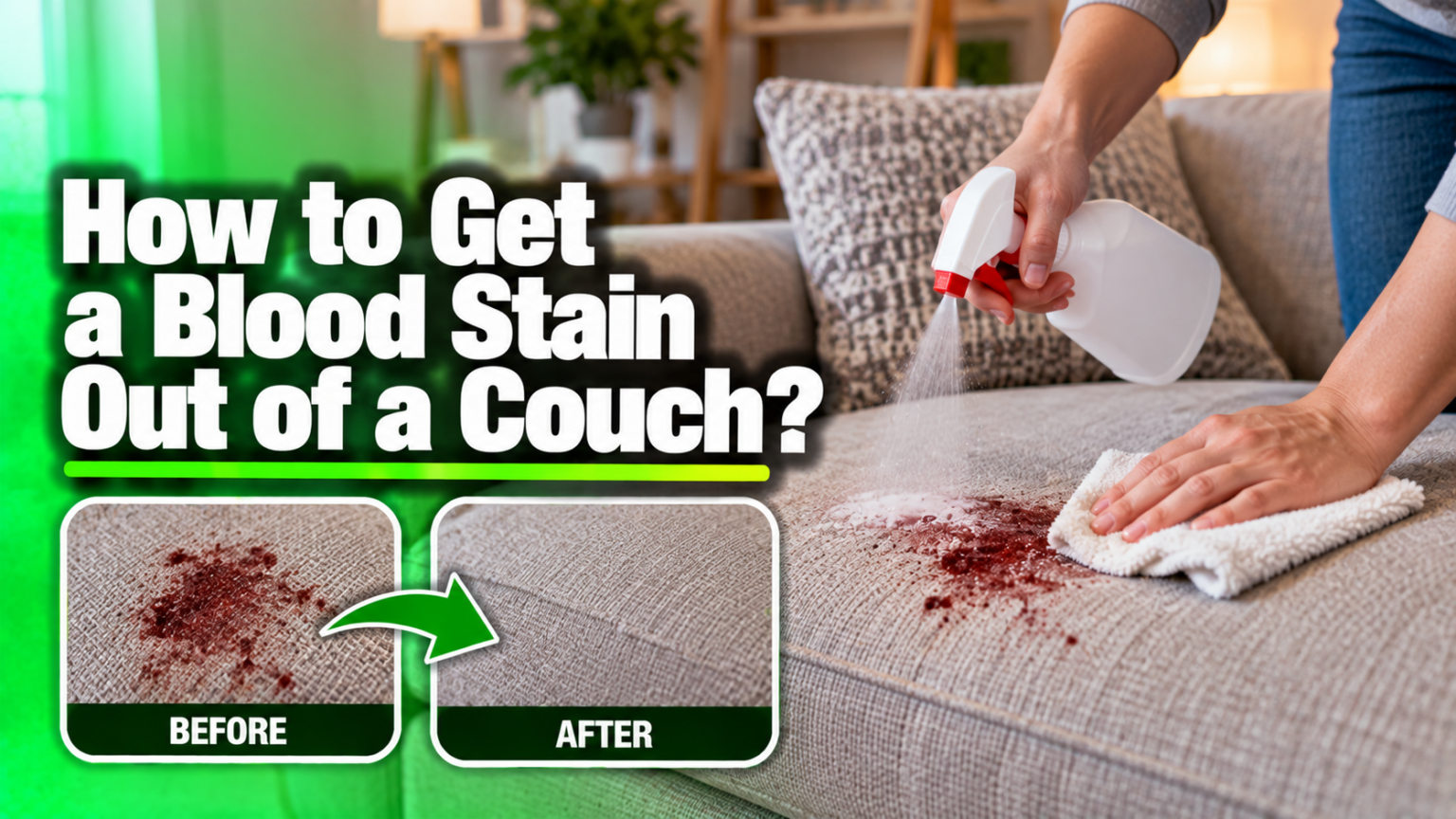

Blot the blood with a cold, damp cloth, check your couch’s care tag, then lift the stain with cold water and a little dish soap, or hydrogen peroxide if the fabric allows it. Work from the outside of the stain inward, keep everything cold, and never rub or use heat. That is the whole method, and the rest of this guide fills in the details for both fresh spills and stains that have already dried.
Speed matters more than any single product. The sooner you get to a blood stain, the more likely it comes out clean. But fast does not mean rough, and the wrong move here can set the stain for good or leave a water ring worse than the blood.
Why blood is so stubborn
Blood is a protein stain. The proteins bond to fabric fibers quickly, and the longer blood sits, the deeper it soaks in and the harder it grips. That is the reason a fresh drop wipes away in a minute while a week-old stain fights you for an hour.
Two things break that bond: cold water and gentle, patient lifting. Heat does the opposite. Warm or hot water cooks the protein into the fibers and locks the stain in place, which is why every step below uses cold water only. A couch also can’t go in the washing machine, so you are treating the stain right where it sits.
First, find your couch’s care tag
Before any liquid touches the couch, find the care tag and read the cleaning code. It is usually a small sewn-in label under a seat cushion, along the bottom of the frame, or in a seam on the back. The code is a single letter or two that tells you what the fabric can handle. Use the wrong one and you risk water rings, color bleeding, or shrinkage.
| Code | What it means | Safe to use for blood |
| W | Water-based cleaners only | Cold water, mild dish soap, hydrogen peroxide (light fabric) |
| S | Solvent only, no water | Dry-cleaning solvent; skip the water methods |
| W/S or WS | Water or solvent both fine | Cold water first, solvent as backup |
| X | Vacuum or brush only | No liquids at all, call a pro |
If the tag is gone or faded, treat the fabric as delicate. Start with a tiny bit of cold water on a hidden spot, like the back corner or under a cushion, and wait a few minutes to check for any color change or ring before you go near the stain itself.
Always test any cleaner on a hidden patch first. A stain you can cover with a cushion beats a bleached ring in the middle of the seat.
Get your supplies together first
Gather these before you start, so you are not running to the cupboard with a wet stain half-treated:
- Several clean white cloths or paper towels (white only, so no dye transfers)
- A bowl of cold water
- Mild dish soap
- Hydrogen peroxide, the standard 3% kind from the pharmacy
- A soft-bristled brush or an old toothbrush
- For a set-in stain, an enzyme cleaner made for protein stains
How to get fresh blood out of a couch
Fresh blood is the easy case. Move quickly and you can often clear it in one or two rounds.
- Blot up the wet blood. Press a dry white cloth or paper towel straight down onto the stain to soak up as much as you can. Do not rub. Rubbing spreads the blood and pushes it deeper into the fibers.
- Dab with cold water. Dampen a fresh cloth with cold water and blot the stain, starting at the outer edge and working toward the center. This keeps the stain from spreading outward. Swap to a clean part of the cloth as it picks up color.
- Add a little dish soap. Mix a few drops of mild dish soap into a bowl of cold water. Dip a cloth, wring it out so it is damp not soaking, and dab the stain. The soap helps loosen blood from the fibers.
- Rinse and blot dry. Wipe the area with a cloth dipped in plain cold water to lift the soap, then press a dry towel down to soak up the moisture.
- Repeat if needed. Absorbent fabrics may take two rounds. Keep going while the cloth is still pulling color, and stop once it comes up clean.
Let the spot air-dry fully. Don’t oversaturate the cushion, because too much water in the padding can lead to a musty smell or mildew later.
How to get dried blood out of a couch
Dried blood has bonded to the fibers, so it needs a bit more work and a lot more patience. The goal is to soften the crust first, then lift it in stages.
- Loosen the crust. Gently scrape or brush off any dried, flaky blood sitting on the surface with a soft brush or the edge of a spoon. Vacuum up the bits so you are not grinding them back in.
- Rehydrate with cold water. Lay a cold, damp cloth over the stain and press for a few minutes. This softens the dried blood so it can release. On a W or W/S fabric you can dab a little cold water directly on and let it sit.
- Make a baking soda paste. Mix two tablespoons of baking soda with one tablespoon of cold water into a paste. Spread it over the stain and leave it 30 to 60 minutes. As it dries it pulls blood up out of the fibers.
- Work it gently. Lightly scrub with a soft brush, then blot with a cold, damp cloth to lift the paste and the loosened blood together.
- Move to peroxide or enzyme cleaner if it lingers. A set-in stain often needs one of the stronger options in the next two sections. Old stains almost always take more than one pass, so plan to repeat.
Using hydrogen peroxide on a blood stain
Hydrogen peroxide is one of the best tools for blood because it reacts with the proteins and breaks them apart. You will see it bubble and fizz on contact, which is the reaction doing its job. Standard 3% hydrogen peroxide, the kind sold as a first-aid antiseptic, is what you want. The National Institutes of Health keeps a plain-language safety page on hydrogen peroxide if you want the details on handling it.
The catch is that peroxide has a mild bleaching effect, so it is only safe on light-colored or white fabric with a W or W/S code. On dark or dyed upholstery it can lighten the color and leave a pale patch. Test a hidden spot first, every time.
- Pour a small amount of 3% hydrogen peroxide straight onto the stain, or onto a white cloth for more control.
- Let it bubble for a few minutes as it breaks down the blood.
- Blot with a clean cloth to lift the loosened stain.
- Wipe the area with cold water to rinse, then blot dry.
- Repeat until the stain is gone, changing to a clean cloth each pass.
Leather, velvet, and delicate fabrics
Leather and suede play by different rules. For leather, blot up the excess blood with a dry cloth right away, dabbing rather than rubbing so you don’t drive it into the grain. A dedicated leather cleaner is the safe choice. If you don’t have one, sprinkle cornstarch or baking soda over the stain, leave it for a few hours or overnight to draw the blood out, then brush it away. Skip water and peroxide on leather and suede.
Velvet and microfiber are also touchy. Use as little moisture as possible, blot only, and let the pile dry before you brush it back into place. For anything marked S or X, don’t experiment. Those fabrics can be ruined by water or solvents used the wrong way, and a professional is the right call from the start.
Mistakes that make blood stains worse
A few common moves turn a small stain into a permanent one. Avoid these:
- Using warm or hot water. It sets the protein and locks the stain in for good. Cold only, always.
- Rubbing or scrubbing hard. This drives the blood deeper and frays the fibers. Blot straight down instead.
- Reaching for colored cloths. Dye can transfer onto light upholstery and add a second stain.
- Soaking the cushion. Too much liquid seeps into the padding and can cause mold or a water ring.
- Skipping the care tag. Water on an S-code fabric can cause browning and rings that are harder to fix than the blood was.
When to call a professional
Some situations are worth handing off. If the couch is marked X, if the fabric is silk or another delicate natural fiber, if the stain is large or has set for a long time, or if you have run through these steps and the mark won’t budge, a professional upholstery cleaner has solvents and equipment you don’t. There is no shame in stopping before you make it worse. A cleaning bill is cheaper than reupholstering a seat you bleached by accident.
Conclusion
To get blood out of a couch, act fast, keep everything cold, and check the care tag before you reach for any cleaner. Blot up what you can, then lift the rest with cold water and dish soap, baking soda paste for dried stains, or hydrogen peroxide on light-colored fabric. Work from the edges in, never rub, and repeat as needed. A clean result means no visible mark and no water ring, with the fabric none the worse for it.
Frequently asked questions
Does cold water really work better than warm on blood?
Yes. Cold water keeps the blood proteins loose so they can lift out. Warm or hot water sets the protein into the fibers and makes the stain permanent, so cold is the rule at every step.
Can I use hydrogen peroxide on a dark couch?
It is risky. Peroxide has a mild bleaching effect and can lighten dyed fabric, leaving a pale patch. Use it only on light or white upholstery with a W or W/S code, and test a hidden spot first.
How do I remove old, dried blood I just noticed?
Scrape off the surface crust, soften the stain with a cold damp cloth, then apply a baking soda paste for up to an hour. Move to peroxide or an enzyme cleaner if it remains. Old stains usually need a few passes.
What if my couch has no care tag?
Treat it as delicate. Test a little cold water on a hidden area first and watch for rings or color change. If the fabric reacts at all, skip the liquids and have it cleaned professionally.
Will vinegar get blood out of a couch?
Cold water, dish soap, and hydrogen peroxide are more reliable for blood. If you try diluted vinegar, keep it cold, test a hidden spot, and blot gently, but don’t expect it to beat peroxide on a set-in stain.
Related Articles
What Paint Finish for Exterior Door? Best Sheen Guide
How to Find a Water Leak Underground Complete Guide 2026
How Much to Install a Bathroom in a Basement: The Complete 2026 Cost Guide




