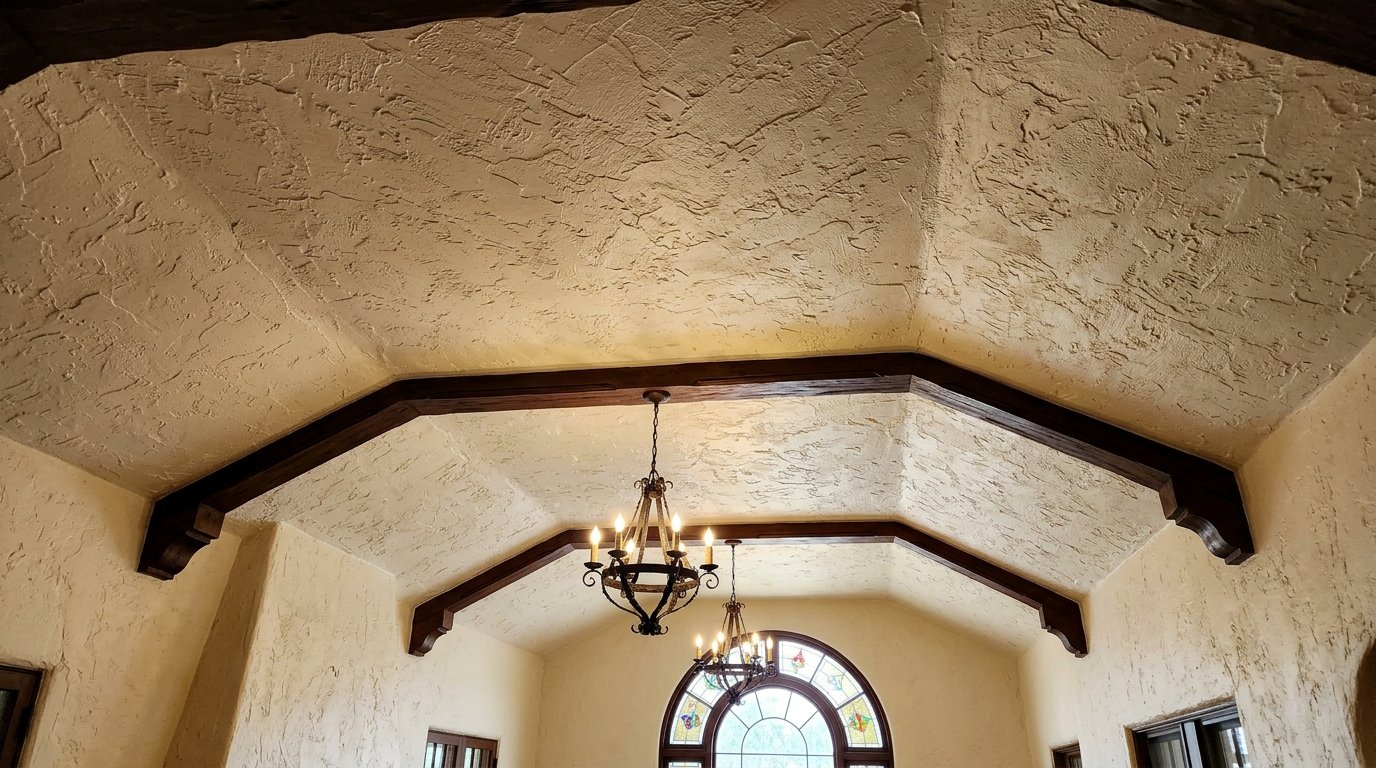

An asbestos stucco ceiling is a textured, plaster-like ceiling finish that contains asbestos fibers mixed into the material during application. These ceilings were common in homes built or renovated between the 1950s and 1980s, before asbestos use in construction materials was restricted.
How Stucco Ceilings Were Made
Stucco ceilings were created by applying a wet, plaster-based compound to the ceiling surface and then shaping it into a textured pattern using trowels, brushes, or spray equipment. Builders often added asbestos fibers to this mixture because they made the finished product stronger and more resistant to cracking.
The texture could be fine and sandy or deep and dramatic, depending on the tools and technique used by the installer. This variety in appearance is one reason homeowners can’t identify asbestos content just by looking at the ceiling.
Why Builders Relied on Asbestos in Ceiling Mixes
Asbestos fibers were inexpensive, widely available, and gave ceiling compounds better fire resistance along with added durability. Contractors found that mixtures containing asbestos sprayed on more evenly and held their texture longer than asbestos-free alternatives.
This made asbestos stucco a practical and economical choice for builders working on tight budgets in mid-century housing developments.
The combination of low cost and improved performance kept asbestos in widespread use for several decades despite emerging health concerns.
Why Asbestos Stucco Ceilings Are a Health Concern
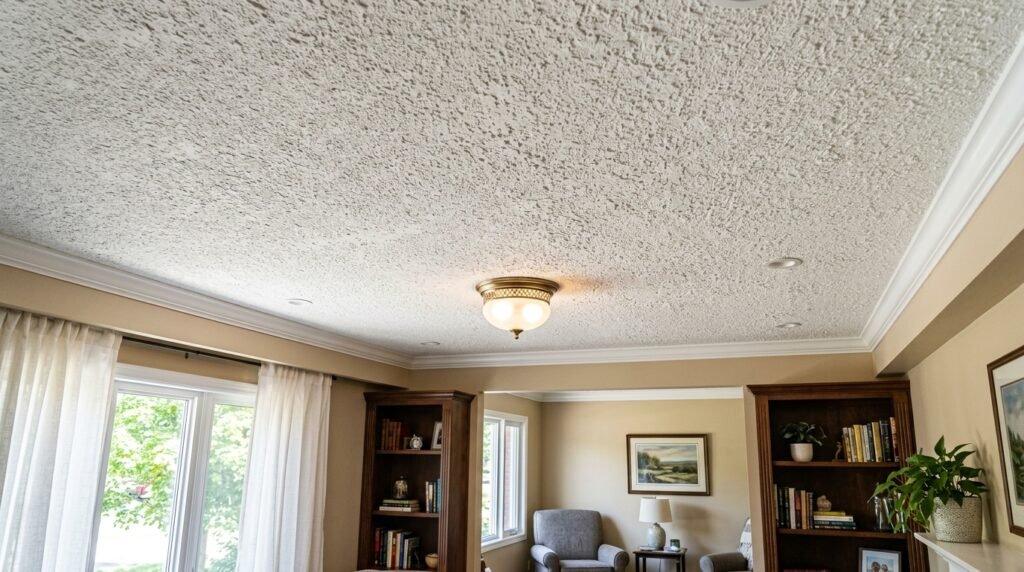
Asbestos stucco ceilings only become dangerous when their fibers are released into the air. Left alone, an intact ceiling typically poses little immediate threat to the people living underneath it.
How Fibers Get Released Into the Air
Asbestos fibers escape into breathable air whenever the ceiling material is broken, drilled, sanded, or scraped. Something as simple as hanging a light fixture or patching a small crack can disturb enough material to send fibers floating through a room.
Because these fibers are microscopic, they remain suspended in the air for long stretches of time without any visible sign that they’re present.
Anyone breathing in that air during or shortly after the disturbance is at risk of inhaling fibers into their lungs.
Long-Term Health Effects of Exposure
Repeated or significant exposure to airborne asbestos fibers has been linked to serious illnesses that often don’t appear until years or decades later.
These include lung scarring known as asbestosis, various forms of lung cancer, and mesothelioma, an aggressive cancer that affects the lining of internal organs. Medical researchers have found that there is no exposure level considered completely safe, though the likelihood of illness increases with both the amount of exposure and how long it continues.
This delayed onset is part of why asbestos exposure is taken so seriously even when symptoms aren’t immediately obvious.
Signs Your Stucco Ceiling May Contain Asbestos
Certain clues can point toward asbestos in a stucco ceiling, even though a lab test is the only way to confirm it for certain.
The Age of Your Home Matters Most
The single strongest indicator is when your ceiling was installed. Homes built or last re-textured before the mid-1980s have a meaningfully higher chance of containing asbestos in their stucco finish.
Checking old renovation records, permits, or paperwork from when the home was built can help narrow down the timeframe. If that information isn’t available, it’s safer to assume the ceiling could contain asbestos until testing proves otherwise.
Physical Condition of the Ceiling
A ceiling that’s cracking, crumbling, or shedding a fine dust onto furniture below is sending a clear signal that something needs attention.
Water stains, sagging sections, or peeling areas can also indicate the material has weakened and may release fibers more easily than an intact surface. Even minor damage, like a scrape from moving furniture or a dent from an accidental bump, can be enough to expose loose material.
Spotting any of these signs is a good reason to schedule professional testing rather than waiting.
Friable vs. Non-Friable Asbestos in Ceilings
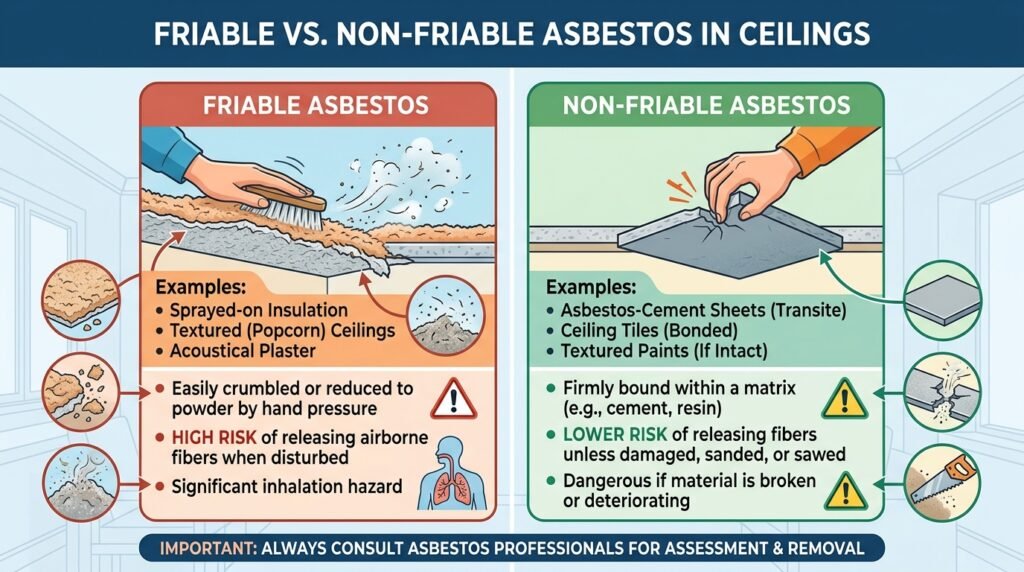
Understanding the difference between these two categories helps explain why stucco ceilings are treated with extra caution compared to other asbestos-containing materials in a home.
What Makes a Material Friable
A friable material is one that can be crumbled or crushed using just hand pressure, which means it releases fibers far more easily than denser materials. Spray-applied and hand-textured stucco ceilings typically fall into this friable category because of how loosely the compound is bound together.
This looseness is exactly what made the material easy to apply decades ago, but it’s also what makes it more hazardous today.
Because of this trait, friable ceilings require more careful handling than asbestos found in tightly bound products.
Why Non-Friable Materials Carry Less Risk
Non-friable asbestos materials, like certain vinyl floor tiles or cement-based siding, hold their fibers much more securely within a solid matrix.
These materials only release fibers when they’re cut, drilled, or otherwise mechanically disturbed in a forceful way.
Because stucco ceilings don’t share this tightly bound structure, they’re far more likely to shed fibers from routine bumps or aging alone. This distinction is a major reason professionals approach ceiling abatement differently than floor tile removal.
Testing Your Ceiling for Asbestos
Lab testing remains the only definitive way to know whether your stucco ceiling contains asbestos, since visual inspection can’t reveal what’s mixed into the material.
How Professional Sample Collection Works
A trained technician collects a small piece of the ceiling material using sealed containment methods designed to prevent any fibers from escaping during the process.
The sample gets packaged in a secure container and sent to an accredited laboratory for detailed analysis. Lab technicians typically use polarized light microscopy to examine the sample and identify whether asbestos fibers are present.
This controlled approach keeps the testing process itself from creating the very exposure risk it’s meant to evaluate.
Why Skipping Professional Testing Is a Mistake
Some homeowners consider collecting their own ceiling sample using a kit purchased online, but this approach carries real risk.
Breaking off a piece of ceiling material without proper containment can release fibers into the room before the sample even reaches a lab. Without protective equipment or a HEPA-filtered cleanup afterward, a DIY attempt can contaminate the surrounding space unnecessarily.
Professional sampling avoids this risk entirely while also producing more dependable, lab-verified results.
Managing or Removing an Asbestos Stucco Ceiling
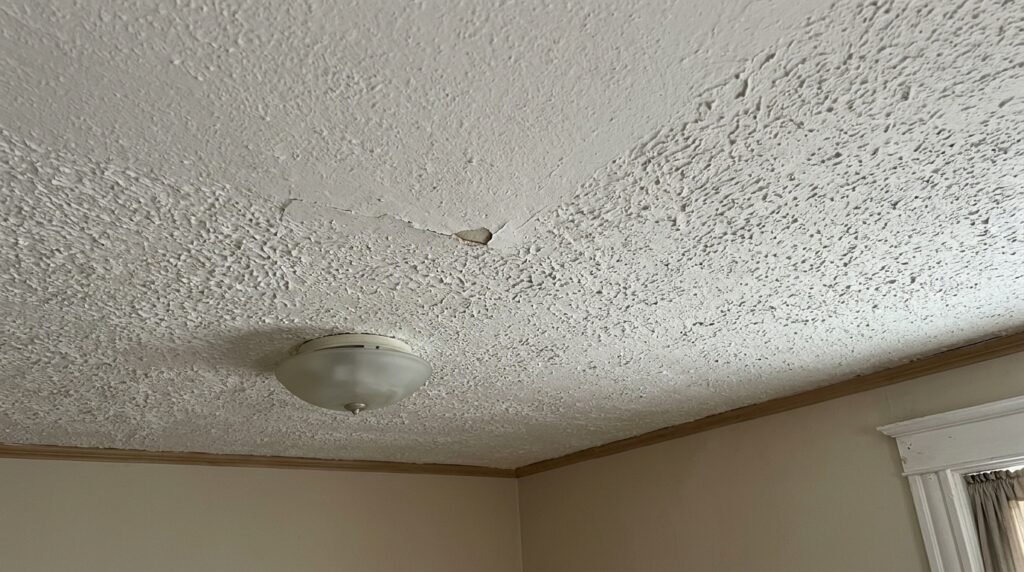
Once testing confirms asbestos is present, homeowners generally have a few practical paths forward depending on the ceiling’s condition and their renovation plans.
Leaving the Ceiling Undisturbed
If the stucco ceiling is intact, stable, and there are no renovation plans on the horizon, many professionals recommend simply leaving it in place. This approach, often called in-place management, involves avoiding any drilling, scraping, or hanging of fixtures directly on the textured surface.
Periodic visual checks help confirm the ceiling remains in good condition over time. This option tends to be the most affordable since it avoids the cost of abatement work entirely.
Encapsulation as a Middle-Ground Option
Encapsulation involves applying a specialized sealant coating directly over the asbestos-containing ceiling to lock the fibers in place.
This method works well for ceilings that are currently stable but might face accidental bumps or minor disturbances down the road. It generally costs less than full removal while still adding a meaningful layer of protection against fiber release.
A licensed contractor applies the encapsulant using techniques designed to avoid disturbing the underlying material during the process.
When Full Removal Becomes Necessary
Full removal becomes the better option when the ceiling is already damaged, when a renovation requires direct access to the space above it, or when a homeowner simply wants the material gone for peace of mind.
This process must be handled by a licensed asbestos abatement company following strict containment and disposal procedures. Attempting removal without proper training and equipment can spread fibers throughout the home and create a far larger problem than the one being solved.
Licensed crews use sealed work areas, HEPA filtration, and wetting techniques to keep the removal process contained and safe.
Comparing Common Textured Ceiling Finishes
| Ceiling Finish | Typical Installation Period | Asbestos Likelihood |
| Popcorn / acoustic spray | 1950s–1980s | High if installed before 1985 |
| Stucco / hand-textured | 1920s–1980s | High in older homes |
| Swirl or fan pattern | 1930s–1980s | High if pre-1985 |
| Knockdown | Late 1980s–present | Low |
| Skip trowel | 1990s–present | Low |
| Orange peel | 1990s–present | Low |
Frequently Asked Questions
Can I paint over an asbestos stucco ceiling myself?
Painting can temporarily hold some fibers in place, but regular house paint isn’t designed to fully seal asbestos, and the prep work involved in painting can actually disturb the surface.
Is it legal to remove an asbestos ceiling without a license?
Regulations vary by location, but in most states only licensed abatement contractors are permitted to remove asbestos-containing materials from a home.
What does asbestos ceiling testing typically cost?
Professional testing is generally affordable compared to the cost of abatement, since it only involves collecting a small sample and sending it to a lab.
How long does a full ceiling abatement project take?
Most residential ceiling abatement projects are completed within a few days, depending on the size of the area and the extent of containment required.
Does homeowners insurance cover asbestos removal costs?
Coverage depends heavily on the individual policy, and many standard homeowners insurance plans exclude asbestos remediation unless it resulted from a covered event like storm damage.
Conclusion
An asbestos stucco ceiling isn’t an automatic emergency, but it’s not something to ignore either. The age of your home, the condition of the ceiling, and any upcoming renovation plans all play a role in deciding your next step.
Testing remains the only reliable way to confirm what’s actually in the material, and from there, leaving it undisturbed, encapsulating it, or removing it entirely are all valid options depending on your situation.
Working with a licensed professional at every stage keeps the process safe and gives you a clear, documented answer about what’s overhead.
Related Articles
How to Clean Shower Tiles: Step-by-Step Guide for a Spotless Bathroom
486 Gelney Kitchen Exhaust Hood System: How It Works and Why It Matters
Mulled Windows vs Non-Mulled Windows: Which Is Right for Your Home
Garage Door Bottom Seal Replacement: Complete Guide for Homeowners